
Dresden: Where Phoenix Wings Span Centuries
The Weight of Memory
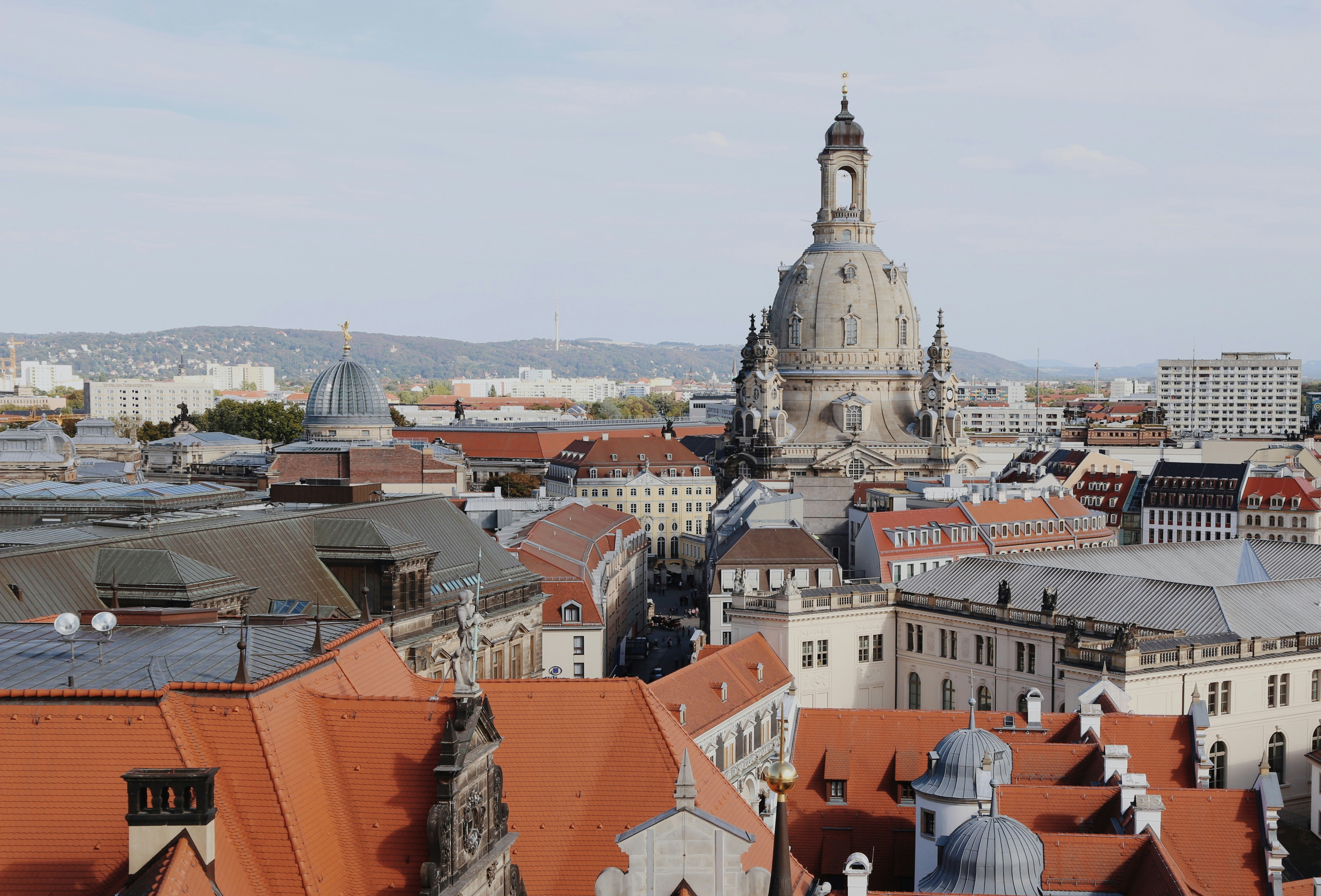
A walk through the Altstadt reveals layers of time compressed into single facades. The Frauenkirche, with its distinctive dome, stands as perhaps the most powerful symbol of resilience anywhere in Germany. For nearly five decades, its ruins were left untouched—a deliberate memorial to the horrors visited upon the city in February 1945. The blackened stones remained where they had fallen, a silent accusation and remembrance.
The decision to rebuild, made after reunification, was driven not by a desire to erase history but to honor it differently. Original stones, darkened by fire, were incorporated into the reconstruction wherever possible. Today, these darker pieces create a patchwork across the honey-colored sandstone facade—a visible reminder that beauty can be born from tragedy, that what was broken need not remain so forever.
Inside, natural light floods through the reconstructed dome, illuminating a space that feels both ancient and impossibly new. The altar, adorned with gilded details, draws the eye upward to the frescoes that required painstaking research and artistry to recreate. Every element speaks to a community's determination to reclaim not just a building, but a piece of collective identity.
Things to do in Dresden
Royal Splendor Along the River
The Zwinger Palace complex presents a different kind of magnificence. Built in the early 18th century under Augustus the Strong, this baroque masterpiece was conceived as a venue for courtly festivities and royal tournaments. Its curved galleries, adorned with sculptures and fountains, create an architectural embrace around the central courtyard.
Within these walls, treasures accumulated by Saxon rulers across centuries can be found. The Porcelain Collection houses over 20,000 pieces, including delicate Meissen creations and exotic imports from China and Japan. The Mathematical-Physical Salon displays scientific instruments of extraordinary craftsmanship—globes, clocks, and optical devices that blur the line between tool and art object.
But perhaps most breathtaking remains the Semper Gallery, where Old Masters paintings hang in carefully restored halls. Raphael's Sistine Madonna, with her serene expression and the two cherubs who have become icons in their own right, commands reverent attention. Dutch masters, Italian Renaissance painters, and German artists from various periods create a dialogue across time and geography.
The Longest Mural
On the exterior wall of the Stallhof, an extraordinary artwork stretches for 102 meters. The Fürstenzug—Procession of Princes—depicts Saxon rulers from the house of Wettin across nearly a thousand years of history. What makes this 19th-century mural remarkable, beyond its scale, goes deeper than its artistic merit.
Originally painted in lime-secco technique, the artwork was recreated between 1904 and 1907 using approximately 23,000 Meissen porcelain tiles. This decision proved fortuitous. When firestorms consumed much of the city in 1945, the porcelain tiles survived largely intact. Today, visitors can still trace the progression of rulers on horseback, in ceremonial dress, accompanied by scholars, soldiers, and craftsmen who shaped Saxon history.
Baroque Grandeur Reimagined
The Residenzschloss, once home to Saxon electors and kings, has been systematically restored since reunification. Room by room, tower by tower, the palace has been brought back from near-total destruction. Within its walls, multiple museums now operate, each offering glimpses into different aspects of courtly life and artistic achievement.
The Green Vault—split into Historic and New sections—displays one of Europe's most significant treasure collections. Gold, ivory, precious stones, and exotic materials were fashioned by master craftsmen into objects of stunning complexity. A cherry pit carved with 185 tiny faces. A frigate crafted entirely from ivory. The Dresden Green Diamond, one of the largest naturally green diamonds in the world. Each piece represents hours of meticulous labor and extraordinary skill.
The Turkish Chamber presents another facet of Saxon collecting passion—an extensive array of Ottoman art and weaponry gathered over centuries. These objects speak to the complex cultural exchanges between European courts and the Ottoman Empire, to fascination with the exotic, and to the ways material culture can bridge vast geographic and cultural distances.
Modern Visions and Controversies
Not all architectural additions have been welcomed with universal enthusiasm. The Waldschlösschen Bridge, completed in 2013 despite UNESCO removing the city from its World Heritage list, remains controversial. Proponents argued for practical transportation needs; opponents lamented the disruption to the Elbe Valley's historic landscape.
The Kulturpalast, rebuilt and reopened in 2017, represents a different kind of architectural conversation—one between GDR-era modernism and contemporary function. The building, originally constructed in the 1960s, was gutted and redesigned while maintaining its distinctive exterior. Inside, world-class acoustics now serve the Dresdner Philharmonic, transforming a socialist-era cultural center into a venue that rivals any in Europe.
Gardens and Green Spaces
Beyond the architectural monuments, the city offers breathing room in its gardens and parks. The Großer Garten, a baroque garden complex expanded over centuries, provides locals and visitors alike with space to walk, cycle, or simply sit beneath ancient trees. In summer, the park's open-air theater hosts performances; in winter, the palace within the garden creates picture-perfect scenes dusted with snow.
The slopes along the Elbe host vineyards that produce wine within city limits—a rarity for urban centers this far north. These hillside plots have been cultivated for centuries, their terraces offering both agricultural bounty and stunning views across the river valley.
Artistic Legacies
The Semperoper, rebuilt after wartime destruction and later restored following flood damage, stands as one of the world's great opera houses. Its acoustics, its intimately scaled auditorium, and its architectural beauty combine to create an environment where music and drama can flourish. The Staatskapelle, one of the world's oldest orchestras, calls this venue home, maintaining traditions that stretch back centuries while championing contemporary works.
Smaller venues throughout the city nurture different artistic expressions. The Kunsthofpassage, with its courtyards transformed by artists into whimsical installations, shows a more playful side. The Neustadt district, less damaged during the war and therefore retaining more of its original character, has evolved into a center for alternative culture, street art, and experimental spaces.
Crossing the Elbe
The river itself, spanned by numerous bridges, shapes daily life and movement. The Augustus Bridge, the oldest crossing point, has connected the Old Town with the newer districts since the 18th century. From its span, particularly at sunset when golden light washes across baroque facades, the city reveals its most photogenic face.
Historic paddle steamers, the oldest fleet of its kind still in operation, offer another perspective. These vessels, some dating to the 19th century, chug up and down the Elbe, their steam engines maintained with care by engineers who understand machines built in an entirely different industrial age. A journey on these boats, past vineyards and castles, through the sandstone formations of Saxon Switzerland, provides context for the city—showing how it functions as gateway between mountains and plains, between Bohemia and northern Germany.
Living History
What strikes visitors most powerfully might not be any single monument, but rather the tangible sense of history actively engaged with rather than merely preserved. The city refuses to hide its scars or pretend the 20th century didn't happen. Instead, those painful chapters become part of an ongoing conversation about memory, responsibility, and possibility.
At the same time, life unfolds with vibrant contemporary energy. Universities fill the streets with students. Tech companies and research institutes drive innovation. Markets, festivals, and daily commerce create rhythms that connect past and present. The Christmas market, the Striezelmarkt, has been held annually since 1434, making it one of Germany's oldest—yet each year it feels both traditional and immediate, both historic and alive.
What happened here in February 1945 cannot be forgotten, nor should it be. But neither should the city be defined solely by destruction. The rebuilding represents something more profound than mere reconstruction—it embodies a commitment to culture, to beauty, to the belief that what humans create at their best deserves to be sustained and celebrated. For travelers exploring Germany's rich tapestry of cities, the journey often extends to other cultural centers, where Munich offers its own distinct blend of Bavarian traditions and cosmopolitan energy, creating yet another chapter in the story of German urban life.




 Home
Home Wishlist