
Florence: Where Renaissance Dreams Were Born
The Cradle of Rebirth
The Tuscan landscape had been shaped by centuries of cultivation when a new era began to take root in the late medieval period. What emerged wasn't merely an artistic movement but a fundamental reimagining of human potential. The Renaissance—that extraordinary flowering of arts, sciences, and philosophy—found its most fertile ground here, nurtured by banking wealth, political intrigue, and an insatiable hunger for knowledge.
Walking through the historic center today, one cannot help but feel transported. Buildings constructed in the 14th and 15th centuries still dominate the skyline, their ochre and terracotta facades glowing warmly in the afternoon light. The architectural language spoken here remains remarkably consistent, preserved through strict regulations that have kept modern intrusions at bay.
Things to do in Florence
The Duomo: An Engineering Marvel
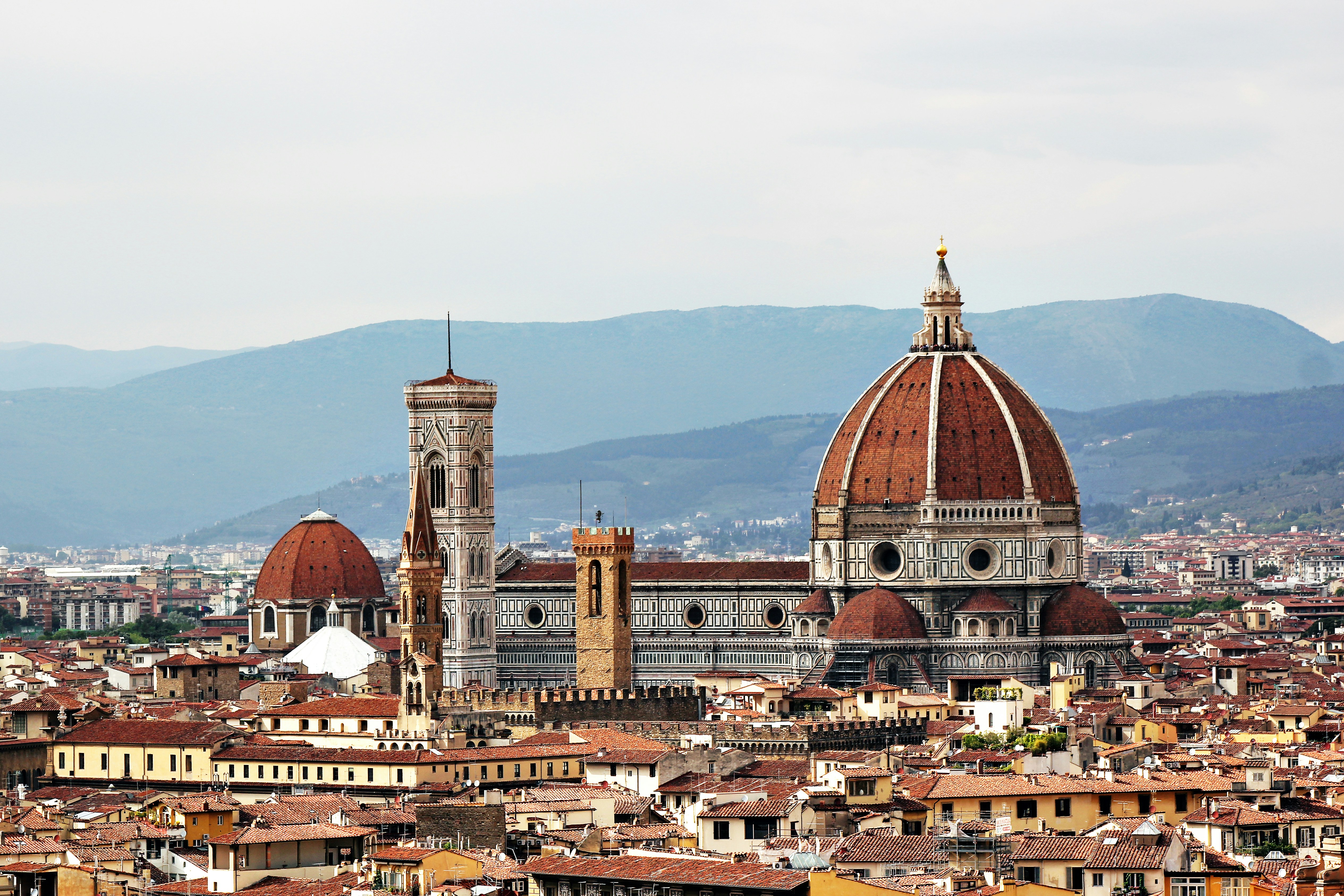
The Cathedral of Santa Maria del Fiore commands attention from nearly every vantage point in the city. Its massive dome, engineered by Filippo Brunelleschi, was completed in 1436 and remains an architectural wonder. When construction began, no one knew exactly how such an enormous cupola could be built without the traditional wooden supporting frameworks. Brunelleschi's innovative double-shell design and herringbone brick pattern solved problems that had stumped architects for decades.
Climbing the 463 steps to the top gets rewarded with panoramic views that stretch across the Arno River valley to the surrounding hills. From this height, the city's layout becomes clear—a dense medieval core surrounded by later expansions, all contained within the memory of ancient walls. The green and white marble facade of the cathedral below catches the eye, its geometric patterns a testament to the Tuscan love of order and proportion.
The Uffizi: A Treasury of Masterpieces
The Galleria degli Uffizi houses one of the world's most important art collections, amassed initially by the Medici family over generations of passionate collecting. Walking through its long corridors feels like traversing the evolution of Western art itself. Each room reveals another chapter in the story of how artists learned to capture light, emotion, and the human form with ever-increasing sophistication.
Botticelli's "Birth of Venus" draws crowds that gather reverently before it. The goddess rising from her shell has become an icon recognized worldwide, yet seeing the actual painting—with its delicate brushwork and luminous colors—still takes the breath away. Nearby, Leonardo da Vinci's "Annunciation" demonstrates the artist's early mastery of perspective and his keen observation of the natural world.
The collection spans from medieval altarpieces to Baroque masterworks, but the heart of the museum remains its Renaissance holdings. Works by Raphael, Michelangelo, Titian, and Caravaggio hang in temperature-controlled rooms where their preservation gets carefully monitored. These paintings weren't created for museums—they were made for churches, private chapels, and noble residences—yet they've found a second life as objects of universal admiration.
Michelangelo's David
At the Galleria dell'Accademia, another masterpiece awaits. Michelangelo's David, carved from a single block of marble between 1501 and 1504, stands seventeen feet tall in a specially designed tribune. The sculptor was only 26 when he began this work, yet he managed to create something that has defined idealized human beauty for five centuries.
What strikes visitors most forcefully gets captured not in photographs but in the physical presence of the statue. David's pose—weight shifted onto one leg, head turned to face an unseen enemy—conveys both relaxation and readiness. Every muscle, vein, and tendon has been rendered with anatomical precision. The hands appear oversized, a deliberate choice that emphasizes the hero's strength and the stone he's about to hurl at Goliath.
The Ponte Vecchio and the Arno
The Arno River cuts through the city like a liquid border between two worlds. On its oldest surviving bridge, the Ponte Vecchio, jewelry shops occupy spaces where butchers once worked until the Medici grand dukes decided the smell was unacceptable for the elevated corridor they built overhead. This private passageway, the Corridoio Vasariano, allowed the ruling family to move between their residence at Palazzo Pitti and the government offices at Palazzo Vecchio without mingling with common citizens.
The bridge survived World War II when all other bridges over the Arno were destroyed by retreating German forces. Whether this was due to a direct order from Hitler himself or the hesitation of a local commander remains debated, but the preservation of this medieval structure feels miraculous when one considers the devastation visited upon so many Italian cities during that conflict.
Beyond the Tourist Trail
Away from the major monuments, quieter pleasures await discovery. The Oltrarno neighborhood, on the southern bank of the river, retains a more residential character. Artisan workshops still operate here, their windows displaying handcrafted leather goods, marbled paper, and traditional wooden frames. The sound of hammering and the smell of leather treatment fluid drift from open doorways.
In the Basilica of Santo Spirito, designed by Brunelleschi but completed after his death, a sense of serene proportion prevails. The interior's austere beauty offers a counterpoint to the more elaborately decorated churches elsewhere in the city. Here, architecture itself becomes the decoration, with columns, arches, and spaces creating their own rhythm and harmony.
The Boboli Gardens, behind Palazzo Pitti, demonstrate how the Renaissance mind approached nature itself as something to be ordered and beautified. Geometric paths lead through carefully planned vistas, past fountains and grottos, up to terraces offering commanding views. These gardens were designed to impress visitors with the power and sophistication of their owners, the Medici grand dukes who ruled Tuscany for centuries.
A Living Workshop
Despite the millions of tourists who visit annually, the city hasn't become merely a museum. Students from the local university fill cafes and bars, continuing a tradition of learning that dates back centuries. The prestigious art academies still train painters, sculptors, and restorers using techniques passed down through generations.
In workshops throughout the historic center, craftspeople continue making goods by hand using methods that would have been recognizable to their Renaissance predecessors. This commitment to traditional craftsmanship coexists with modern life in ways that feel surprisingly natural. A fresco restorer might post updates on social media while applying techniques developed in the 1400s.
The Culinary Tradition
Tuscan cuisine reflects the region's agricultural abundance and its historic frugality. Ribollita, a hearty soup made with bread, beans, and dark leafy vegetables, originated as peasant food but has been elevated to an art form in local trattorias. Bistecca alla fiorentina—a massive T-bone steak from the local Chianina cattle breed—gets served rare, seasoned simply with salt, pepper, and olive oil to let the quality of the meat speak for itself.
The wines produced in the surrounding countryside—Chianti, Brunello di Montalcino, Vino Nobile di Montepulciano—complement these dishes perfectly. In enoteche throughout the city, bottles from small producers sit alongside offerings from famous estates, all available for tasting by the glass. The Tuscan approach to wine emphasizes place and tradition over trendy techniques.
The Market Experience
At the Mercato Centrale, the city's main covered market, vendors have been selling fresh produce, meats, cheeses, and prepared foods since 1874. The iron and glass structure that houses them exemplifies 19th-century market architecture, functional yet elegant. Upstairs, a more recent addition features food stalls and restaurants where traditional recipes get interpreted by young chefs.
The San Lorenzo market outside sprawls across the surrounding streets, offering everything from leather jackets to souvenirs. Prices get negotiated, voices raised in good-natured haggling that sometimes sounds like arguing but rarely becomes actually contentious. This marketplace energy has animated these same streets for hundreds of years.
Evening Transformations
As sunset approaches, the city undergoes a subtle transformation. Day-trippers depart, and a different rhythm emerges. Locals reclaim the piazzas, gathering for aperitivo—that peculiarly Italian ritual of pre-dinner drinks accompanied by small snacks. The Piazza della Repubblica's carousel lights up, its cheerful music floating above the conversations of those seated at surrounding cafes.
The view from Piazzale Michelangelo at dusk has been photographed countless times, yet it never fails to move. The entire historic center spreads below, the Duomo's dome catching the last rays of sun while the sky behind fades through shades of pink and purple. Couples and friends gather on the steps, sharing wine and watching the city lights begin to twinkle.
Later in the evening, after a leisurely dinner, some travelers might feel inspired to continue their Italian journey northward to Venice, where water replaces stone as the defining element and a different kind of Renaissance magic awaits.


 Home
Home Wishlist