
Köln: Where Centuries Meet the Rhine
The Cathedral That Defines a Skyline
The Kölner Dom—Cologne Cathedral—dominates the urban landscape with an authority few buildings can match. Construction was begun in 1248, though completion wasn't achieved until 1880, making it a monument to persistence as much as faith. The twin Gothic towers soar 157 meters into the air, visible from nearly every corner of the city center.
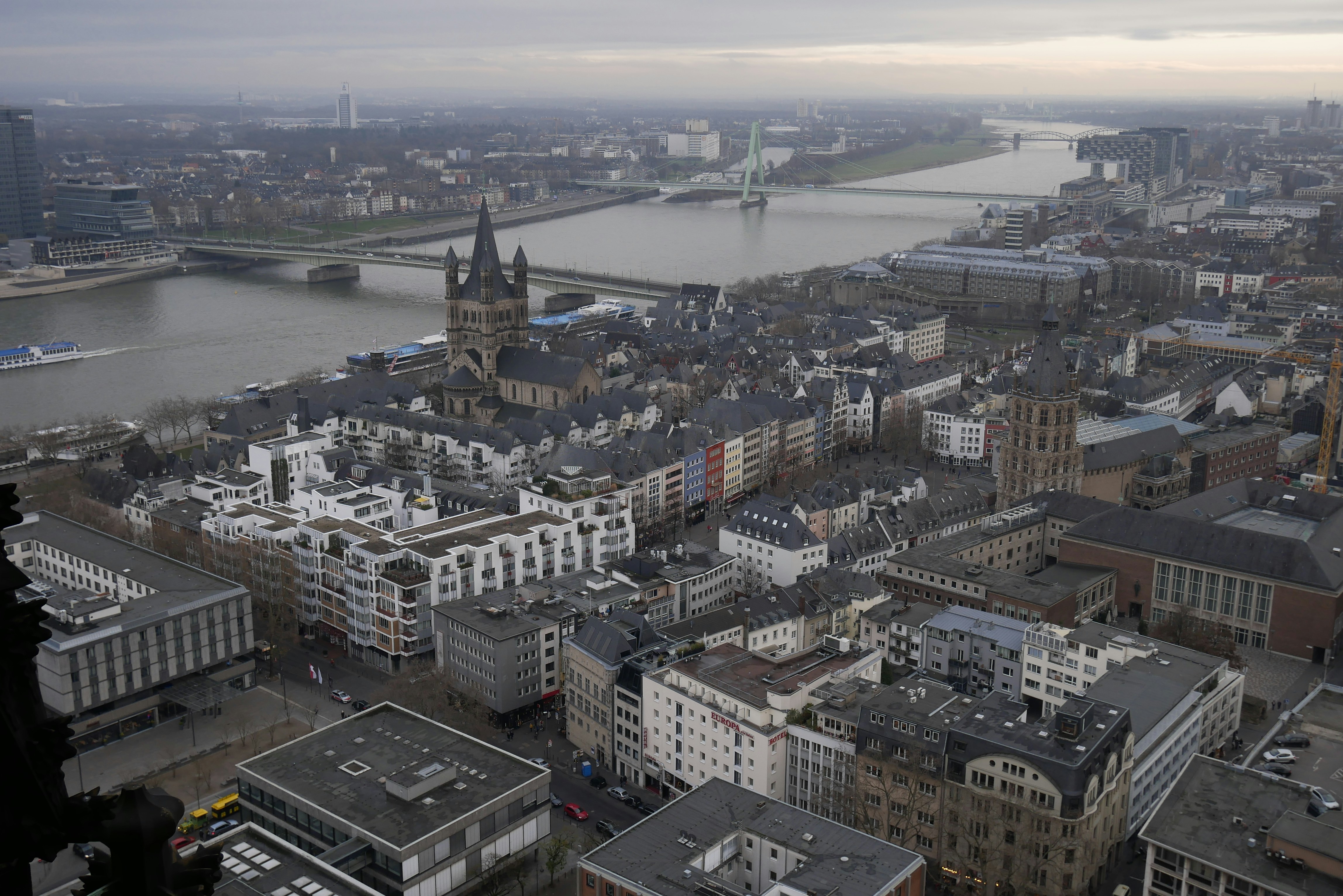
Inside, light filters through stained glass windows that somehow survived wartime bombing, casting colored patterns across stone floors worn smooth by millions of footsteps. The Shrine of the Three Kings, believed to contain relics of the Biblical Magi, has drawn pilgrims for centuries. Visitors willing to climb 533 steps can be rewarded with panoramic views where the Rhine curves through the urban fabric, bridges connecting both banks in elegant arcs.
The cathedral wasn't merely built beside the Rhine by chance. Its location was chosen deliberately—a statement of religious and civic importance placed at the heart of what had been, and would continue to be, one of Europe's most vital trading corridors.
Things to do in Koln
Echoes of Empire
Long before the cathedral's foundations were laid, this riverside settlement was known as Colonia Claudia Ara Agrippinensium. The Romans recognized the strategic value of this position along the Rhine, establishing it as a colonial capital in 50 CE. Evidence of that ancient presence can still be found throughout the modern city.
The Romano-Germanic Museum houses extraordinary artifacts recovered from beneath city streets—intricate glass vessels, detailed mosaics, and architectural fragments that speak to sophisticated urban life two millennia ago. The famous Dionysus Mosaic, discovered during construction work in 1941, depicts scenes of revelry that wouldn't feel entirely out of place in the city's contemporary beer halls.
Medieval fortifications built atop Roman foundations created a walled city that thrived through the Middle Ages. Though most walls were dismantled in the 19th century to allow urban expansion, several gates remain, including the Eigelsteintorburg and Hahnentor, their sturdy towers reminding passersby of times when entry into the city was a privilege carefully guarded.
Liquid Tradition
Beer culture runs deep here, but not just any beer will do. Kölsch, a light, crisp, top-fermented brew, was granted protected designation status, meaning authentic versions can only be produced within the city limits. The beverage gets served in distinctive tall, narrow glasses called "Stanges," holding just 200 milliliters.
Traditional brewhouses like Früh am Dom and Gaffel am Dom maintain rituals dating back generations. Blue-aproned servers called "Köbes" navigate crowded rooms with practiced efficiency, replacing empty glasses before they've barely been set down. The protocol demands respect: your glass gets replaced automatically until a coaster gets placed on top, signaling you've had enough.
These establishments function as social institutions where barriers between strangers dissolve after a few rounds. Long wooden tables encourage communal seating, conversations flowing as freely as the beer. Traditional dishes—sauerbraten, blood sausage with onions, or the peculiarly named "Halve Hahn" (which, despite translating to "half rooster," turns out to be a cheese sandwich)—provide sustenance for extended sessions.
Carnival Madness
Each year, starting on the eleventh of November at precisely 11:11 AM, carnival season officially begins. But the true celebration erupts in February or March, when Weiberfastnacht kicks off six days of unbridled festivities. Women traditionally storm city hall and symbolically take control, cutting off men's ties with scissors—a custom that still sees businessmen wearing old or deliberately ugly neckties for self-preservation.
Rose Monday brings the parade to remember—elaborate floats wind through packed streets while costumed participants toss candy, flowers, and small bottles of liqueur into outstretched hands. The celebration was historically understood as a final burst of indulgence before Lenten austerity, though its religious connections have loosened considerably over time.
Music fills every corner during these days. Dialect songs specific to the region get belted out in bars, on streets, and from parade floats. Even visitors who can't understand a word find themselves swept up in the infectious energy, arm-in-arm with strangers, swaying to unfamiliar melodies.
Art and Contemplation
Museum Ludwig houses one of Europe's most significant collections of modern art. Pop art receives particular emphasis—the museum holds the world's third-largest Picasso collection, along with substantial works by Warhol, Lichtenstein, and other defining figures of 20th-century movements. The building itself, constructed in the 1980s beside the cathedral, represents a architectural dialogue between contemporary design and Gothic grandeur.
Across the river in the Rheinpark, the Tanzbrunnen offers open-air concert space where performers from classical orchestras to international rock acts have entertained audiences against the cathedral's illuminated backdrop. The green spaces surrounding this venue provide welcome respite from urban density—locals claim patches of grass for picnics, sunbathing, and impromptu gatherings during warmer months.
The Wallraf-Richartz Museum focuses on older masterpieces, spanning medieval painting through the 19th century. Works by Rembrandt, Rubens, and German Romantic painters hang in galleries that trace the evolution of European artistic traditions. The collection was saved through remarkable efforts during World War II, when precious pieces were hidden in remote locations to protect them from bombing raids.
Scars and Renewal
By 1945, approximately 90 percent of the inner city had been reduced to rubble. The cathedral, though damaged, remained standing—a beacon of hope amid devastation. Photographs from that period show a moonscape of ruins with the Dom's spires rising defiantly above the destruction.
Reconstruction presented difficult choices. Should the city be rebuilt exactly as it was, or should modern urban planning principles be applied? Ultimately, a compromise was reached. Some historic structures were painstakingly restored, while other areas were developed with contemporary architecture and wider streets to accommodate automobiles.
This history of destruction and renewal gets commemorated in subtle ways throughout the urban landscape. Plaques mark buildings that were reconstructed. The NS Documentation Center, housed in a former Gestapo headquarters where basement cells still bear prisoners' desperate scratchings, presents an unflinching examination of the city's darkest chapter.
The Chocolate Museum's Sweet Narrative
Positioned on a Rhine peninsula, the Imhoff-Schokoladenmuseum takes visitors through 5,000 years of chocolate history. The glass-walled building resembles a ship docked at the river's edge, its modern architecture a sharp contrast to the old town visible across the water.
Inside, the journey begins with cacao cultivation in tropical regions and progresses through industrial production methods. A three-meter-high chocolate fountain flows continuously in the tropical greenhouse section—staff members offer samples to visitors on wafer sticks, a practice that generates considerable enthusiasm among younger guests.
The museum was founded by Hans Imhoff, a local chocolate manufacturer who collected historical artifacts related to the industry throughout his career. His personal passion transformed into an institution that welcomes hundreds of thousands of visitors annually, many of whom leave with purchases from the well-stocked gift shop.
Bridges and Connections
Seven bridges span the Rhine within the city limits, each with distinct character. The Hohenzollern Bridge, completed in 1911 and reconstructed after wartime destruction, carries rail traffic and pedestrians. Its iron trusses have become adorned with thousands of "love locks"—padlocks attached by couples who then throw the keys into the river below as symbols of eternal commitment.
The Deutzer Brücke connects the old town with the eastern bank's more residential and commercial districts. From its walkways, spectacular views of the cathedral can be captured, particularly at sunset when golden light washes across the Gothic facade.
These bridges facilitate more than physical transit. They represent the city's role as a crossroads—connecting the Netherlands and Belgium to southern German regions, linking western European trade networks with those extending eastward. This geographic position shaped historical development and continues to influence economic vitality.
A Living City
Media companies, insurance firms, and automotive manufacturers maintain significant presences here, providing employment that sustains a metropolitan population exceeding one million. The university, founded in 1388 and re-established in 1919 after Napoleonic closure, contributes intellectual energy and youthful demographics.
The Belgisches Viertel—Belgian Quarter—exemplifies the city's evolving character. Once a residential area fallen into decline, it has transformed into a trendy neighborhood where independent boutiques, cafes, and galleries occupy renovated buildings. Vintage shops sit beside contemporary design studios, Turkish bakeries neighbor Italian restaurants, creating the kind of organic diversity that can't be artificially manufactured.
Markets bring neighborhoods to life throughout the week. At Nippes flea market, vendors spread their wares across the Wilhelmplatz—vintage clothing, antique furniture, used books, and mysterious items of uncertain purpose. Shoppers negotiate in multiple languages, reflecting the international character that has always defined this riverside trading post.
The Rhine continues its patient flow, just as it did when Roman legions first arrived, when medieval merchants haggled over goods, when cathedral builders looked skyward with ambition, and when survivors emerged from ruins to rebuild. The water reflects changing light throughout each day—dawn's soft pastels, afternoon's brilliant clarity, evening's deepening blues. Along its banks, a city keeps writing its story, honoring tradition while embracing what comes next. Those seeking similar experiences along Germany's waterways might find equal fascination in Bremen, where maritime heritage and urban vitality meet in different but equally compelling ways.




 Home
Home Wishlist