
Leeds: Where Industrial Heritage Meets Contemporary Ambition
The Weight of History
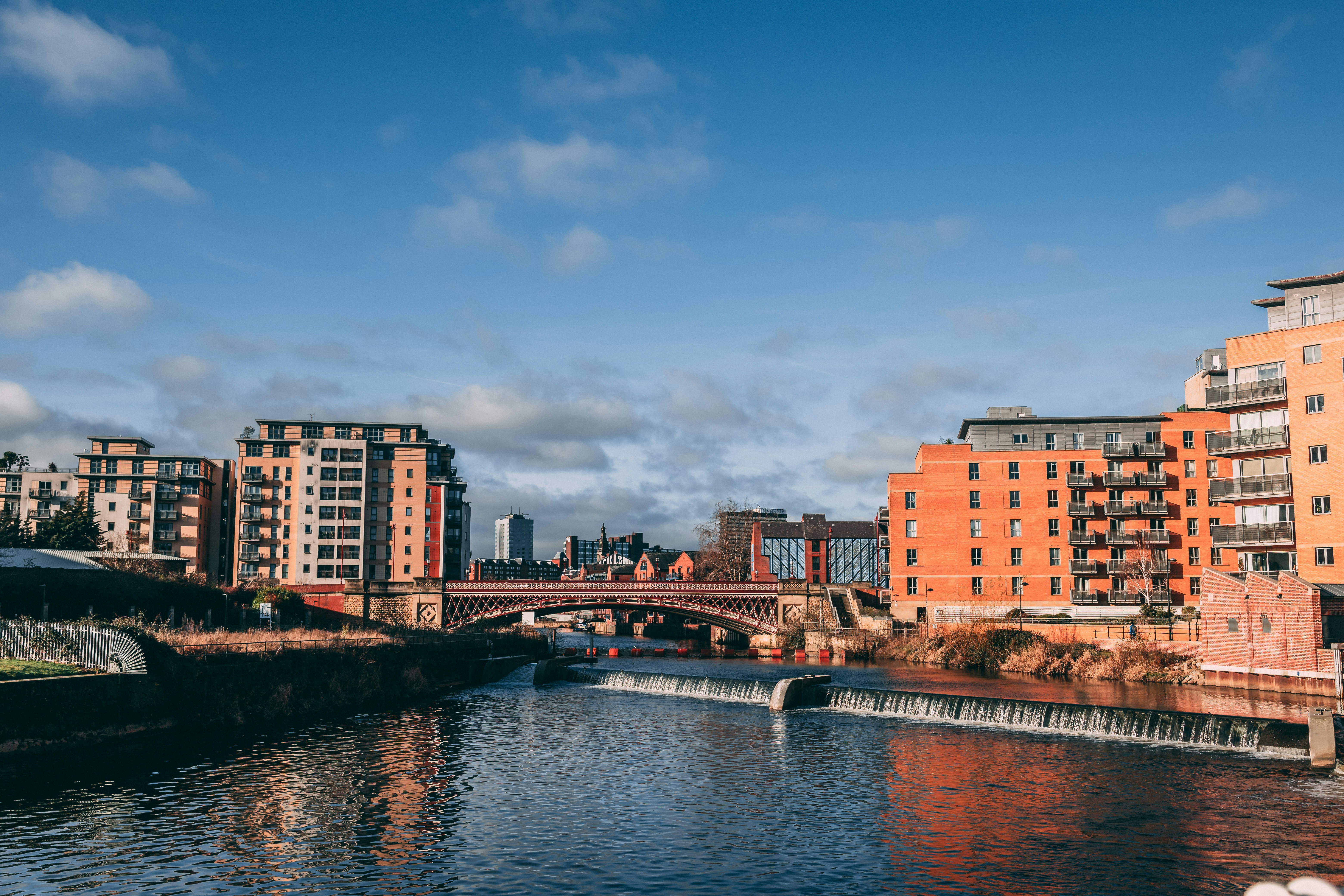
A walk through the city center reveals layers of industrial heritage that cannot be ignored. Red brick warehouses line the waterfront, their solid facades bearing witness to an era when wool and cloth were shipped across the British Empire. The River Aire, once thick with industrial runoff, has been cleaned and reclaimed, its towpath now frequented by joggers and families rather than factory workers.
Armley Mills, once the world's largest woolen mill, has been transformed into an industrial museum. Inside, vintage machinery stands frozen in time, while old photographs show workers – many of them children – laboring in conditions that would be unthinkable today. These images serve as reminders of both progress made and sacrifices endured.
Temple Mill, with its distinctive Egyptian-inspired facade, stands as one of the most remarkable examples of industrial architecture in Britain. Built in 1842, its grandeur was intended to reflect the ambition and confidence of Victorian industrialists. Today, it has been converted into offices, a fitting metaphor for the city's transition from manufacturing to service economies.
Things to do in Leeds
A Canvas of Victorian Splendor
The prosperity generated by industry was poured into civic buildings of remarkable grandeur. The Town Hall, completed in 1858, dominates Millennium Square with its towering columns and ornate clock tower. Designed by architect Cuthbert Brodrick, it was conceived as a statement of municipal pride and has been compared favorably to classical temples.
Nearby, the Corn Exchange presents a different architectural marvel. Its oval design and domed glass roof create a light-filled space that once hosted merchants trading grain. Now, independent boutiques and vintage shops occupy the ground floor, while visitors crane their necks to admire the geometric precision of the roof structure overhead.
Kirkgate Market, one of the largest covered markets in Europe, continues to serve its original purpose. The distinctive roof, supported by cast-iron columns, shelters hundreds of stalls selling everything from fresh produce to second-hand books. The market's atmosphere – bustling, unpretentious, occasionally chaotic – captures something essential about the local character.
Knowledge and Innovation
Two major universities contribute significantly to the intellectual and cultural vitality of the area. The University, established in 1904, was built on principles of educational access and civic responsibility. Its campus, dominated by the imposing Parkinson Building with its distinctive tower, has expanded considerably over the decades. Research conducted here spans numerous disciplines, from medical sciences to sustainability studies.
Beckett University, which achieved university status in 1992, brings a more vocational focus to higher education. Both institutions together educate over 60,000 students, infusing the city with youthful energy and ensuring a steady stream of talent for local employers.
This academic presence has helped foster a thriving tech sector. Digital agencies, software developers, and creative studios have multiplied, particularly in areas like Holbeck Urban Village, where old industrial spaces have been repurposed as modern workplaces. The transformation from textile production to digital innovation mirrors broader economic shifts seen across post-industrial Britain.
Culture Reimagined
The cultural landscape has been reshaped dramatically in recent years. The West Yorkshire Playhouse, before its renovation, served for decades as a cornerstone of regional theatre. Following extensive redevelopment, it reopened as Leeds Playhouse in 2019, offering two auditoriums and a commitment to producing work that reflects diverse communities.
The art gallery, housed in a Victorian building on The Headrow, holds an impressive collection spanning centuries. Works by Courbet, Renoir, and Sickert hang alongside contemporary pieces by British artists. The 20th-century galleries showcase the evolution of modernism, while temporary exhibitions often highlight emerging local talent.
Music venues cater to every taste. The O2 Academy hosts major touring acts, while smaller spaces like Brudenell Social Club and Wharf Chambers provide platforms for underground and alternative music. The city's DIY music scene has produced numerous bands that have gone on to national recognition, continuing a tradition that includes acts like Gang of Four and The Wedding Present.
Flavors of Transformation
Culinary evolution mirrors the city's broader transformation. Traditional Yorkshire puddings and Sunday roasts can still be found in old-school pubs, but they now compete with an increasingly diverse food scene. Kirkgate Market remains a destination for traditional fare – pork pies, black pudding, and locally baked bread.
Call Lane and Greek Street have emerged as dining destinations, their narrow streets lined with restaurants offering cuisines from across the globe. Indian, Thai, Turkish, and Italian establishments sit side by side, reflecting demographic changes brought by successive waves of immigration.
The craft beer movement has taken firm root, with numerous brewpubs and microbreweries opening in recent years. Northern Monk, one of the more successful local breweries, has expanded from a small operation in Holbeck to a major player in the British craft beer scene, with its refectory serving as both taproom and cultural space.
Green Spaces and Recreation
Despite its urban density, numerous parks and green spaces provide respite. Roundhay Park, one of the largest city parks in Europe, stretches across more than 700 acres. Its lakes, woodlands, and gardens attract families, runners, and those simply seeking a moment of calm. Tropical World, housed within the park, offers an unexpected journey through different climate zones under glass.
Golden Acre Park, on the northern fringe, presents a more manicured landscape. Its ornamental gardens, created in the 1930s, have been carefully maintained, while the surrounding woodland offers miles of walking paths.
The Leeds-Liverpool Canal, once vital for industrial transport, now serves leisure purposes. Narrowboats painted in cheerful colors are moored along its length, while towpaths have been improved for cycling and walking. The canal offers a different perspective on the city, revealing hidden corners and quiet stretches rarely noticed by those traveling by road.
Shopping and Commerce
The retail sector has undergone significant expansion and transformation. Victoria Quarter, with its stunning mosaic floors and intricate ironwork, offers upscale shopping beneath a magnificent stained-glass roof designed by Frank Matcham. The arcade's conversion from office space to retail destination was completed in the 1990s and set a precedent for heritage-led regeneration.
Trinity Leeds, a modern shopping center opened in 2013, represents a different approach to retail. Its contemporary architecture contrasts sharply with Victorian buildings nearby, yet the development has been carefully integrated into the city fabric. The center's success helped establish the city as a major retail destination, attracting visitors from across Yorkshire and beyond.
Independent shops cluster in areas like the Northern Quarter and Corn Exchange, offering alternatives to high street chains. Vintage clothing stores, record shops, and specialist bookshops serve niche markets and contribute to neighborhood character.
Connectivity and Movement
Transport infrastructure has improved considerably, though challenges remain. The railway station, one of the busiest in Britain, connects the city to London in just over two hours, while regional services link surrounding towns and cities. Plans for High Speed 2, though subject to political debate, promise to reduce journey times further.
The local bus network, operated by several companies, provides extensive coverage, though traffic congestion remains problematic during peak hours. Cycling infrastructure has been expanded in recent years, with dedicated lanes appearing on major routes, though provision remains patchy compared to European cities.
Bradford Airport, despite its name, serves the wider region and offers flights to European destinations. For long-haul travel, Manchester Airport lies about an hour away by car or train, providing extensive international connections.
Challenges and Opportunities
Not all neighborhoods have benefited equally from economic regeneration. Areas of significant deprivation persist, particularly in parts of South and East Leeds, where poverty, health inequalities, and educational underachievement remain stubborn problems. The gap between prosperous and struggling areas has, in some cases, widened rather than narrowed.
Housing affordability has become a growing concern, particularly for young people and those on lower incomes. As the city center has become more desirable, property prices and rents have risen, pushing some residents to outlying areas or neighboring towns.
Environmental challenges also demand attention. Air quality, while improved from industrial days, still exceeds safe limits in certain areas, largely due to traffic emissions. Climate change adaptation and mitigation strategies have been adopted at the municipal level, though implementation remains a work in progress.
The transformation witnessed here over recent decades offers lessons about post-industrial reinvention. Success has not been automatic or inevitable, but rather the result of strategic planning, public and private investment, and the determination of residents to build something new while respecting what came before. Much like the experience offered to those exploring Birmingham, where industrial heritage similarly shapes contemporary identity, the story continues to be written by those who call these northern cities home, each day adding new chapters to an evolving narrative.


 Home
Home Wishlist