
Lübeck: Where Red Brick Cathedrals Meet Salt Merchants' Dreams
The Queen of the Hanseatic League
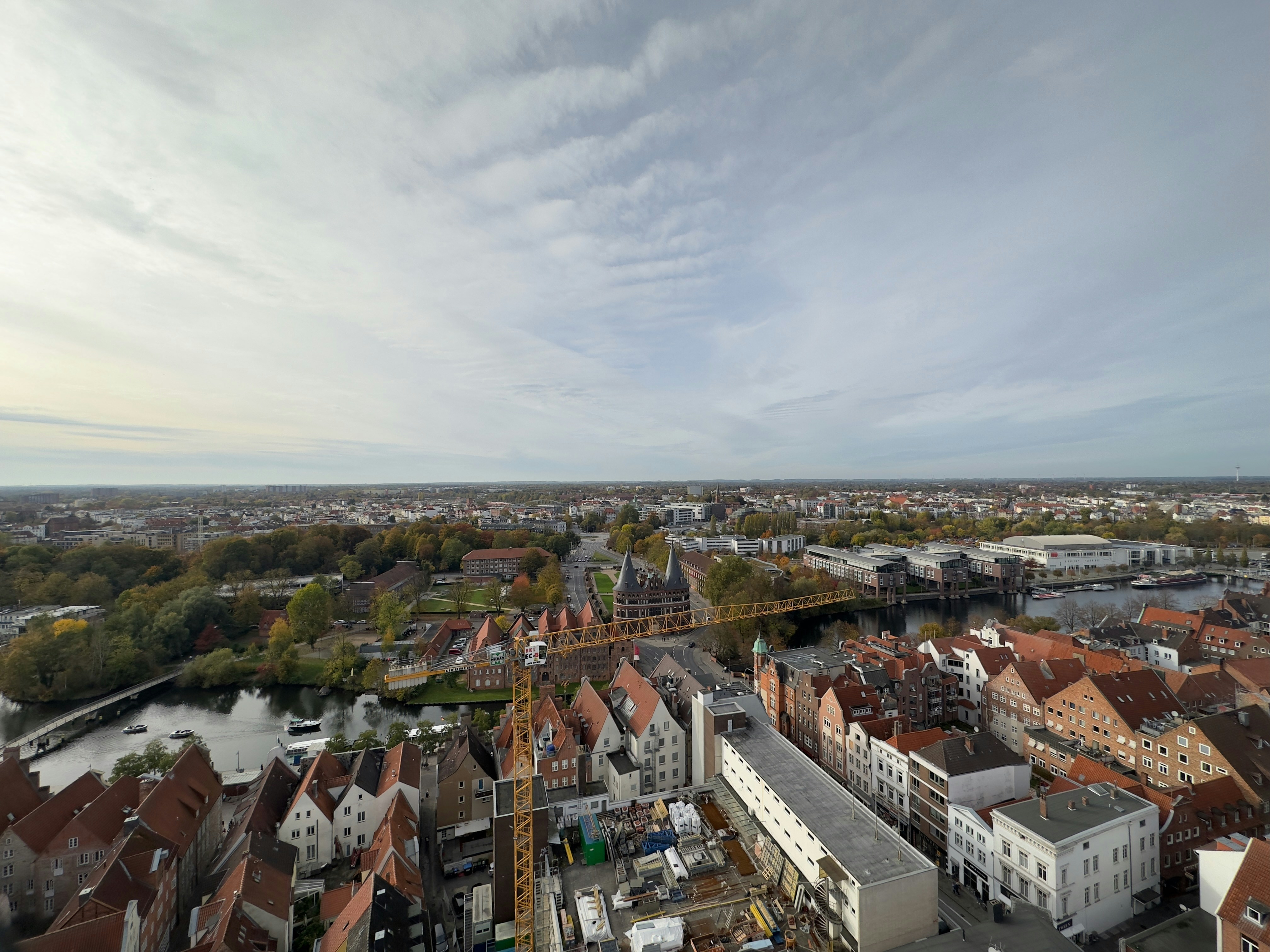
The Holstentor stands as a formidable gateway, its twin towers commanding attention at the city's western entrance. Built in 1464, this massive fortification served not merely as defense but as declaration – a statement of power and prosperity carved in red brick. Behind those walls, the wealth of an entire trading network once flowed, transforming this Baltic port into something extraordinary.
Throughout the 14th and 15th centuries, dominance over northern European trade was exercised from these very streets. Ships bearing grain, timber, furs, and that most precious commodity – salt – were dispatched to distant ports. Contracts worth fortunes were signed in counting houses. Alliances were forged that would reshape the economic map of an entire continent.
The Rathaus, with its distinctive black glazed bricks and Gothic arcades, reflects the confidence of those prosperous times. Construction began in 1230, though additions and modifications continued for centuries. Each generation of merchants and councilors left their mark, creating an architectural palimpsest that speaks to the city's enduring significance.
Things to do in Lubeck
Brick Gothic Majesty
The Marienkirche soars above the Altstadt, its vaulted ceilings reaching nearly 40 meters toward heaven. This masterpiece of Brick Gothic architecture served as inspiration for countless churches throughout the Baltic region. The building technique – necessitated by the absence of local stone quarries – was transformed from limitation into artistic triumph.
Inside, light filters through stained glass, casting colored shadows across whitewashed walls. The astronomical clock, installed in 1472, continues to mark time with medieval precision. Most poignant, perhaps, are the bells that crashed to the floor during World War II bombing raids. They've been left where they fell, a memorial to destruction and endurance alike.
Next door, the Rathaus and Marienkirche together frame the Marktplatz, where daily life has unfolded for eight centuries. Markets were held here since medieval times, farmers and fishermen selling their wares beneath the shadow of church and state. That tradition continues today, though now alongside cafes serving lattes and tourists consulting smartphones.
Sweet Legacy
The aroma proves irresistible – almonds, sugar, and rosewater combining into something that transcends simple confection. Marzipan has been produced here since the 15th century, when enterprising merchants began crafting the almond paste that would become synonymous with the city itself.
At Niederegger, founded in 1806, the tradition reaches its apotheosis. Windows display marzipan sculptures of astonishing intricacy – miniature portraits, architectural models, entire scenes crafted from the malleable sweet. Inside, the cafe serves cakes and tortes that elevate marzipan from mere candy to high art.
The recipe remains closely guarded, though the basic principle proves simple enough: almonds ground fine, mixed with sugar and rosewater, then shaped, molded, and often covered in dark chocolate. What makes local production special lies not in secret ingredients but in centuries of accumulated expertise, passed from master to apprentice in an unbroken chain.
Merchants' Monuments
Along the Trave River, the Salzspeicher – salt warehouses – line up like soldiers at attention. Six of these brick buildings remain, relics of the trade that built fortunes. Salt from Lüneburg was stored here before being shipped throughout Scandinavia, preserving fish and meat in an age before refrigeration.
The patrician houses along Königstraße and Breite Straße reveal how that wealth was spent. Behind modest street facades, courtyards open onto unexpected spaces. Gardens were cultivated where today visitors discover cafes and boutiques. The wealthy merchant families who occupied these properties understood the value of privacy, of beauty concealed from casual observation.
At the Buddenbrookhaus, the 18th-century merchant's house where Thomas Mann's grandparents lived, literature and history intertwine. The author's novel "Buddenbrooks" – chronicling the decline of a merchant family across four generations – was set in these very streets, drawing from family memory and local tradition. The building now serves as museum, celebrating Mann's life and work while preserving the atmosphere of mercantile prosperity that inspired his greatest work.
Passages Through Time
The city reveals itself slowly, rewarding those who wander without fixed destination. Hidden passageways – the Gänge and Höfe – thread between main streets, creating a second network of paths. These narrow lanes once provided access to the homes of craftsmen and workers, small dwellings tucked into spaces between grander properties.
The Füchtingshof, built in 1639 as housing for widows, exemplifies this architectural tradition. A small courtyard surrounded by modest apartments, entered through an archway easily missed by those hurrying past. Inside, tranquility reigns, a pocket of calm preserved through centuries of surrounding change.
At the Heiligen-Geist-Hospital, established in 1286, medieval charity takes tangible form. The long ward, with its wooden cubicles where elderly residents once lived, remains remarkably intact. The chapel frescoes, though faded, still convey the religious devotion that motivated such institutions. Today, the complex houses shops and galleries, adaptive reuse that honors rather than erases history.
Tastes of the North
In traditional restaurants throughout the Altstadt, menus celebrate maritime heritage and northern German tradition. Labskaus – that peculiar sailor's hash of corned beef, potatoes, and beetroot, topped with fried egg and pickled herring – divides opinion but commands respect. This was sustenance for men working Baltic trade routes, fuel for bodies strained by physical labor.
Fish features prominently, as might be expected. Herring prepared in countless variations, smoked eel, fresh-caught plaice. The Trave and nearby Baltic provide abundance, a tradition of fishing that predates even the Hanseatic glory days.
Local breweries produce their own interpretations of northern German beer styles. Dräger, founded in 1852, maintains traditional methods while adapting to contemporary tastes. A pilsner enjoyed at a riverside beer garden as evening light gilds the brick facades captures something essential about the place – the marriage of tradition and present moment.
Beyond the Walls
Travelers occasionally venture beyond the historic core to Travemünde, the seaside resort district where the Trave meets the Baltic. Wide beaches stretch along the coast, backed by grand hotels and casino. The Passat, a four-masted steel barque built in 1911, sits permanently moored at the harbor, open for exploration. The ship's towering masts and web of rigging speak to an age when sail still competed with steam.
Back within the city proper, quiet neighborhoods reveal a different character. Residential streets lined with brick townhouses, small parks where locals walk dogs and children play. This everyday life – unglamorous but authentic – exists alongside the tourist attractions, reminder that this remains a living city rather than open-air museum.
The Günter Grass-Haus celebrates another literary figure with local connections. The Nobel laureate spent his final years here, and the museum explores his work as writer and visual artist. His controversial legacy – literary brilliance shadowed by revelations about wartime service – mirrors the complicated German relationship with the past, the ongoing process of confronting difficult history.
Cultural Continuity
Throughout the year, festivals and events animate the historic streets. The Christmas market, set against the illuminated facade of the Rathaus, draws visitors from across northern Europe. Wooden stalls sell crafts, ornaments, and seasonal treats. Glühwein – mulled wine – gets consumed in quantities that speak to its warming properties and the northern winter's bite.
The Music and Congress Hall hosts performances spanning classical to contemporary. The Philharmonic Orchestra maintains high artistic standards, while the Theater Figuren Museum celebrates the puppetry traditions of multiple cultures. This cultural programming ensures the city remains vital, offering residents and visitors alike reasons to return.
Music fills the churches too, particularly the Marienkirche and Dom. The organ tradition runs deep, with instruments of extraordinary quality and concerts showcasing their capabilities. Sitting in those vast spaces as Bach or Buxtehude resonates through the vaulted ceilings connects directly to centuries of musical tradition.
As twilight settles over the seven spires – five churches plus the twin towers of the Holstentor – and lights begin to glow in windows of half-timbered houses, the accumulated weight of history feels almost tangible. This quality proves difficult to articulate but impossible to miss. Every stone, every brick, every weathered timber contains within it the stories of those who came before.
The merchants who built this prosperity, the craftsmen who executed their visions in brick and wood, the families who inhabited these houses across generations – their presence lingers. Walking these streets after dark, when tourist crowds thin and locals reclaim their city, that connection to the past strengthens. History becomes not abstraction but lived reality, the foundation upon which present experience builds.
For those seeking to understand northern Germany's unique character – practical yet artistic, commercial yet cultured, Protestant yet beautiful – this Baltic port offers invaluable insight. The legacy of the Hanseatic League shaped not just architecture and urban planning but attitudes and values that persist today. And for travelers continuing their German explorations, nearby Hamburg offers another fascinating perspective on maritime heritage and mercantile tradition, where port culture evolved in different yet complementary directions.


 Home
Home Wishlist