
The Soul of Southern Italy: A Journey Through Layers of Time
Where Fire and History Collide
Mount Vesuvius looms over the bay with quiet menace, a reminder that beauty and danger have always walked hand in hand in this corner of Campania. The volcano's catastrophic eruption in 79 AD was witnessed by Pliny the Younger, whose detailed accounts have been preserved through the ages. Today, the archaeological sites of Pompeii and Herculaneum get visited by millions each year, offering an unparalleled window into Roman daily life, frozen in time by volcanic ash.
The relationship between the city and its volcano has been defined by equal parts reverence and defiance. Buildings have been erected, torn down by earthquakes, and rebuilt countless times. Yet the population has never wavered in its determination to call this particular patch of earth home. The fertile volcanic soil has yielded abundant harvests for millennia, while the bay has provided sustenance and trade routes connecting the Mediterranean world.
Things to do in Naples
Layers Upon Layers
Beneath the modern streets, history gets stacked like geological strata. Greek colonists arrived in the 8th century BC, establishing Neapolis – the "new city." Their legacy can still be traced in the grid pattern of the ancient center, particularly along Spaccanapoli, the arrow-straight street that bisects the historic quarter. Roman amphitheaters lie hidden beneath apartment buildings, their curves occasionally revealed in the unusual shape of a piazza or the arc of a building facade.
The centuries have been marked by successive waves of conquest and influence. Norman fortifications have been transformed into royal palaces. Spanish baroque churches stand adjacent to medieval towers. Each ruling power left its architectural signature, creating a visual cacophony that somehow achieves harmony. Walking through the centro storico feels like flipping through a three-dimensional history book, where each page has been written over but never completely erased.
The Underground World
Forty meters below street level, an entirely different city exists. The Napoli Sotterranea – the underground passages carved from soft tufa stone – have been expanded and repurposed over two millennia. Originally quarried by the Greeks for building materials, these caverns later served as Roman aqueducts, medieval escape routes, and World War II bomb shelters. Thousands of residents took refuge in these subterranean chambers during the Allied bombing campaigns, creating temporary communities complete with living spaces, hospitals, and even theaters.
Today, guided tours lead visitors through a fraction of this underground network. The air hangs cool and damp, and the walls bear the marks of ancient tools. Cisterns once used to collect rainwater now stand empty, their vaulted ceilings supported by pillars carved directly from the bedrock. This hidden dimension adds yet another layer to a city already overflowing with complexity.
The Art of Living
Life gets lived publicly here, spilling out from cramped apartments onto streets that function as communal living rooms. Laundry flutters from balconies like colorful flags marking territory. Grandmothers lean from windows, offering commentary on the scene below. Children play football in squares where marble statues of long-dead kings look on impassively.
The local dialect, Napoletano, gets spoken with passionate intensity, hands gesturing wildly to emphasize points that might otherwise be missed. This isn't simply Italian with an accent – it's a language unto itself, shaped by Greek, Latin, French, Spanish, and Arabic influences. To hear it spoken rapidly between market vendors haggling over prices brings an almost musical quality to commerce.
Culinary Traditions
The pizza margherita was invented here in 1889, created by chef Raffaele Esposito to honor Queen Margherita of Savoy. The colors of the Italian flag – red tomato, white mozzarella, green basil – have been replicated millions of times since, but something about the pizzas made here transcends mere ingredients. Perhaps it's the local water used in the dough, or the specific variety of tomatoes grown in volcanic soil, or the wood-fired ovens maintained for generations. Most likely, it's the accumulated knowledge passed from pizzaiolo to apprentice, refined over more than a century.
But pizza represents just the beginning. Sfogliatella pastries get crafted with dozens of paper-thin layers, their ricotta filling delicately perfumed with orange blossom water. Fresh seafood gets transformed into dishes like spaghetti alle vongole, where the briny sweetness of clams complements perfectly al dente pasta. Coffee culture has been elevated to an art form – espresso gets consumed standing at the bar, quickly but never rushed, a moment of contemplation before plunging back into the day's chaos.
Sacred and Profane
Religion permeates daily existence in ways both profound and casual. The Duomo di San Gennaro houses the dried blood of the city's patron saint, which supposedly liquefies three times each year. Thousands gather to witness this miracle, and the failure of the blood to liquefy gets interpreted as a dire omen. Neighborhood shrines dedicated to various saints get tended carefully, adorned with fresh flowers and illuminated by flickering candles.
Yet this deep religiosity coexists comfortably with a pragmatic approach to life's necessities. The tradition of the "suspended coffee" – where someone pays for an extra espresso to be claimed later by someone less fortunate – reflects a culture that takes care of its own through unofficial channels. Mutual aid networks function beneath the radar of formal institutions, a necessary adaptation developed over centuries of periodic hardship.
The Artistic Legacy
Caravaggio fled here after killing a man in Rome, creating some of his most powerful works while seeking protection. The chiaroscuro technique he perfected – that dramatic interplay of light and shadow – seems almost to have been inspired by the city itself, where brilliance and darkness exist in constant tension. His "Seven Acts of Mercy" hangs in the Pio Monte della Misericordia, a masterpiece that captures both the brutal realities and aspirational ideals of Neapolitan life.
The tradition of presepe – elaborate nativity scenes – gets taken to extraordinary levels here. Entire workshops along Via San Gregorio Armeno dedicate themselves to crafting figures for these scenes, from traditional biblical characters to contemporary politicians and celebrities. The miniature worlds constructed annually grow increasingly detailed and imaginative, blurring the line between religious devotion and artistic expression.
Organized Chaos
The traffic defies conventional logic. Scooters weave between cars, pedestrians dart across streets without regard for crosswalks, and somehow collisions get avoided through an intricate dance of mutual understanding. Traffic lights serve more as suggestions than commandments. Parking spaces get created through sheer determination and impressive spatial reasoning. To the uninitiated, it appears anarchic. To residents, it's simply the most efficient way to navigate a medieval street plan never designed for motorized vehicles.
This apparent disorder masks an underlying order – unwritten rules understood by all participants. The seeming chaos actually represents a highly functional system adapted to specific circumstances. It serves as a metaphor for the city itself, where formal structures often prove less important than informal networks of relationships and reciprocal obligations.
The Bay at Twilight
As evening approaches, the waterfront transforms. The harsh Mediterranean sun softens, casting golden light across the bay. Castel dell'Ovo – the seaside fortress where legend says Virgil placed a magical egg to protect the city – stands silhouetted against the deepening sky. Couples wander along the lungomare, gelato in hand, while fishermen tend their boats in preparation for the night's work.
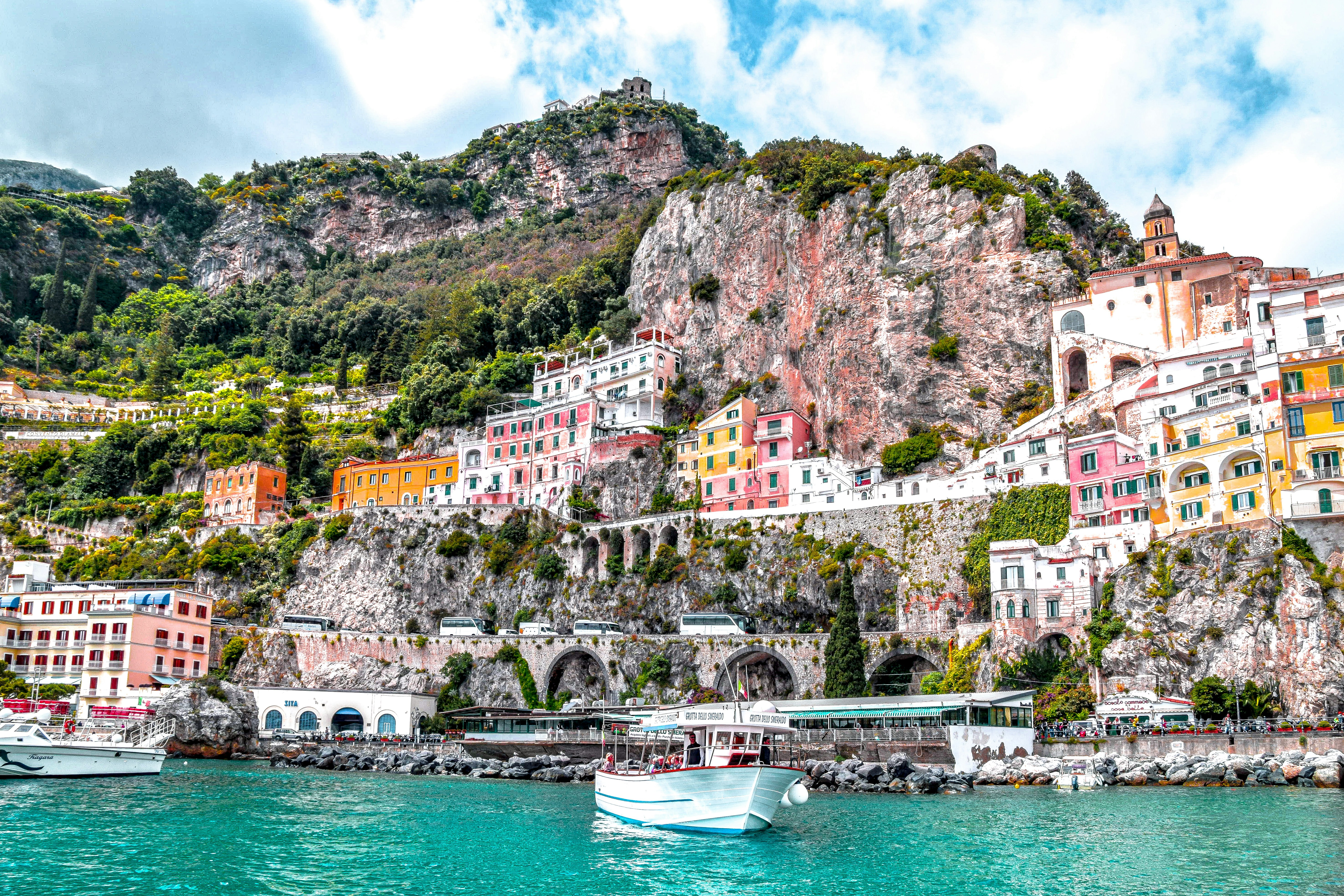
Across the water, the islands of Capri, Ischia, and Procida float like mirages. The coast curves southward toward Sorrento and the Amalfi cliff-villages, their lights beginning to twinkle as dusk settles. In this moment, the city's rough edges soften, and even the most jaded resident might pause to appreciate the extraordinary setting that has shaped life here for nearly three millennia.
Living with Contradiction
The experience here demands acceptance of paradox. Extraordinary beauty coexists with urban decay. Profound poverty exists alongside ostentatious wealth. Ancient traditions persist even as modernity advances. The same street might harbor a family-run trattoria serving recipes unchanged for generations, a contemporary art gallery showcasing cutting-edge installations, and a crumbling palazzo whose frescoed ceilings can be glimpsed through broken windows.
These contradictions don't get resolved – they simply get absorbed into the fabric of daily life. Attempting to apply external logic or expectations often leads to frustration. The city operates according to its own internal rhythm, developed through centuries of adaptation to circumstances both favorable and adverse. Those who try to change it inevitably find themselves changed instead.
Standing in Piazza del Plebiscito as night falls, watching families gather and tourists photograph the illuminated Royal Palace, the essence of this place finally crystallizes. It refuses to be easily categorized or contained. The energy that pulses through these streets comes from thousands of years of human settlement, each generation adding its own layer while the fundamental character remains remarkably consistent. Much like the creative spirit that also gets celebrated in Florence, this southern jewel continues to inspire those willing to embrace its complexity and contradictions.


 Home
Home Wishlist