
Rimini: Where Adriatic Waves Meet Ancient Echoes
Ancient Stones and Imperial Dreams
The Arco d'Augusto stands at what was once the southern gateway to the city, its weathered stones having witnessed nearly two thousand years of human passage. Built in 27 BC, this triumphal arch marked the end of the Via Flaminia, the great road connecting the Adriatic to the capital. Chariots once rolled beneath its span; today, tourists pause to photograph its imposing form while locals hurry past on their daily routines, barely registering what has become part of the urban fabric.
Not far away, the Ponte di Tiberio spans the Marecchia River with five elegant arches. Construction was begun under Augustus and completed by his successor Tiberius in 21 AD. The bridge's remarkable preservation speaks to Roman engineering prowess—it still carries modern traffic, its Istrian stone blocks fitted so precisely that the structure has weathered flood, war, and the simple erosion of time. At dawn, when mist rises from the water and soft light bathes the ancient stones, the centuries seem to collapse.
Things to do in Rimini
Byzantine Splendor Hidden in Plain Sight
The Tempio Malatestiano might be dismissed as just another Italian church by those rushing past its unfinished facade. But within, a different story unfolds. What began as a Gothic Franciscan church was transformed in the 15th century by Sigismondo Pandolfo Malatesta, the city's ambitious ruler, into a monument to humanist ideals and personal glory.
Leon Battista Alberti was commissioned to redesign the exterior, though his vision was never fully realized. Inside, however, the work of Piero della Francesca and Agostino di Duccio turns walls and pillars into a gallery of Renaissance artistry. A fresco depicting Sigismondo kneeling before his patron saint reveals as much about political power as piety. The elephant motif, repeated throughout the decoration, served as the Malatesta family emblem—a reminder that religious spaces have often been claimed for earthly ambitions.
The Fellini Effect
Federico Fellini was born here in 1920, and though his career took him to Rome's Cinecittà studios, his hometown never released its hold on his imagination. Films like "Amarcord" drew heavily on childhood memories—the Adriatic beaches, the provincial characters, the dreamlike quality of small-town life where fantasy and reality blurred.
The Fellini Museum, opened in 2021, occupies three locations across the city center. Cinema Fulgor, restored to its 1920s glory, was where the young Fellini first fell under the spell of moving pictures. Palazzo del Fulgor and Castel Sismondo house exhibitions tracing his creative journey through costumes, set designs, and personal artifacts. Walking through these spaces, one gets the sense that for Fellini, memory itself was the ultimate film set—endlessly rearrangeable, always bathed in a nostalgic glow.
Where the Beach Became an Industry
The transformation into a resort destination began in the 1840s with the opening of the first bathing establishment. By the early 20th century, miles of coastline had been parceled into numbered beaches, each with its own cabanas, restaurants, and character. This systematic approach to seaside leisure was pioneered here and subsequently copied throughout the Mediterranean.
Summer sees the beach transform into a densely populated ribbon of activity. Rows of loungers extend toward the water's edge, each section claimed by its particular stabilimento. Children build sandcastles while grandmothers watch from the shade. Beach volleyball nets spring up in the afternoon. At dusk, the ritual passeggiata moves from the streets to the waterfront promenade, families strolling in their evening best as gelato drips in the warm air.
Critics have sometimes dismissed this as commercialized and overly organized beach culture. Yet there's something democratic about the way these spaces function. Unlike exclusive resort enclaves, the numbered beaches welcome everyone—local families who've claimed the same spot for generations, budget travelers, and yes, even those seeking the package-tour experience in its purest form.
A Table Set with Adriatic Flavors
The cuisine reflects geography—caught between the wheat fields of Emilia-Romagna and the Adriatic's bounty. Piadina, the flatbread that serves as both plate and meal, gets grilled on cast-iron skillets throughout the old town. Filled with squacquerone cheese and prosciutto, or simply folded around fresh arugula, it represents comfort food refined over generations.
Seafood dominates the menus near the harbor. Brodetto, a fish stew that varies from kitchen to kitchen, transforms the day's catch into something approaching poetry. Each restaurant guards its recipe jealously, though the basics remain constant—multiple fish varieties, tomatoes, white wine, and the patience to let flavors meld. Eaten with grilled polenta, it becomes a meal that connects diners to centuries of fishing culture.
At the morning market, vendors arrange their displays with an artist's eye. Tiny Adriatic shrimp, their shells translucent pink, pile beside local squid. Vegetables from nearby farms—tomatoes still warm from the sun, zucchini with flowers attached—speak to the richness of the surrounding countryside. Here, one finds the ingredients that will appear on evening menus throughout the city.
The Rhythm of the Year
Summer brings crowds that swell the population tenfold. Hotels that shuttered for winter reopen their doors. Beach clubs hire seasonal staff. The streets fill with languages from across Europe and beyond. This seasonal pulse has been the economic heartbeat for over a century—a concentrated burst of activity that must sustain the quieter months.
Come October, a different city emerges. The beach clubs close down, their colorful umbrellas stored away. Locals reclaim their town, and a more authentic rhythm reasserts itself. Restaurants shift menus from tourist-friendly to regional classics. The morning market continues, but now it serves residents rather than visitors seeking culinary souvenirs.
This annual cycle creates a dual identity. The summer version exists for visitors—vibrant, energetic, outward-facing. The winter city turns inward, quieter but no less alive. Both versions hold truth, and understanding this place requires experiencing both seasons, or at least acknowledging that what you see depends entirely on when you arrive.
Beyond the Postcard
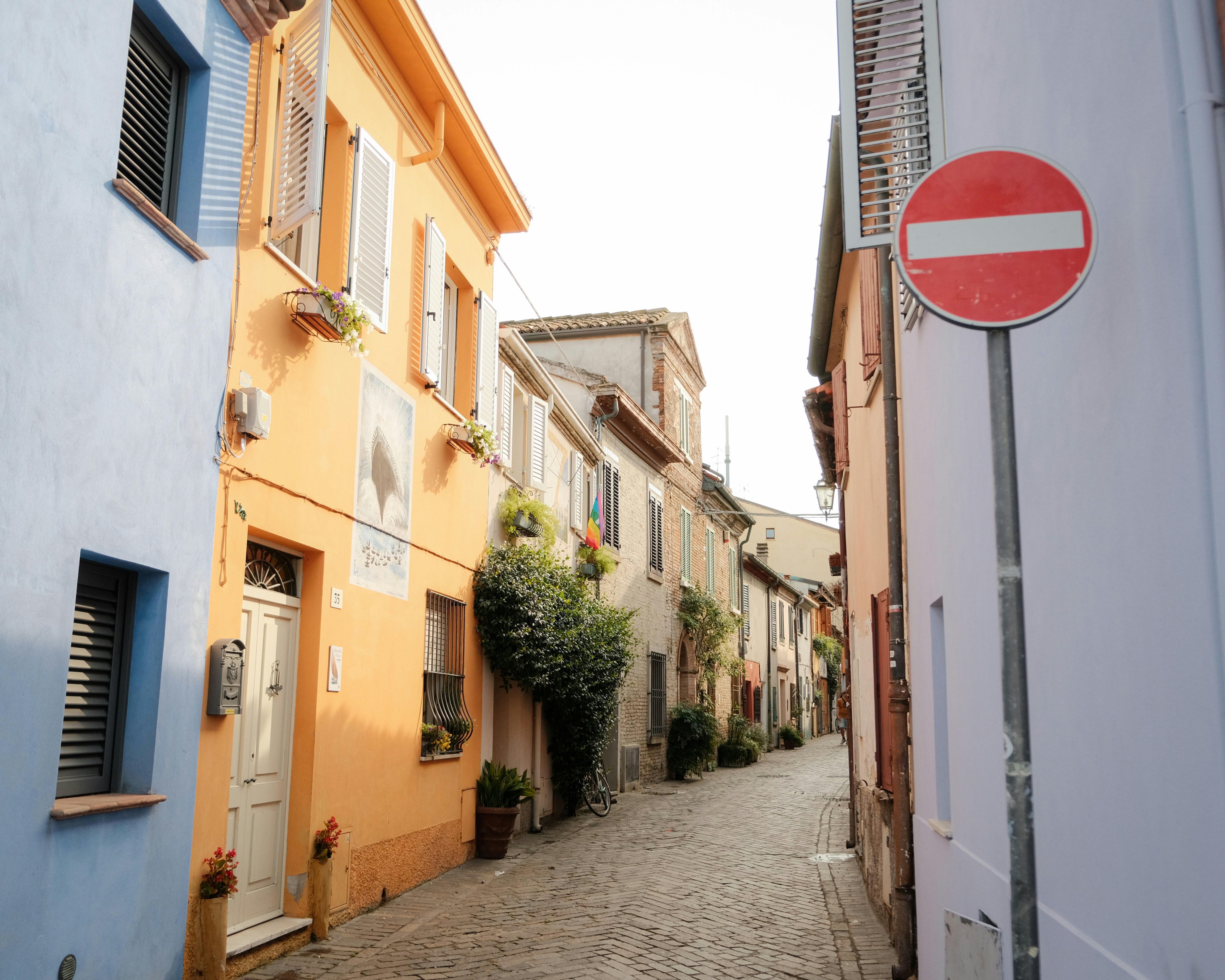
Borgo San Giuliano, the fishing quarter across the Tiberio bridge, offers a different perspective. Narrow lanes wind between houses painted in soft pastels. Murals celebrating Fellini's films decorate walls. Small trattorias serve locals who've lived in these streets for generations. This neighborhood feels removed from the resort bustle, though it lies just minutes from the beach.
The covered market in the historic center operates year-round, its vendors offering more than just ingredients. Conversations happen here—about weather, politics, whose grandson just graduated, which restaurant has gone downhill. It's where the city talks to itself, away from tourist ears. Even a brief visit reveals social networks that have nothing to do with summer visitors.
Evening finds different crowds in different quarters. The Marina Centro, closest to the beach, caters to tourists with international menus and familiar rhythms. The old town's piazzas host aperitivo crowds, young professionals mixing with students from the local university. Each zone has its own character, its own soundtrack, its own sense of belonging.
Traveling the Adriatic coast reveals other historic coastal cities, though perhaps few blend ancient heritage with resort culture quite so thoroughly. Further south, destinations like Brindisi offer their own unique character where history meets the sea.


 Home
Home Wishlist