
Rostock: Where Baltic Winds Meet Hanseatic Heritage
A Legacy Built in Brick
The old town reveals its medieval soul through magnificent brick architecture that has defined northern European cities for centuries. St. Mary's Church, completed in the 13th century, dominates the skyline with its twin towers, their copper-green spires visible from miles around. Inside, an astronomical clock from 1472 still tracks the movements of celestial bodies, each figure carved and painted with exquisite care by craftsmen whose names have been lost to time.
Walking through the Neuer Markt, the central square pulsing with daily life, the eye gets drawn to the ornate Town Hall facade. This administrative heart has been rebuilt multiple times, yet its fundamental character – that distinctive North German brick Gothic style – remains unchanged. The arcaded ground floor once sheltered merchants conducting business, their ledgers recording transactions that connected this Baltic port to London, Bergen, and Novgorod.
The city walls, though fragmentary now, speak of strategic importance and constant vigilance. Four original gates survive, with the Kröpeliner Tor being perhaps the most impressive. Its massive form once controlled access to the western approach, and today marks the beginning of the pedestrian shopping street that bears its name.
Things to do in Rostock
Echoes of the Hanseatic League
Maritime commerce shaped every aspect of life here for centuries. The Hanseatic League – that powerful confederation of merchant guilds and trading cities – transformed this settlement into one of Northern Europe's most prosperous ports. Wealth flowed through the harbor from the 13th century onward, funding the construction of churches, merchant houses, and fortifications that still define the urban landscape.
Salt from Lüneburg, herring from Scania, furs from Russia – these commodities passed through local warehouses, enriching merchants and craftsmen alike. The painted gabled houses in the old town, though many rebuilt after World War II, maintain the proud bearing of structures erected by families grown wealthy on international trade.
This mercantile heritage gets preserved and celebrated in the city's museums. The Cultural History Museum, housed in a former monastery, displays artifacts that illuminate daily life across the centuries. Ship models, trade goods, religious art – each object tells part of the larger story of a community built on exchange and connection.
The University Tradition
Intellectual life has flourished here since 1419, when the university was founded – making it among the oldest in Northern Europe. Through centuries of political upheaval, this institution has remained a constant, shaping the character of the city and attracting students from across the region and beyond.
The university district pulses with youthful energy that contrasts with the medieval solemnity of the old town. Libraries, lecture halls, and student housing have been woven into the urban fabric, creating neighborhoods where coffee shops fill with animated discussions and bicycles lean against every available wall.
Albert Einstein taught here briefly in the 1920s. His tenure was short, but the connection between serious scholarship and this Baltic port runs deep. Research conducted here, particularly in maritime sciences, oceanography, and engineering, contributes significantly to Germany's scientific output.
Where River Meets Sea
The Warnow River curves through the city, its waters reflecting clouds and sunlight as they flow toward the Baltic. Along its banks, the shipbuilding tradition that sustained families for generations continues, though transformed by modern technology and changing economic realities. The harbor area, once purely industrial, has been partially reimagined as a space for leisure and culture.
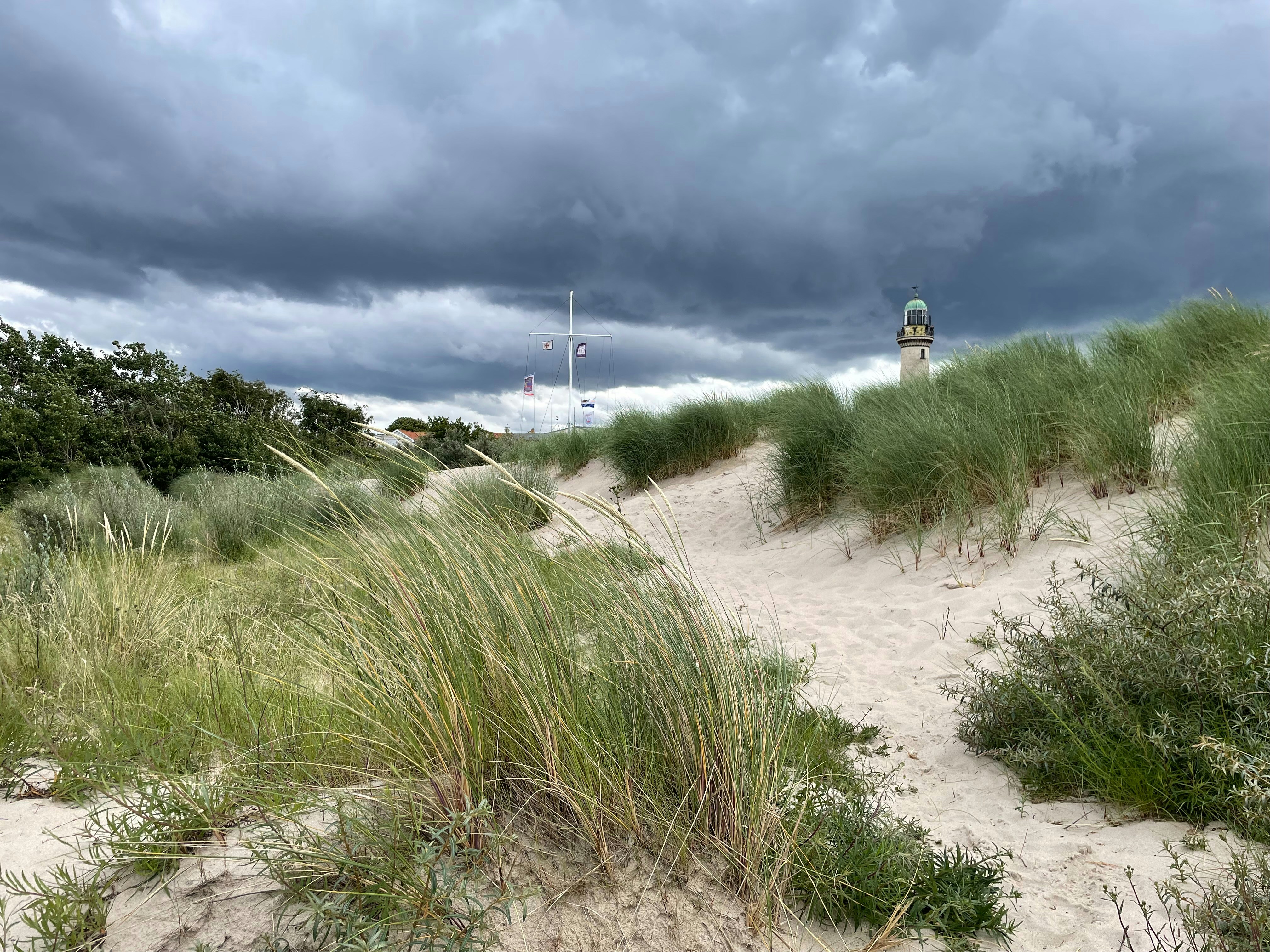
Warnemünde, the seaside district where river becomes sea, draws visitors year-round. Its wide sandy beach stretches for miles, punctuated by the distinctive Teepott building – a piece of GDR-era architecture whose swooping roofline has become an unlikely icon. The old lighthouse still operates, its beacon sweeping across dark waters on winter nights when Baltic storms lash the coast.
Summer brings a different atmosphere entirely. Beach chairs dot the sand, their wicker backs providing shelter from the wind. Families build sandcastles while sailboats tack back and forth across the bay. The promenade fills with people savoring ice cream, fish sandwiches purchased from harbor-side stands, or simply breathing deeply of air that tastes of salt and possibility.
Seasons of Transformation
Baltic weather shapes daily life in profound ways. Long summer evenings, when darkness arrives late and reluctantly, get savored at outdoor tables and waterfront benches. The sun's reflection on water seems to extend each day beyond its natural length, creating a dreamy quality where time feels suspended.
Autumn arrives with dramatic skies – clouds racing across vast expanses of blue and grey, their shadows moving across cobblestones and church spires. The beech forests surrounding the city turn golden, inviting long walks through rustling leaves while the temperature drops and the first hints of winter make themselves known.
Winter here demands resilience. When east winds blow across the Baltic, temperatures plummet and streets become channels for icy gusts that make even short walks feel like expeditions. Yet this harshness brings its own beauty – frost crystals on windows, the dramatic contrast of brick buildings against snow, the warmth of cafes and restaurants that becomes all the more precious.
Spring, when it finally arrives, feels earned. Cherry blossoms in the city parks, longer days, the return of outdoor markets – each sign of renewal gets celebrated with genuine appreciation by people who have endured months of grey skies and early darkness.
A Living Maritime Culture
The relationship with the sea remains fundamental to local identity. The annual Hanse Sail festival transforms the harbor into a gathering place for traditional sailing vessels from across Northern Europe. Tall ships with their rigging and canvas sails evoke an earlier era of maritime commerce and adventure, while smaller boats of every description crowd the waters, their crews celebrating traditions that span generations.
Fish still figures prominently in local cuisine. Smoked eel, herring prepared in countless ways, salmon, and plaice – these appear on menus throughout the city, often prepared using recipes passed down through families of fishermen and restaurant owners. A fish sandwich purchased at the harbor, eaten while watching gulls circle overhead and ferries come and go, offers a direct connection to centuries of maritime culture.
The fishing fleet, though much reduced from its peak, continues to operate. Early morning at the harbor means watching boats return with their catches, the air thick with brine and diesel fumes, the shouts of crew members echoing across water as nets get hauled in and sorted.
Rebuilding and Renewal
The scars of World War II required decades to heal. Much of the historic center was destroyed in bombing raids, with entire neighborhoods reduced to rubble. The painstaking work of reconstruction, conducted first during the GDR era and continuing after reunification, has restored much of the old town's visual character, though debates continue about authenticity versus practical necessity.
The socialist period left its own architectural legacy – panel housing blocks on the outskirts, the distinctive Teepott building, various public structures built in the austere style favored by the regime. These structures, once dismissed as eyesores, have been increasingly recognized as part of the city's complex history, worthy of preservation and appreciation in their own right.
Since reunification, significant investment has flowed into infrastructure, education, and cultural facilities. The university has expanded, research institutes have been established, and the harbor has been modernized to handle contemporary shipping needs while preserving historical character where possible.
Daily Rhythms
Life here follows patterns shaped by geography and tradition. Mornings begin early, with bakeries opening before dawn and the first trams rattling through streets while most windows remain dark. Coffee gets consumed in quantity – strong, hot, often accompanied by a pastry or sandwich eaten quickly before work or classes begin.
The Kröpeliner Straße, the main pedestrian thoroughfare, fills midday with shoppers, students between lectures, and tourists consulting maps and guidebooks. Street musicians stake out favorite spots, their melodies competing with conversations and the general hum of urban activity.
Evenings bring their own rituals. Restaurants fill with diners savoring local specialties and international cuisine. Theater performances, concerts, and university events draw crowds. In summer, the IGA Park – a sprawling green space created for a 2003 horticultural exhibition – becomes a gathering place for joggers, families, and anyone seeking respite from urban density.
Beyond the City Center
The surrounding Mecklenburg countryside offers a different perspective – one of quiet villages, vast fields, and forest tracks that wind through ancient beech stands. Day trips reveal a region shaped by agriculture and small-scale rural life, where tradition remains powerful and change arrives slowly.
The Baltic coast stretches in both directions, offering numerous beaches, clifftop walks, and seaside villages that swell with visitors during summer months and return to sleepy tranquility once autumn arrives. Each community maintains its own character, its own relationship with the sea that sustains and threatens in equal measure.
The journey between major urban centers in northern Germany reveals connections forged by centuries of trade and cultural exchange, and those seeking to explore this region further might consider a visit to Lubeck, another magnificent Hanseatic city where brick Gothic architecture tells stories of medieval prosperity and maritime ambition.


 Home
Home Wishlist