
Stuttgart: Where Engineering Excellence Meets Vineyard Culture
The Cradle of Automotive Innovation
Few cities can claim the automotive heritage that has been established here over more than a century. In 1886, the first automobile was patented by Carl Benz, but it was in this valley where the industry truly came of age. The names Porsche and Mercedes-Benz have become synonymous with engineering excellence, and their headquarters remain firmly rooted in the city's industrial landscape.
At the Mercedes-Benz Museum, automotive history gets unfolded through nine levels of sleek, futuristic architecture. Over 160 vehicles have been displayed, spanning from the earliest motorized carriages to concept cars that hint at tomorrow's roads. The building itself—a striking silver double-helix structure—was designed to reflect the innovation contained within its walls.
Not far away, the Porsche Museum offers a different perspective on automotive passion. Here, the focus shifts to sports cars that have defined racing culture and everyday driving pleasure for generations. The gleaming collection includes everything from the iconic 356 to cutting-edge hybrid technology, demonstrating how tradition and innovation have been woven together.
Things to do in Stuttgart
Unexpected Green Spaces
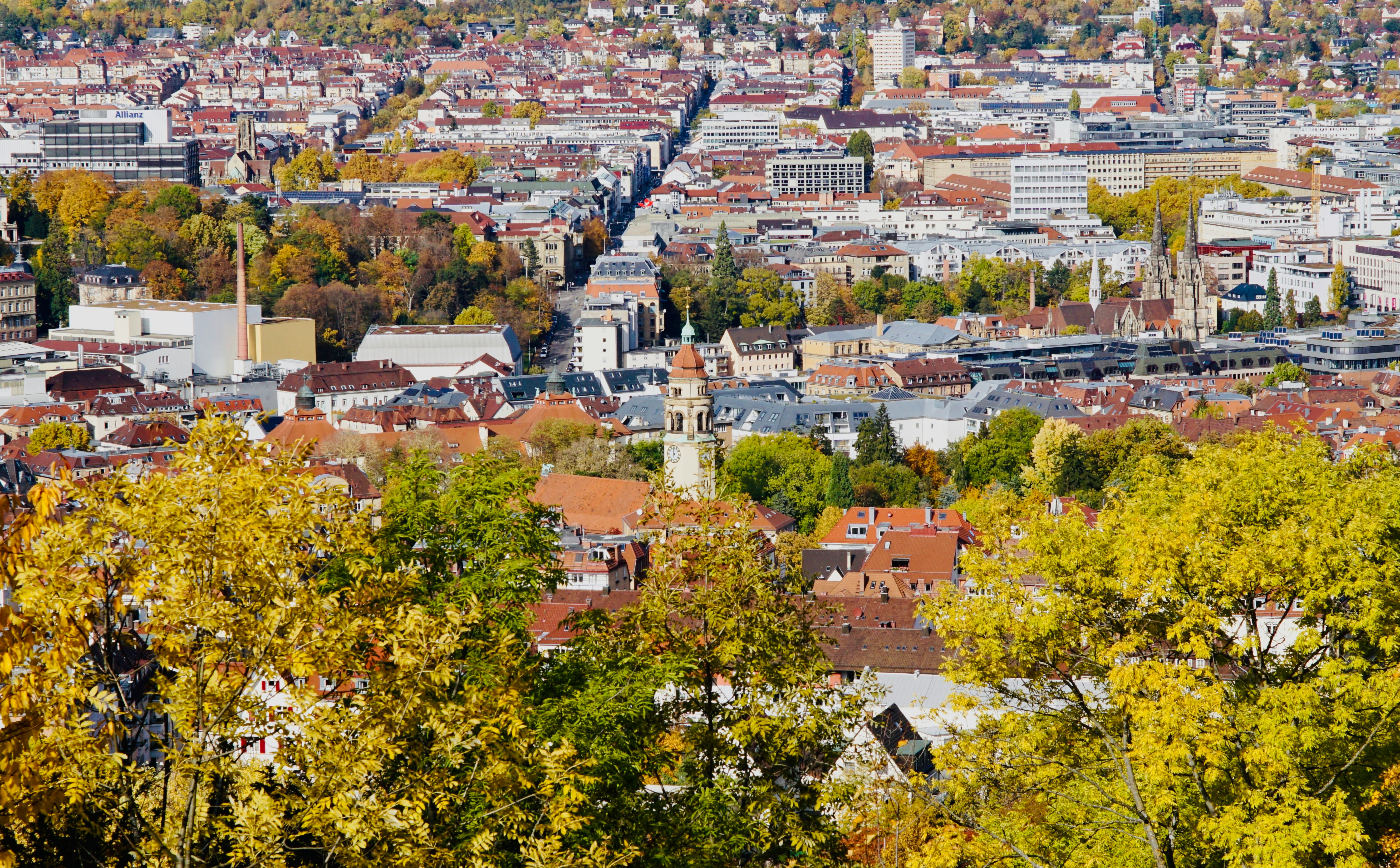
What surprises many visitors first encountering this metropolis becomes apparent quickly: despite its industrial reputation, remarkable amounts of greenery have been preserved. The Schlossgarten, a ribbon of parkland stretching through the city center, offers unexpected tranquility. Locals can be seen jogging along tree-lined paths, families spread picnic blankets on expansive lawns, and the sound of traffic gets muted by dense foliage.
More remarkable still, vineyards climb the surrounding hillsides right into the urban core. Few major cities worldwide can claim such extensive wine cultivation within their boundaries. Over 400 hectares of vines have been planted on these slopes, producing predominantly red wines that hold their own against more famous German wine regions.
The Killesberg Park, created for a 1939 horticultural exhibition, showcases landscape design at its finest. Terraced gardens cascade down the hillside, a miniature railway delights children and nostalgic adults alike, and the distinctive Killesberg Tower—a delicate lattice structure—provides panoramic views across the valley.
Cultural Treasures Beyond Cars
While automotive museums draw crowds, the city's cultural offerings extend far beyond engine blocks and racing heritage. The Staatsgalerie, one of Germany's most significant art museums, houses an impressive collection spanning seven centuries. Works by Rembrandt, Monet, and Picasso hang alongside contemporary pieces, while the museum's postmodern extension—designed by British architect James Stirling—has become an architectural landmark in its own right.
For those drawn to performing arts, the Staatstheater complex ranks among Europe's largest three-division theaters. Opera, ballet, and drama get performed here at the highest level, continuing traditions established centuries ago when this was a ducal residence.
The city's library, opened in 2011, presents a stark contrast to historical institutions. This cube of pale concrete, designed by Korean architect Eun Young Yi, features a minimalist exterior that gives way to a breathtaking interior atrium. Natural light floods through the central void, illuminating reading galleries stacked like gift boxes. The library has become both a functional space and a pilgrimage site for architecture enthusiasts.
A Wine Culture Unlike Any Other
The relationship between this city and wine cannot be overstated. Where else do commuters pass vineyards on their way to work? Where else do wine festivals get celebrated with such genuine enthusiasm in an urban center known primarily for engineering?
The Weindorf, an annual wine festival held in late August, transforms the central Marktplatz and Schillerplatz into a temporary wine village. Traditional half-timbered huts get erected, local vintners pour their latest vintages, and the atmosphere becomes decidedly un-metropolitan. For eleven days, business suits mix with traditional costumes, and conversations flow as freely as the Trollinger and Lemberger wines.
Throughout the year, the Besen—temporary wine taverns operated by local vintners—offer authentic experiences that cannot be replicated in formal restaurants. These rustic establishments, marked by a broom hung outside, serve simple regional dishes alongside wines produced mere meters away. The tradition, centuries old, remains vibrantly alive.
Architectural Contrasts
Walking through the city center reveals architectural layers that tell the story of triumph, destruction, and reinvention. The Old Castle (Altes Schloss), with its Renaissance courtyard, survived World War II bombardment and now houses the Württemberg State Museum. Across the plaza, the New Castle (Neues Schloss)—a Baroque palace completed in 1807—presents an imposing facade that once served as royal residence.
Much of the historic center was destroyed during the war, and post-war reconstruction followed the modernist principles then in fashion. The result—a mix of historical fragments and 1950s pragmatism—may lack the picture-perfect charm of cities that escaped bombing, but tells an honest story about resilience and adaptation.
More recently, ambitious urban development projects have reshaped entire districts. The controversial Stuttgart 21 railway project, though plagued by delays and protests, promises to transform the central station area and free up land for new quarters. The Europaviertel already demonstrates what might be achieved: contemporary architecture, mixed-use development, and public spaces designed for modern urban life.
A Taste of Swabian Tradition
Regional cuisine here reflects the Swabian character: hearty, unpretentious, and deeply satisfying. Maultaschen—large pasta pockets filled with meat, spinach, and herbs—get served in broth or pan-fried with eggs. Legend suggests these were invented by monks trying to hide meat from God during Lent, earning them the nickname "Herrgottsbscheißerle" (little God-cheaters).
Spätzle, the quintessential Swabian egg noodles, accompany nearly everything, from rich stews to simple cheese preparations. The texture—somewhere between pasta and dumpling—gets achieved through a technique that requires skill and practice.
For dessert, Zwiebelkuchen (onion tart) might seem an odd choice, but this savory-sweet creation, traditionally paired with new wine in autumn, perfectly captures the region's agricultural roots. In cozy restaurants throughout the old town, these dishes continue to be prepared much as they were generations ago, a culinary anchor in a rapidly changing world.
The Rhythm of the Valley
Life in this valley follows rhythms dictated by both industry and nature. Morning rush hours see commuters flowing toward headquarters of global corporations and countless engineering firms. The automotive sector alone employs tens of thousands, its influence extending far beyond factory gates into universities, research institutes, and supplier networks.
Yet when weekend arrives, the city transforms. The Markthalle, a beautifully restored Art Nouveau market hall, fills with locals shopping for fresh produce, artisanal cheeses, and exotic spices. The nearby Bohnenviertelviertel—once the quarter where beans were grown—now hosts galleries, boutiques, and cafes in its narrow lanes.
The surrounding hills beckon hikers and cyclists who can reach forests and vineyards within minutes of the city center. The Württemberg Mausoleum, perched high above the valley, rewards the climb with sweeping views and a touching love story—King Wilhelm I built this domed chapel for his deceased wife Katharina.
As evening settles over the valley, lights begin twinkling on the hillsides where vineyards give way to residential neighborhoods. The Mercedes star atop the company headquarters glows against the darkening sky—a symbol visible for kilometers, announcing this city's identity to anyone approaching. Down in the streets, restaurant terraces fill with diners savoring Swabian specialties and local wines, while in theaters and concert halls, culture gets consumed with equal appetite.
What becomes clear after time spent here: this valley city refuses simple categorization. Engineering precision coexists with wine-making tradition. Industrial might shares space with unexpected green beauty. Swabian frugality balances against quiet prosperity. These contradictions don't conflict—they complement, creating a place whose character runs deeper than first impressions suggest.
For those seeking Germany beyond the usual tourist circuits, this valley offers rewards that unfold gradually. Every hillside vineyard, every perfectly engineered vehicle, every glass of local wine tells part of a larger story about a region that has mastered the difficult art of honoring tradition while driving relentlessly forward. Similar experiences await in cities across Germany, whether exploring the cultural richness of Dresden or discovering other urban centers where history and modernity continue their eternal dance.


 Home
Home Wishlist