
Turin: Where Elegance Meets Innovation
The Royal Legacy
Few Italian cities can claim such an illustrious royal past. For centuries, the Savoy dynasty made this Piedmontese capital their seat of power, and their influence can be felt throughout the urban fabric. The Palazzo Reale, once inhabited by the House of Savoy, now welcomes visitors through its opulent rooms where frescoed ceilings hover above precious tapestries and gilded furniture.
Beyond the palace walls, the Residences of the Royal House of Savoy have been recognized by UNESCO as World Heritage Sites. These magnificent structures weren't confined to the city center alone – sprawling hunting lodges and summer residences were scattered across the surrounding countryside, each more lavish than the last. The Reggia di Venaria Reale, just outside the urban core, stands as one of Europe's largest royal residences, its gardens and halls testament to an era when power was measured in marble and gold leaf.
Things to do in Turin
Arcaded Streets and Hidden Courtyards
What strikes many visitors first about this Piedmontese capital might be noticed overhead rather than at eye level. Over 18 kilometers of arcaded sidewalks have been constructed throughout the historic center, creating covered walkways that protect pedestrians from both summer sun and winter snow. These porticoes weren't merely practical additions – they were designed with careful attention to proportion and style, their vaulted ceilings supported by elegant columns.
Behind the uniform facades of these arcaded streets, unexpected treasures can be discovered. Interior courtyards, hidden from casual passersby, offer quiet respites where fountains trickle and climbing vines soften ancient stone walls. These secret spaces, once reserved for aristocratic families, now serve as reminders that beauty in this city often reveals itself to those willing to venture beyond the obvious.
The Automotive Soul
While royal heritage shaped the city's architectural identity, industrial innovation forged its modern character. The transformation from aristocratic capital to industrial powerhouse began in the early twentieth century when automobile manufacturing took root here. FIAT – Fabbrica Italiana Automobili Torino – was founded in 1899, and over the following decades, the company's growth would fundamentally alter the urban landscape.
The Lingotto factory, built in the 1920s, became an icon of industrial architecture. Its rooftop test track, spiraling ramps, and revolutionary assembly line methods were celebrated across Europe. Though automobile production ceased there decades ago, the building has been brilliantly reimagined. A shopping center, concert hall, and hotel now occupy the space where cars once rolled off production lines, while the rooftop track has been preserved as a walkable monument to industrial heritage.
At the Museo Nazionale dell'Automobile, this automotive legacy has been carefully chronicled. Rare vehicles, design sketches, and interactive exhibits trace the evolution of Italian car manufacturing from its earliest days to contemporary electric innovations. The collection represents not just mechanical achievement but also the artistry that has long been associated with Italian automotive design.
A Museum City
Beyond automobiles, cultural treasures have been assembled in remarkable collections throughout the urban landscape. The Museo Egizio houses one of the world's most important Egyptian collections outside Cairo. Mummies, papyri, and artifacts spanning millennia can be examined in galleries designed to evoke both wonder and scholarly curiosity. The museum's collection was begun in the eighteenth century by the House of Savoy, and subsequent acquisitions have only enhanced its significance.
Contemporary art finds its home at the Castello di Rivoli, where a baroque palace has been transformed into a cutting-edge exhibition space. Here, works by Italian and international artists challenge conventional perspectives, their modern sensibilities creating fascinating dialogues with the historic architecture that contains them.
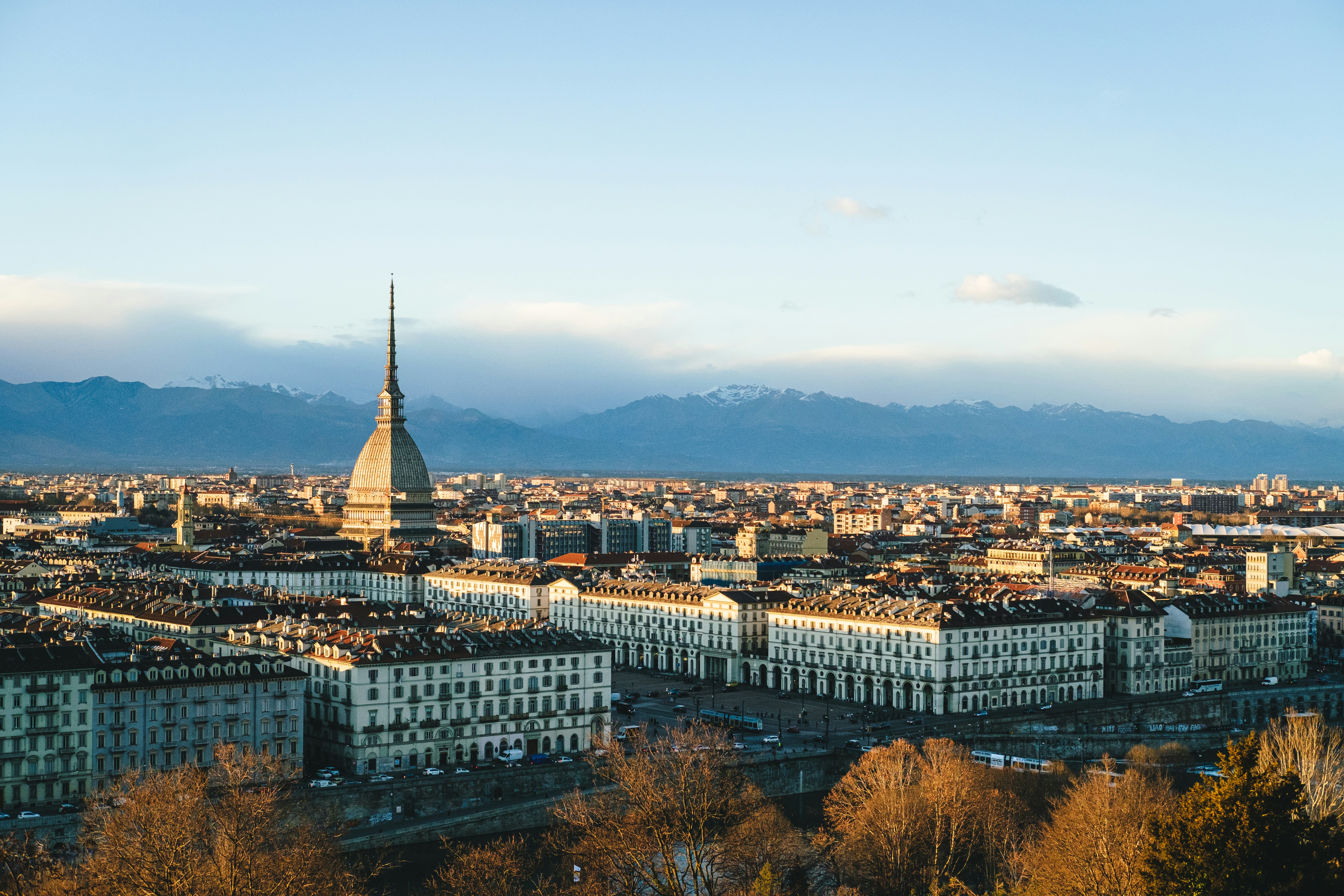
The Mole Antonelliana, perhaps the city's most recognizable landmark, dominates the skyline with its distinctive dome and soaring spire. Originally conceived as a synagogue, the building now houses the National Cinema Museum. Inside, film history has been presented through immersive installations that wind their way up through the building's vertiginous interior, culminating in panoramic views from the observation deck.
Coffee and Chocolate Traditions
In the historic cafés that line elegant boulevards, traditions have been maintained with almost religious devotion. These establishments weren't merely places to drink coffee – they served as intellectual salons where writers, politicians, and artists gathered to debate, dream, and conspire. The Caffè San Carlo and Caffè Torino, both dating to the nineteenth century, still welcome patrons beneath crystal chandeliers and ornate mirrors.
The city's relationship with chocolate runs equally deep. When cocoa first arrived in Europe, it was embraced here with particular enthusiasm. Innovations like gianduiotto – a creamy blend of chocolate and hazelnut – were perfected by local chocolatiers. Even today, historic chocolate shops maintain their craft, their windows displaying artistic creations that blur the line between confection and sculpture.
Green Spaces and River Views
Despite its urban density, breathing room has been generously provided throughout the city. The Parco del Valentino stretches along the Po River, its tree-lined paths offering escape from the bustle of city streets. Within the park, the Castello del Valentino presents a fairytale silhouette, while the Borgo Medievale – a faithful nineteenth-century reconstruction of a medieval village – transports visitors to an earlier era.
The Po River itself flows through the urban landscape like a liquid timeline, connecting the city to both its past and the surrounding countryside. Along its banks, locals jog, cycle, and gather for impromptu picnics, while the pre-Alpine peaks provide a dramatic backdrop that shifts in color and mood throughout the day.
Contemporary Reinvention
As the automobile industry evolved and globalized, this Piedmontese capital faced the challenge of reinventing itself once again. Former factory districts have been reimagined as creative spaces where startups, design studios, and tech companies now thrive. The city's polytechnic university attracts students from across Italy and beyond, infusing neighborhoods with youthful energy and fostering innovation.
Sustainable urban planning has been embraced with characteristic thoughtfulness. Bike-sharing programs, expanded pedestrian zones, and green building initiatives have been implemented to create a more livable urban environment. Old industrial sites have been transformed into parks and cultural centers, proving that industrial heritage and environmental consciousness can coexist.
Culinary Heritage
Piedmontese cuisine, with its emphasis on simple ingredients elevated through careful preparation, has been celebrated in trattorias and restaurants throughout the city. Agnolotti pasta, vitello tonnato, and bagna cauda represent just a fraction of the regional repertoire. Local wines from nearby Barolo and Barbaresco accompany meals that can stretch for hours, each course savored in the Italian tradition.
At the Porta Palazzo market, one of Europe's largest open-air markets, the full bounty of Piedmont can be experienced. Vendors call out prices, haggle with regular customers, and offer tastes of seasonal produce. The market pulses with life every morning except Sunday, a tradition that has endured for centuries and shows no sign of fading.
The sophistication found in this alpine-framed city offers a compelling alternative to Italy's more tourist-saturated destinations, much like the refined elegance discovered when exploring Verona's romantic streets and ancient Roman monuments.


 Home
Home Wishlist