
Ulm: Where Ambition Reaches the Sky
The Cathedral That Touched Heaven
The skyline gets dominated by a single, unmistakable silhouette. The Ulm Minster, with its 161.5-meter spire, was completed in 1890 after more than five centuries of construction. This Gothic masterpiece remains the tallest church tower in the world, a title earned through the determination of medieval burghers who refused to build anything ordinary.
From street level, the sheer scale of the structure becomes overwhelming. Every surface has been carved with intricate detail—saints, prophets, and fantastical creatures peer down from their stone perches. The main portal alone took decades to complete, each figure carefully chiseled by hands long since turned to dust.
Inside, light filters through stained glass windows, casting pools of color across the stone floor. The vaulted ceiling soars overhead, designed to lift the eyes—and the spirit—toward something greater. For those willing to climb the 768 steps to the viewing platform, a panorama of the surrounding landscape gets unveiled: the Danube winding through the valley, the distant Alps visible on clear days, and the patchwork of red-tiled roofs spreading out below.
Things to do in Ulm
The City of Thinkers
While the Minster represents the city's medieval heart, another claim to fame rests on more recent history. Albert Einstein was born here in 1879, in a modest house on Bahnhofstrasse that no longer stands. Though his family moved away when he was still an infant, the city has embraced its connection to the physicist whose theories revolutionized our understanding of the universe.
A fountain in the Zeughaus courtyard depicts Einstein as a playful figure, tongue out in his famous pose, while the Einstein Memorial nearby offers a quieter tribute. The legacy of curiosity and intellectual rigor that Einstein embodied can still be felt in the city's approach to education and innovation.
The University, established more recently in 1967, has built a reputation for excellence in engineering and natural sciences. Students from across Germany and beyond come here, drawn by strong programs and a quality of life that balances academic rigor with the pleasures of a manageable urban environment.
Between River and History
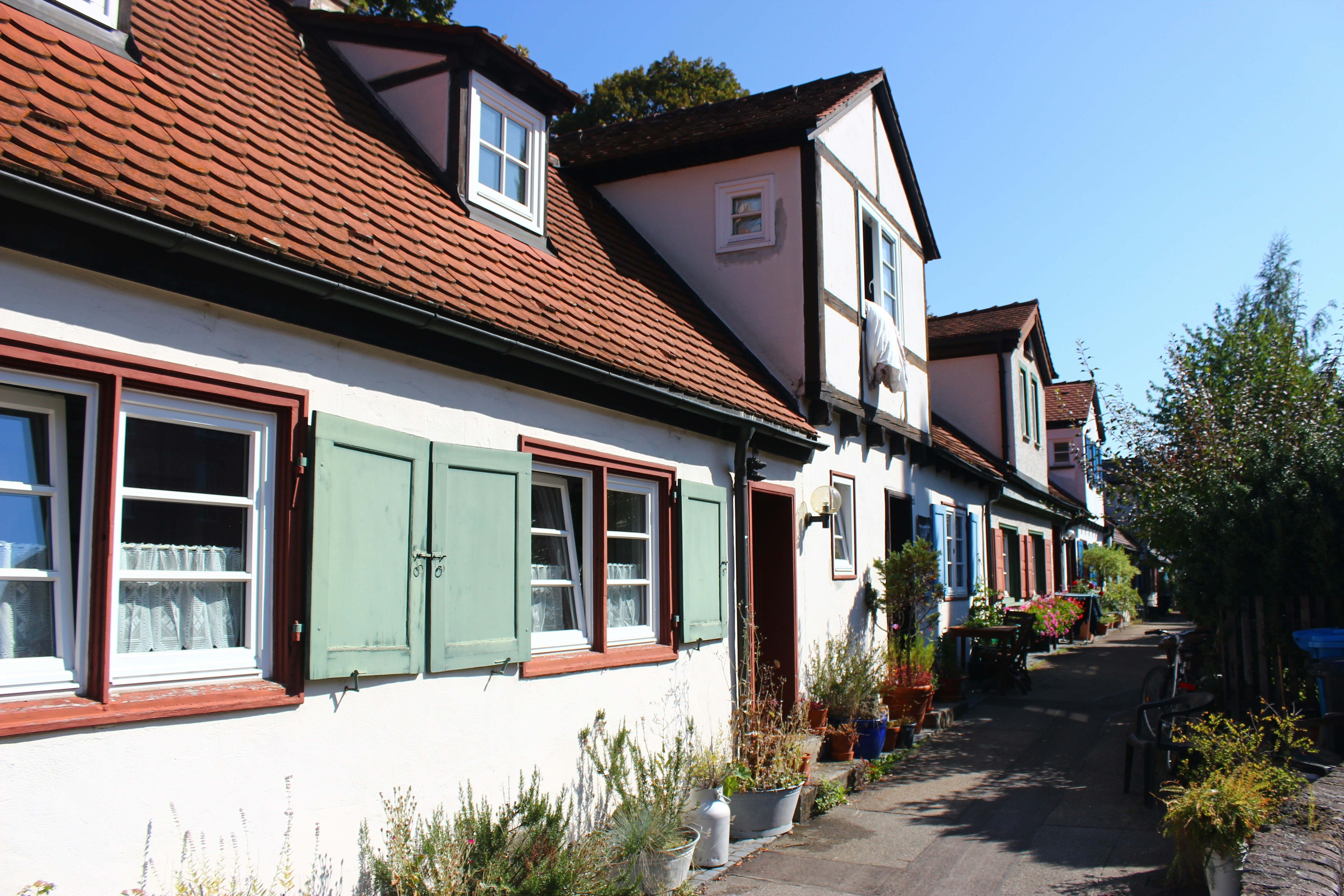
The Danube has always been more than just a geographic feature. For centuries, it served as a vital trade route, connecting the city to markets across Europe. The Fischerviertel, or Fishermen's Quarter, preserves the memory of those early days when merchants and craftsmen built their homes along crooked lanes near the water.
Half-timbered houses lean at improbable angles, their beams darkened with age. The Schiefes Haus, recognized by Guinness as the world's most tilted hotel, has been transformed from a liability into an attraction. Walking these narrow streets feels like stepping back in time, though the restaurants and boutiques tucked into ground floors serve decidedly contemporary tastes.
The old city walls, once essential for defense, have been partially preserved and integrated into the urban fabric. The Metzgerturm, or Butchers' Tower, leans even more dramatically than the famous tower in Pisa, its tilt a quirk of soft ground rather than design. These imperfections have been embraced rather than corrected, adding character to a cityscape that values authenticity.
Rebuilding and Renewal
The devastation of World War II left much of the historic center in ruins. What had taken centuries to build was destroyed in a matter of hours during bombing raids. The post-war period brought difficult decisions about reconstruction—whether to rebuild exactly as before or to embrace modernity.
The answer came in a blend of both approaches. Some historic buildings were painstakingly restored, while others gave way to functional modernist structures that made no attempt to disguise their era. The result can feel jarring at times, but also honest. The city wears its history openly, scars and all.
The Stadthaus, designed by American architect Richard Meier and completed in 1993, represents a bold statement of contemporary design. Its white, geometric form stands in stark contrast to the Gothic cathedral nearby, yet somehow the two coexist without diminishing each other. The building houses the municipal information center and serves as a venue for exhibitions and cultural events.
Flavors of Swabia
The culinary traditions of the Swabian region get celebrated in kitchens throughout the city. Spätzle, those irregular egg noodles that form the basis of countless dishes, appear on nearly every menu. Whether served simply with cheese as Käsespätzle or accompanying a rich goulash, they provide comfort in their familiar texture.
Maultaschen, often called Swabian ravioli, have their own local legend. These oversized pasta pockets filled with meat, spinach, and herbs were supposedly invented by monks seeking to hide meat from God during Lent—a culinary deception that has been perfected over generations.
Local bakeries display rows of Ulmer Brot, a traditional mixed-grain bread with a distinctive oblong shape. The recipe has been passed down for centuries, and the bread remains a staple at breakfast tables across the region. Paired with local butter and honey, it speaks to the simple pleasures that have sustained communities through changing times.
The Rhythm of Markets and Festivals
The Münsterplatz comes alive several times a week with market stalls offering fresh produce, flowers, cheeses, and baked goods. Vendors call out their prices, shoppers squeeze fruit to test for ripeness, and the air fills with the mingled scents of bread, coffee, and seasonal vegetables. These markets maintain a tradition that stretches back to the Middle Ages, when similar scenes unfolded in the same square.
During December, the Christmas market transforms the city center into something magical. Wooden stalls sell handcrafted ornaments, roasted nuts, and mulled wine. The smell of cinnamon and cloves drifts through the cold air, while carolers perform beneath twinkling lights. The cathedral provides a dramatic backdrop, its illuminated spire visible from every corner of the market.
The Schwörmontag, celebrated each July, represents the city's most important civic holiday. The mayor stands on the balcony of the Schwörhaus and reads the traditional oath, reaffirming the commitment to good governance. Afterward, a festival breaks out along the Danube, with music, food, and the famous Nabada—a flotilla of decorated rafts that parade down the river, their crews dressed in outrageous costumes and often getting thoroughly soaked.
Modern Ambitions
The city's economy has evolved from its medieval base in textiles and trade to embrace high-tech industries. Companies specializing in automotive engineering, medical technology, and telecommunications have established operations here, drawn by the skilled workforce and strategic location.
The Science Park provides space for startups and research institutions, fostering the kind of innovation that Einstein might have appreciated. This forward-looking stance gets balanced by a respect for craftsmanship and quality that feels distinctly German—a belief that things should be built to last.
Green Spaces and Quiet Corners
Despite its compact urban core, the city offers numerous parks and gardens where residents escape the bustle. The Friedrichsau, a large park along the Danube, provides walking paths, playgrounds, and the small Tiergarten zoo. Families gather here on weekends, spreading blankets for picnics or renting boats to paddle along the quiet waterways.
The Botanical Garden attached to the University offers a different kind of retreat. Carefully labeled plants from around the world fill the greenhouses and outdoor beds, creating a living library of botanical diversity. Students sketch specimens, researchers collect samples, and visitors simply wander, enjoying the ordered beauty of cultivated nature.
Connections and Journeys
The central train station serves as a gateway to wider explorations. Regular connections link the city to major urban centers throughout southern Germany and beyond. Within an hour, travelers can reach Stuttgart, where another world of culture and industry awaits discovery.
Yet many visitors find themselves reluctant to leave too quickly. There's something about the human scale of the streets, the genuine warmth of local interactions, and the sense of a place comfortable with itself that encourages lingering. Perhaps it comes from centuries of self-governance, or from the Protestant work ethic that values substance over flash. Whatever the source, it creates an atmosphere where ambition gets tempered by contentment, and where reaching for the sky doesn't mean losing touch with the ground.


 Home
Home Wishlist