
Valencia: Where Mediterranean Warmth Meets Architectural Daring
The Legacy of the Silk Trade
In the heart of the old quarter, the Lonja de la Seda – the Silk Exchange – commands attention with its Gothic elegance. Completed in 1548, this UNESCO World Heritage site was constructed during a period when the city ranked among Europe's most prosperous trading hubs. Inside the Sala de Contratación, slender spiral columns rise toward a vaulted ceiling, creating a forest of stone that once witnessed the exchange of fortunes in silk and spices.
The building's intricate carvings and gargoyles tell stories of medieval commerce, yet the space has been preserved with such care that the energy of those long-ago transactions can still be felt. Walking across the worn marble floors, one can imagine merchants haggling in multiple languages, their voices echoing off the ancient walls.
Things to do in Valencia
A Cathedral of Many Faces
Not far from the Lonja, the Cathedral stands as a testament to the city's layered history. Built over nearly five centuries, the structure displays a fascinating mix of architectural styles – Romanesque, Gothic, Renaissance, and Baroque elements have been woven together into a single magnificent whole. The octagonal Gothic tower, known as El Miguelete, has watched over the city since 1429, its bells marking the passage of time for generations.
Inside, a small chapel houses what has been claimed by tradition as the Holy Grail. Whether one believes in its authenticity or not, the chalice has been venerated here since 1437, drawing pilgrims and curious visitors in equal measure. The cathedral's museum holds works by Goya and other masters, their paintings illuminated by light filtering through stained glass windows centuries old.
The City of Arts and Sciences
If the old quarter represents the city's past, then the Ciudad de las Artes y las Ciencias embodies its bold vision for the future. Designed by native son Santiago Calatrava and Félix Candela, this sprawling complex of avant-garde buildings has been transformed from what was once a drained riverbed into one of Europe's most striking architectural achievements.
The Hemisfèric, with its eye-shaped design, houses an IMAX cinema and planetarium beneath its moveable lid. The Príncipe Felipe Science Museum rises like a whale's skeleton, its white ribs creating dramatic shadows on sunny days. Perhaps most impressive, the Palau de les Arts Reina Sofía soars 75 meters high, its shell-like form hosting world-class opera and musical performances.
These futuristic structures have been positioned along the old Turia riverbed, now converted into a ribbon of parks and gardens that stretches through the city. This transformation from potential flood hazard to urban oasis represents the kind of innovative thinking that has defined the city's recent renaissance.
The Garden by the Sea
The Turia Gardens themselves deserve exploration. After devastating floods in 1957, the river was diverted, and what could have become a highway was instead transformed into Europe's largest urban park. Today, nine kilometers of green space wind through the heart of the city, connecting neighborhoods and providing residents with playgrounds, sports facilities, and quiet corners for contemplation.
Joggers and cyclists share the paths with families enjoying picnics beneath palm trees. The gardens eventually lead to the waterfront, where broad beaches stretch along the Mediterranean. Here, the famous Malvarrosa beach buzzes with activity during summer months, its chiringuitos serving cold drinks and fresh seafood to sun-seekers from around the world.
A Culinary Revolution
Few cities can claim to be the birthplace of a dish as internationally beloved as paella, yet this honor belongs firmly to this Mediterranean metropolis. In the surrounding Albufera wetlands, rice has been cultivated for over a thousand years, and it was here that the iconic dish was perfected over wood fires by workers in the rice fields.
Traditional paella Valenciana contains rabbit, chicken, and beans – no seafood in sight, contrary to popular belief. The dish must be prepared in a wide, shallow pan over an open flame, the rice achieving that perfect balance between tender grains and crispy socarrat at the bottom. Restaurants throughout the city serve their own variations, but purists insist the best versions can still be found in humble establishments along the Albufera.
Beyond paella, the local cuisine has been elevated by innovative chefs who respect tradition while pushing boundaries. The Central Market – a magnificent Art Nouveau structure – overflows with fresh produce, seafood, and meats that inspire both home cooks and professional chefs. Horchata, the sweet drink made from tiger nuts, has been refreshing locals since medieval times and remains a beloved accompaniment to fartons, the soft pastries dunked into the milky beverage.
When Fire Lights the Sky
For a few explosive days each March, the city undergoes its most dramatic transformation during Las Fallas. This festival, which has been celebrated for centuries, sees enormous satirical sculptures constructed throughout the streets. These ninots, some reaching heights of twenty meters, depict politicians, celebrities, and social issues with biting humor and incredible artistry.
The festival builds toward La Cremà, when nearly all the sculptures are set ablaze in a synchronized inferno. Fireworks explode overhead as flames consume months of artistic labor, the spectacle representing both destruction and renewal. One ninot from each neighborhood is saved by popular vote and preserved in the Fallas Museum, but the rest must burn – tradition demands it.
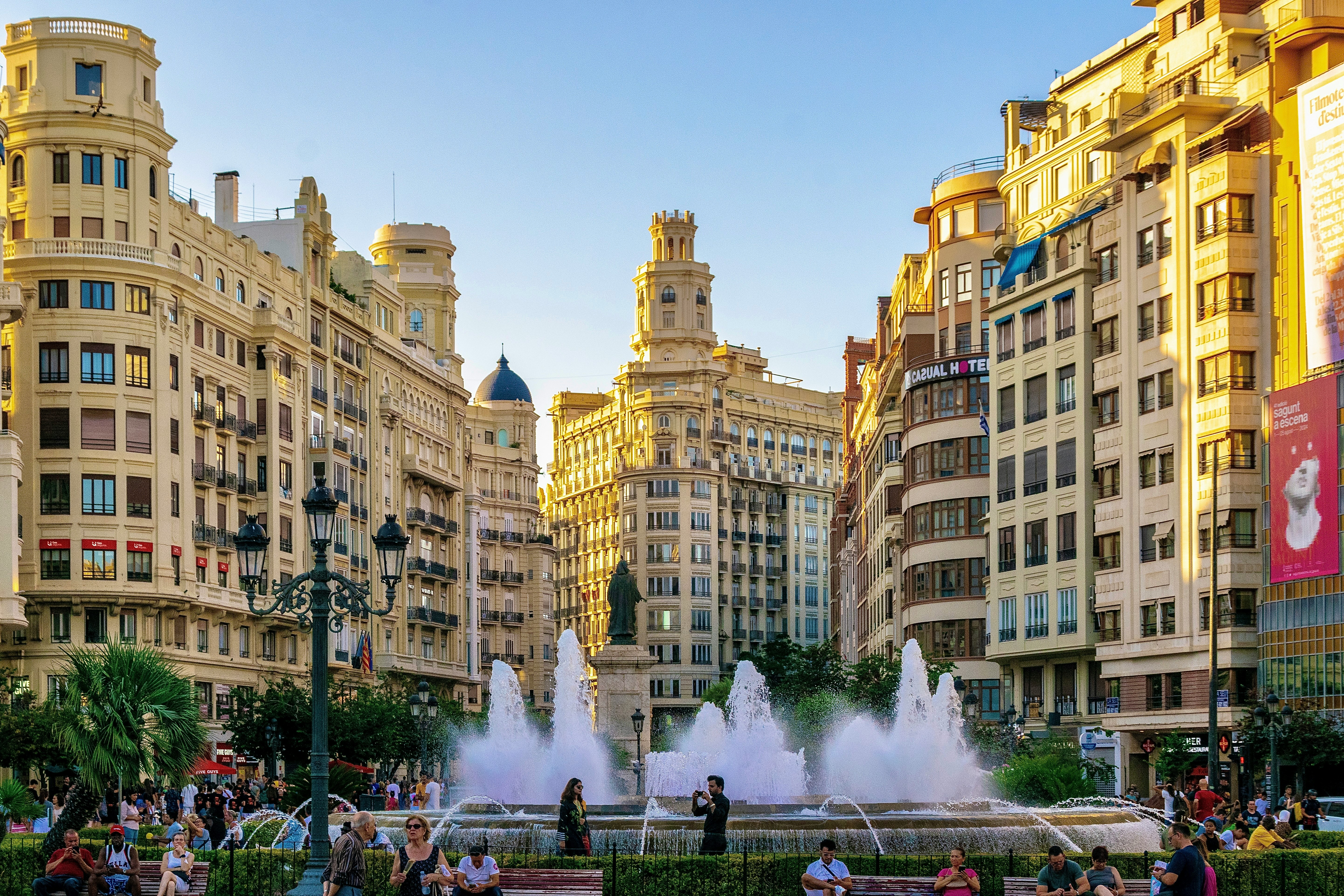
The festival also features the daily Mascletà, a thunderous firework display where rhythm matters as much as visual spectacle. At precisely two o'clock each afternoon, Plaza del Ayuntamiento fills with crowds who come to feel the explosions reverberate through their chests, a visceral experience that must be witnessed to be understood.
Where Old Meets New
In the Barrio del Carmen, medieval walls enclose streets where contemporary street art has been painted onto centuries-old buildings. This neighborhood, once the bohemian heart of the city, maintains its alternative spirit while undergoing gradual gentrification. Tiny bars serving vermouth on tap occupy ground floors of buildings where Roman ruins have been discovered in the basements.
The Torres de Serranos and Torres de Quart, remnants of the medieval city walls, now serve as venues for concerts and exhibitions. These defensive towers, which once protected the city from invaders, have been repurposed to welcome visitors rather than repel them. From their heights, panoramic views reveal how seamlessly old and new coexist in the urban landscape below.
A Living City
What strikes visitors most powerfully might not be any single monument or museum, but rather the palpable sense of a city comfortable with itself. Locals maintain their afternoon siesta tradition even as they embrace technological innovation. Ancient festivals coexist with contemporary art galleries. The Valencian language, once suppressed, has been revived and now appears alongside Spanish on street signs and official documents.
The quality of light here – that particular Mediterranean brightness that has inspired painters for generations – bathes everything in warmth. Evening paseos fill the streets as residents emerge to socialize, their conversations flowing between languages and generations. In sidewalk cafes, discussions range from politics to football to the proper rice-to-water ratio for the perfect paella.
This southeastern Spanish metropolis has managed what many cities struggle to achieve: honoring its rich past while building fearlessly toward the future. Neither a museum frozen in time nor a soulless modern development, it pulses with authentic life. The old silk traders would hardly recognize the skyline dominated by Calatrava's creations, yet they might feel at home in the entrepreneurial spirit that still drives this Mediterranean gem forward. Those seeking similar architectural contrasts might find them explored in Dresden, where reconstruction has created its own dialogue between historical memory and contemporary vision.


 Home
Home Wishlist