
Verona: Where Romance and History Intertwine
Echoes of Empire
The massive oval of the Arena dominates Piazza Bra, its pink-hued limestone walls weathered by nearly two thousand years of sun and rain. Built in 30 AD, this Roman amphitheater once witnessed gladiatorial combat; today, it serves as one of the world's most spectacular opera venues. On summer evenings, the ancient stones reverberate with the voices of tenors and sopranos performing under star-filled skies. Over half a million visitors each season are drawn to productions of Aida, La Traviata, and Carmen within these storied walls.
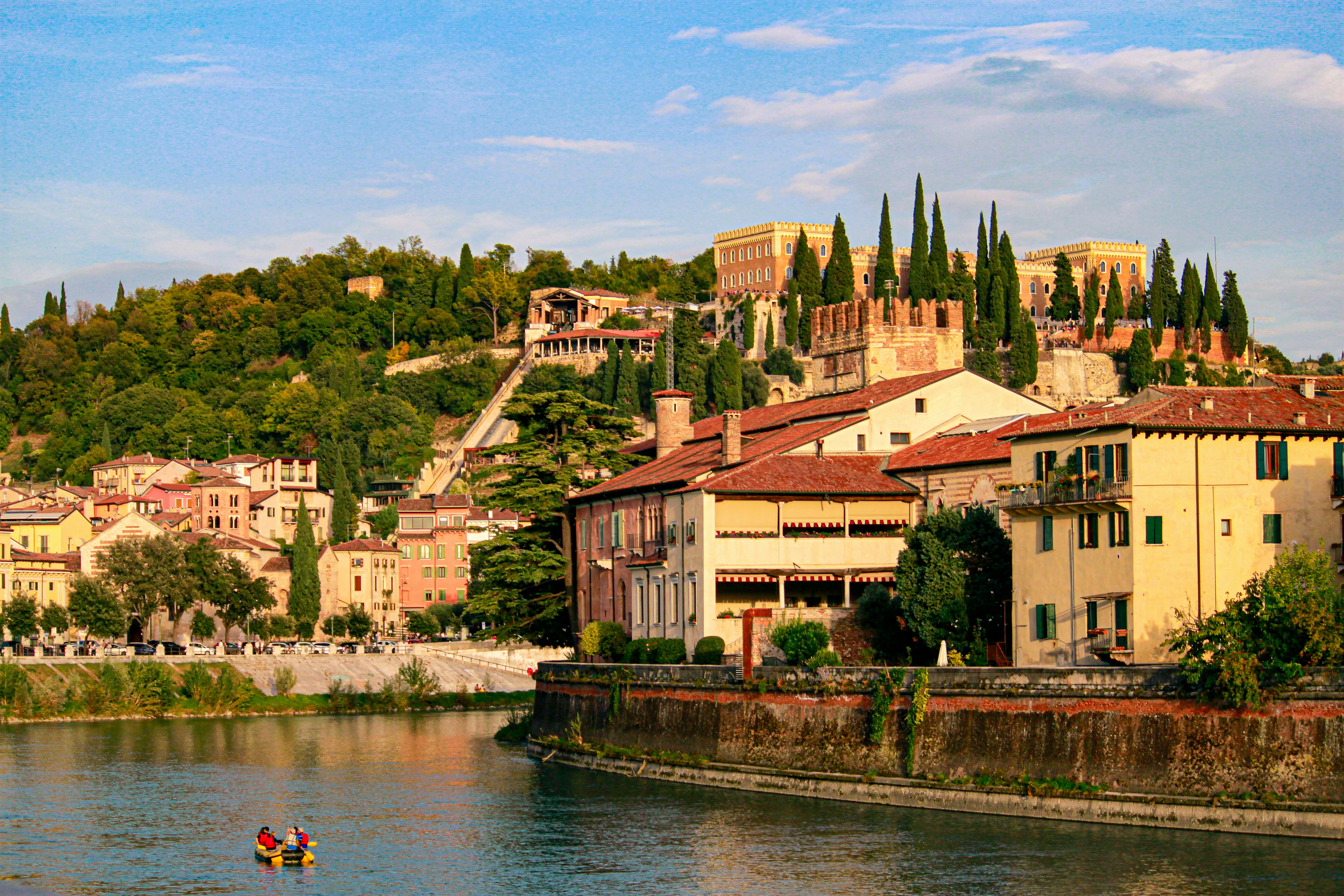
Beyond the Arena, Roman footprints can be traced throughout the historic center. The Porta Borsari, a first-century gate that once marked the city's main entrance, still frames the bustling Via Corso. Nearby, the Teatro Romano clings to a hillside across the river, its semicircular tiers offering views that have changed remarkably little since audiences gathered here two millennia ago. These remnants speak to a time when the settlement served as a crucial crossroads connecting Rome with its northern territories.
Things to do in Verona
Medieval Might and Renaissance Refinement
The transition from Roman colony to medieval commune left its mark in the form of soaring towers and fortified bridges. The Ponte Scaligero, with its distinctive crenellated battlements, was constructed in the 14th century by the della Scala family—the Scaligeri—whose rule transformed the city into a major political and cultural center. Their lavish Gothic tombs, the Arche Scaligere, stand as testament to their power, with intricate stone canopies sheltering the sarcophagi of Cangrande I and his successors.
The Castelvecchio, the Scaligeri fortress-palace, now houses an impressive art collection within its brick walls. Works by Pisanello, Mantegna, and Veronese hang in galleries that were once armories and guard rooms. From the castle's bridge, panoramic views stretch across the river to the ancient theater and the cypress-dotted hillside of San Pietro.
Renaissance splendor was added when the city fell under Venetian control in 1405. Elegant palazzi with frescoed facades line the streets, their architectural details reflecting nearly four centuries of Venetian influence. The Loggia del Consiglio, with its delicate arcade and statues of notable citizens, exemplifies this golden age of artistic patronage.
A Love Story Set in Stone
Via Cappello leads to the courtyard that has become synonymous with romantic pilgrimage. Here, the so-called Casa di Giulietta draws crowds who come to stand beneath a small balcony and imagine Shakespeare's young heroine declaring her love. While the connection between this 13th-century house and the fictional Capulet family remains entirely manufactured—the balcony itself was added in the 1930s—the power of the story endures. Love notes cover the walls, and tradition holds that touching the bronze statue of Juliet brings good fortune in romance.
Shakespeare never visited this Veneto city, yet his tragedy of young love and family feuds has been inexorably linked to these streets since the play's first performance. The so-called Tomba di Giulietta, located in a former monastery, completes the circuit for devoted literary tourists, though historians acknowledge no historical Montagues or Capulets ever walked these medieval lanes.
Wine, Cuisine, and Tradition
The surrounding Valpolicella hills produce some of Italy's most celebrated wines. Amarone, with its rich, complex character, comes from dried grapes following methods perfected over centuries. Valpolicella Ripasso and the sweet Recioto round out the regional offerings, each bottle carrying the essence of limestone-rich soil and careful cultivation. Local enotecas offer tastings where these robust reds can be savored alongside regional specialties.
Traditional dishes reflect both the city's location and its history. Risotto all'Amarone combines local rice with the prized wine. Pastissada de caval, a hearty horse meat stew, traces its origins to the aftermath of a medieval battle. Pearà, a peppery sauce made with bone marrow and breadcrumbs, accompanies boiled meats in a recipe passed down through generations of home cooks.
Pandoro, the golden star-shaped Christmas cake now beloved throughout Italy, was created here in the 19th century. Its buttery, vanilla-scented crumb has been replicated worldwide, but local bakeries still produce versions following closely guarded family recipes.
Daily Rhythms and Hidden Corners
Morning light illuminates Piazza delle Erbe, where market stalls have been set up since Roman times. Vendors call out their offerings—fresh produce from nearby farms, aged cheeses, cured salami—beneath the shade of striped umbrellas. The medieval Torre dei Lamberti rises above the square, its bells marking the hours as they have for eight centuries. Those who climb its 368 steps get rewarded with sweeping vistas across terracotta rooftops.
Less frequented by tourists, Piazza dei Signori exudes quiet elegance. The statue of Dante, who found refuge here during his exile from Florence, presides over café tables where locals linger over espresso. Evening strolls, the passeggiata, bring families and friends out to promenade along Via Mazzini, the pedestrian shopping street connecting the major squares.
The Giardino Giusti, a Renaissance garden climbing the hillside east of the river, offers tranquil respite. Its geometric parterres, ancient cypress trees, and hidden grottoes have been admired by visitors ranging from Goethe to Mozart. From the upper terrace, the entire cityscape spreads below—a tableau of church domes, medieval towers, and the Arena's unmistakable oval.
Faith and Artistry
The Basilica di San Zeno Maggiore stands as a masterpiece of Romanesque architecture. Its bronze doors, cast in the 11th and 12th centuries, depict biblical scenes with surprising expressiveness. Inside, Mantegna's altarpiece triptych demonstrates the Renaissance mastery of perspective. The crypt below houses the remains of San Zeno, the city's patron saint, whose feast day brings elaborate celebrations each May.
The Duomo, with its distinctive Romanesque-Gothic hybrid style, contains Titian's "Assumption of the Virgin" glowing in its chapel. Santa Anastasia, the largest church in the city, displays frescoes by Pisanello and a carved holy water font supported by marble hunchbacks worn smooth by centuries of touch.
Churches throughout the historic center hold artistic treasures often overlooked by casual visitors. Veronese's paintings adorn the walls of San Giorgio in Braida. San Fermo, actually two churches stacked one atop the other, displays a stunning wooden ship's keel ceiling.
Modern Life in Ancient Streets
Contemporary life unfolds amid these layers of history. Students from the university, founded in 1339, fill cafés discussing philosophy and physics. Business professionals hurry past Roman gates on their way to meetings. Fashion boutiques occupy Renaissance palazzi, their display windows illuminated by designer lighting.
The Veronafiere exhibition center hosts major trade shows, including Vinitaly, the world's largest wine fair. Each April, producers and buyers from across the globe converge here, transforming the city into an international hub of wine commerce. These modern functions complement rather than compete with the historical identity that defines the local character.
Summer brings not only opera but also jazz festivals, Shakespeare performances in multiple languages, and outdoor cinema screenings. The Roman theater becomes a magical venue where classical drama meets ancient architecture under balmy evening skies.
As twilight descends over the Adige and the Arena's arches glow honey-gold in the fading light, the city reveals its essential character—a place where every era has left its mark without erasing what came before. Those seeking similar historical richness might find themselves drawn to explore Bologna, where medieval towers and Renaissance porticoes create their own architectural dialogue with the past.


 Home
Home Wishlist