
Zaragoza: Where Ancient Stones Whisper Stories
Echoes of Empire
The Roman colony of Caesaraugusta was founded in 14 BC, and its legacy can still be traced beneath modern streets. Stone walls that once protected citizens from invaders have been uncovered by archaeologists, revealing the sophisticated urban planning that characterized Roman civilization. Underground passages lead visitors through ancient forums and theaters, where the voices of long-dead orators once echoed.
These archaeological treasures weren't discovered by accident. During routine construction work in the 1970s and 80s, workers repeatedly struck ancient foundations, forcing the modern city to reckon with its layered past. Rather than paving over these inconvenient reminders, preservation efforts were undertaken, allowing fragments of Roman life to be experienced firsthand.
The theater, once capable of seating six thousand spectators, has been partially reconstructed. Walking through its corridors, the sophistication of Roman engineering becomes apparent – drainage systems, acoustic design, and structural innovation all speak to a civilization that valued both spectacle and practicality.
Things to do in Zaragoza
Faith Written in Stone
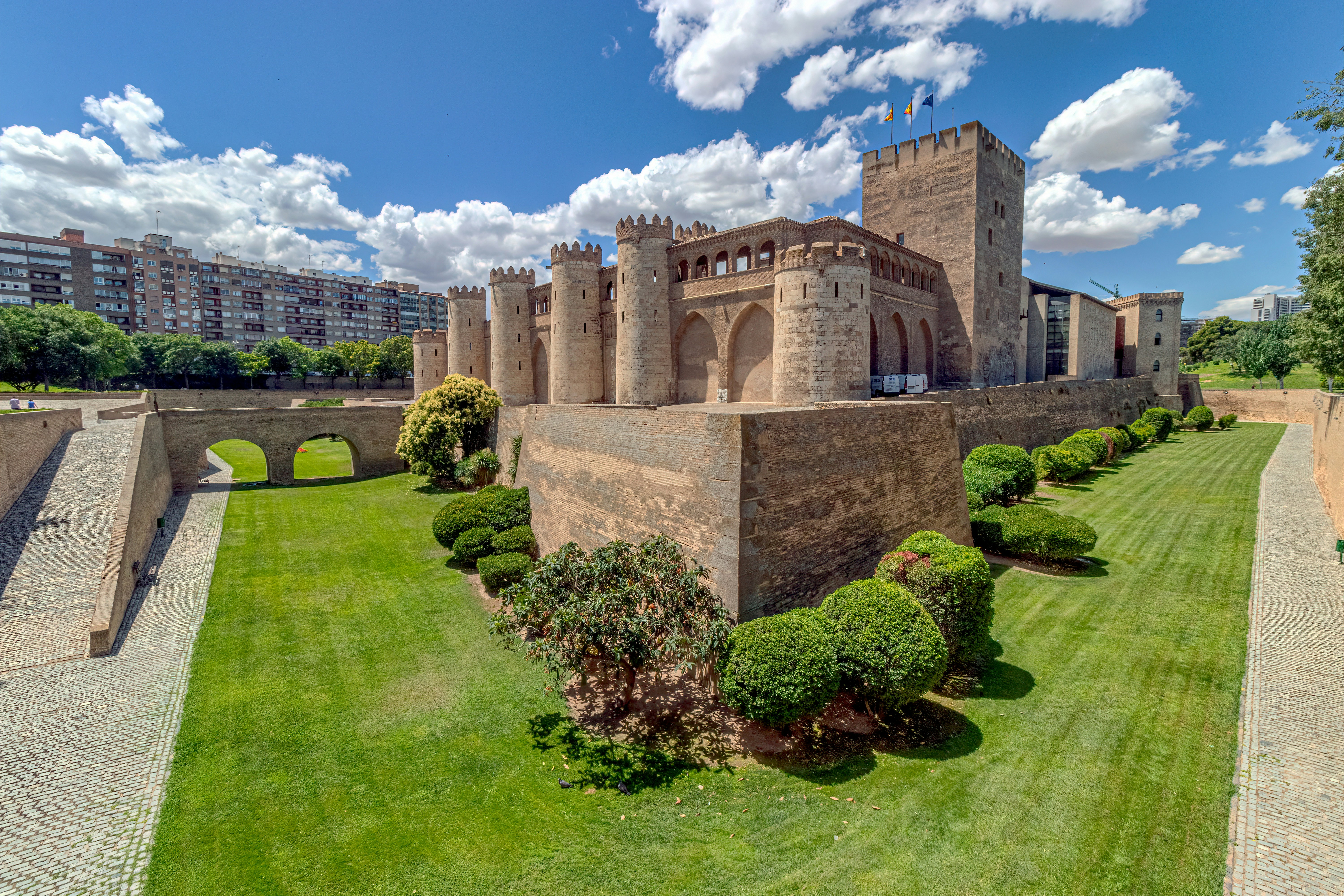
When the Moors arrived in the 8th century, the city was transformed once again. For over four hundred years, Islamic culture flourished here, leaving behind architectural marvels that would influence the region for centuries. The Aljafería Palace was constructed in the 11th century as a fortress and royal residence, its intricately carved arches and geometric patterns representing the pinnacle of Taifa-period architecture.
Later, when Christian forces reclaimed the city in 1118, the palace wasn't destroyed but adapted. Catholic monarchs added their own wings and chapels, creating a structure that tells multiple stories simultaneously. Gothic arches stand beside Moorish courtyards, while Renaissance staircases lead to Islamic prayer halls converted into Catholic chapels.
The Basilica del Pilar dominates the city's skyline, its eleven domes visible from nearly every vantage point. According to tradition, the Virgin Mary appeared here to Saint James in 40 AD, making this one of the oldest Marian pilgrimage sites in Christendom. The current baroque structure, completed in 1872, replaced earlier churches built on the same sacred ground. Inside, frescoes painted by Francisco Goya adorn the walls, their colors still vibrant after more than two centuries.
The Cathedral of Two Faiths
La Seo Cathedral stands as perhaps the most striking example of the city's layered religious history. Built on the site of a Roman forum that later became a Visigothic church, then a mosque, and finally a Christian cathedral, the building encapsulates fifteen centuries of architectural evolution. Its exterior wall displays a stunning example of Mudéjar brickwork – Islamic artistic techniques employed by Christian patrons – creating patterns of such complexity that modern architects still study them.
Inside, Gothic vaults soar overhead, while baroque altarpieces compete for attention with Renaissance chapels. A small museum within the complex displays the cathedral's collection of tapestries, some of which date back to the 15th century and depict biblical scenes with remarkable detail and color preservation.
Markets and Merchants
The El Tubo neighborhood has served as the city's commercial heart for centuries. Its narrow streets, barely wide enough for two people to pass, were designed to provide shade during brutal summer months. Today, these alleys house some of the region's finest tapas bars, where traditional dishes have been prepared using recipes passed down through generations.
The Mercado Central, a modernist structure from 1903, continues to function as it has for over a century. Under its iron and glass roof, vendors sell produce from the surrounding Ebro valley – vegetables grown in rich river soil, olive oils pressed from trees that may have witnessed the Moorish occupation, and jamón carved from pigs raised on acorns in nearby forests.
A City Transformed
The 2008 International Exposition brought dramatic changes to the urban landscape. The Ebro riverbanks, once neglected industrial zones, were reimagined as public spaces. The Bridge Pavilion, designed by Zaha Hadid, spans the river like a gladiator lying on its side – a controversial piece of contemporary architecture that has nonetheless become iconic.
The Water Tower, another Expo remnant, rises 76 meters above the landscape, its glass exterior reflecting the changing sky. These modern structures exist in conversation with ancient monuments, creating a cityscape where centuries collapse into single sightlines – baroque domes frame contemporary glass, while Roman walls anchor ultramodern bridges.
The Art of Living
Daily life here follows rhythms established over centuries. Mornings begin with coffee and pastries at traditional cafés, where older generations gather to discuss politics and weather. By midday, restaurants fill with workers enjoying the long Spanish lunch, often featuring local specialties like ternasco (roast lamb) or bacalao (salt cod prepared in various regional styles).
The paseo, that quintessentially Spanish evening stroll, sees families and friends walking along the riverfront or through the old town's plazas. During summer months, these walks might not begin until ten or eleven at night, when temperatures finally become bearable. Street musicians provide soundtrack, while the smell of grilled meat drifts from outdoor terraces.
Creative Spirits
The city has long nurtured artists, perhaps most famously Francisco de Goya, who was born in nearby Fuendetodos in 1746. His early works can be seen in several churches, including the Basilica del Pilar, where his youthful frescoes demonstrate the technical mastery that would later produce his dark and revolutionary paintings. The Goya Museum, housed in a Renaissance palace, traces his evolution from court painter to pioneering modernist.
Contemporary arts thrive in converted industrial spaces and modern galleries. The Pablo Serrano Museum, dedicated to the 20th-century Aragonese sculptor, occupies a sleek building that itself serves as a work of art. Its collection demonstrates how artists from this region have consistently pushed boundaries while remaining rooted in their cultural heritage.
Learning and Legacy
The University, founded in 1542, has educated generations of scholars, scientists, and artists. Its historic buildings in the old town contrast with modern campuses on the city's outskirts, but the institution's mission remains unchanged – to preserve knowledge while generating new understanding. Students from across Spain and beyond bring energy and innovation, ensuring that the city remains forward-looking despite its ancient foundations.
The evening light turns golden as it filters through centuries-old streets, casting long shadows that connect present to past. Conversations spill from bars where tapas get shared and wine flows freely, just as they have for generations. This continuity, this sense that tomorrow will honor yesterday while embracing today, defines the experience of being here. For travelers seeking authentic encounters with Spanish culture, or those simply drawn to places where history lives and breathes, few destinations prove as rewarding. Some visitors find themselves drawn to explore other historic Spanish cities afterward, while others discover that Heidelberg offers similarly compelling layers of architectural and cultural heritage worth experiencing firsthand.


 Home
Home Wishlist