
Berlin: Where Fragments of History Shape Tomorrow
The Weight of Memory
Remnants of the past can be found woven throughout the urban fabric. The East Side Gallery stretches along the Spree River, where over a hundred artists were invited to transform what once divided a city into the world's longest open-air gallery. Segments of concrete that once represented separation have been converted into canvases celebrating freedom and unity. The famous "Fraternal Kiss" between Brezhnev and Honecker still draws crowds, while newer additions continue to be debated, restored, and occasionally vandalized – a living testament to how the past gets negotiated in the present.
Not far away, the Memorial to the Murdered Jews of Europe occupies an entire city block with its 2,711 concrete slabs. Designed by Peter Eisenman and opened in 2005, the memorial was conceived not as a single monument but as a field of stones where visitors could walk, get lost, and feel the disorientation of absence. No names appear on the surface; instead, an underground information center holds the stories. The decision to place this memorial in the heart of the reunified capital – rather than at a former camp site – was made deliberately, ensuring that remembrance would be encountered in daily life rather than relegated to designated spaces of mourning.
Things to do in Berlin
A Capital Reconstructed
The Reichstag building stands as perhaps the most visible symbol of German reunification and democratic renewal. After being damaged by fire in 1933 and then by war, the structure sat partially ruined for decades. When reunification made the city the capital again, British architect Norman Foster was commissioned to transform the building. His addition of a glass dome in 1999 was meant to symbolize transparency in government – a literal and metaphorical commitment to openness after the darkness of dictatorship.
Visitors can be seen ascending the spiraling ramps inside the dome daily, looking down into the parliamentary chamber below or out across the cityscape. The juxtaposition was intentional: citizens standing above their representatives, watching them work. This architectural statement about democracy gets repeated throughout the government quarter, where buildings were designed to be accessible rather than imposing, modern rather than grandiose.
The Architecture of Division
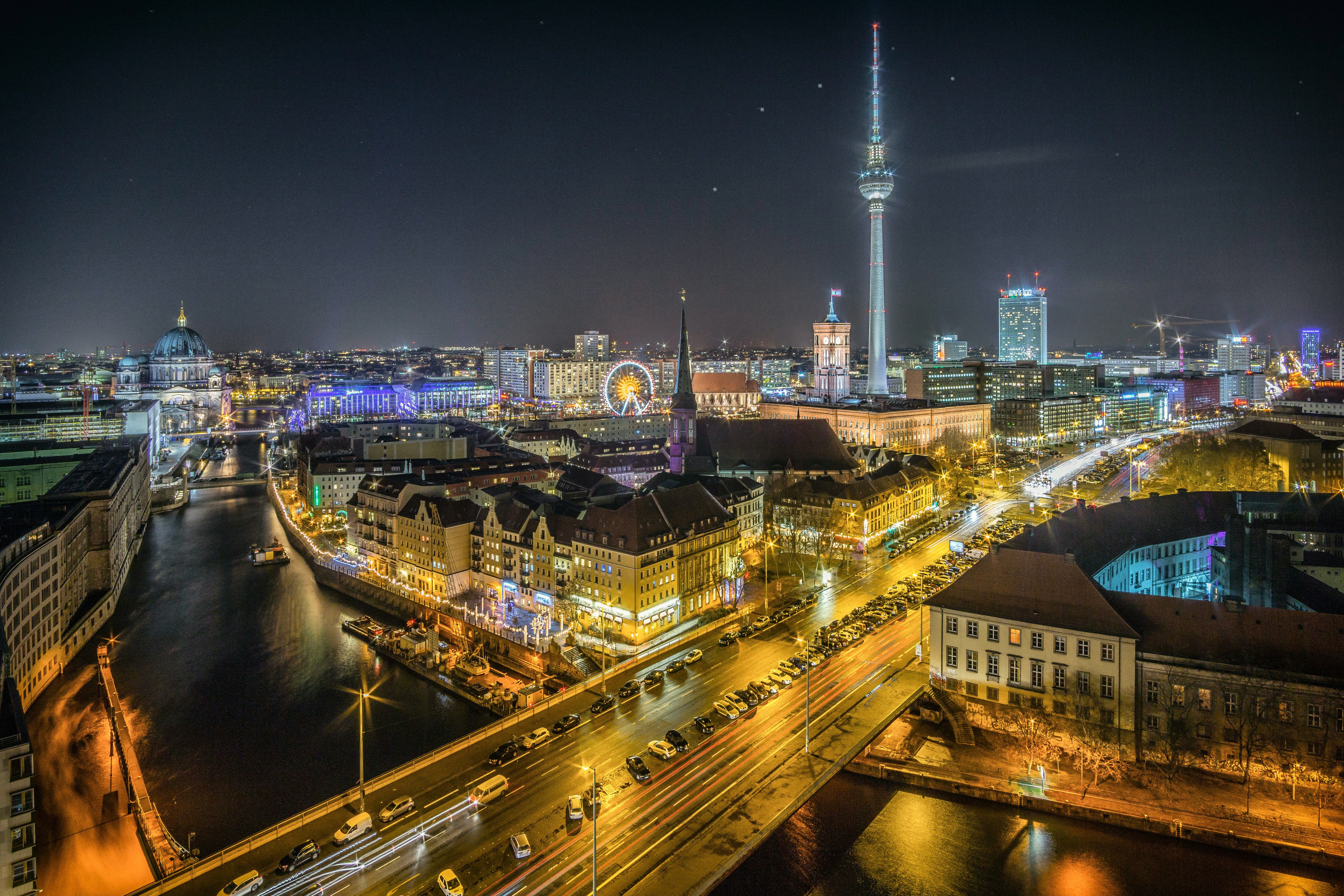
Alexanderplatz remains one of the most striking examples of socialist-era urban planning. The massive public square was redesigned in the 1960s by East German planners who envisioned a showcase of socialist modernity. The Fernsehturm – the television tower – was completed in 1969 and still dominates the skyline at 368 meters. Ironically, when the sun hits the tower's sphere, a cross-shaped reflection appears, dubbed the "Pope's Revenge" by locals who saw divine humor in this unintended Christian symbol atop a monument to atheist socialism.
The surrounding brutalist architecture has been both condemned and celebrated. What some see as oppressive concrete monoliths, others view as important historical artifacts worthy of preservation. This tension between demolition and conservation gets played out repeatedly in ongoing debates about the city's architectural future. The Palace of the Republic was demolished, but the Karl-Marx-Allee's socialist classicist buildings have been carefully restored and even given UNESCO consideration.
Neighborhoods in Transformation
Kreuzberg and Friedrichshain exemplify the constant metamorphosis happening at street level. Once working-class districts divided by the Wall, these neighborhoods have been transformed by waves of immigration, squatter movements, gentrification, and artistic colonization. Turkish communities established in Kreuzberg during the 1960s and 70s created what became known as "Little Istanbul," while Friedrichshain's abandoned buildings were occupied by artists and activists after 1989.
Today, these areas represent the city's ongoing struggle with identity and change. Rent increases have been protested loudly, with demonstrations demanding affordable housing and protection for long-time residents. Meanwhile, former industrial spaces have been converted into galleries, clubs, and startup offices. The Berghain nightclub, housed in a former power plant, has become internationally famous, yet locals debate whether such attention helps or harms the authentic culture that made the city attractive in the first place.
Museums and Memory
Museum Island, a UNESCO World Heritage site in the Spree River, houses five major museums constructed between 1824 and 1930. The Pergamon Museum holds monumental archaeological treasures, including the reconstructed Ishtar Gate of Babylon and the Market Gate of Miletus. The Neues Museum, destroyed in the war and reopened in 2009, displays the famous bust of Nefertiti alongside Egyptian and prehistoric collections.
What makes this museum complex particularly significant gets revealed in how it was reconstructed. Rather than hiding war damage, architect David Chipperfield chose to integrate the scars into the restoration, leaving bullet holes visible and combining new materials with fragments of the original structure. This approach mirrors the city's broader relationship with its damaged past – acknowledging rather than erasing, preserving complexity rather than pursuing perfection.
Green Spaces and Urban Breath
Tiergarten provides 520 acres of green space right in the urban core. Originally a royal hunting ground, the park was redesigned in the 18th century in the style of English landscape gardens. After being stripped bare for firewood in the post-war years, it was replanted by West Berliners and has regrown into a vital urban forest.
On summer afternoons, the meadows fill with picnickers, sunbathers, and amateur musicians. Paths wind through the trees, occasionally opening onto monuments or beer gardens. The Victory Column rises in the center, moved to its current location by the Nazis to commemorate military victories and now serving as a landmark that can be seen from various points throughout the city. What was designed to project imperial power now gets claimed by joggers, cyclists, and tourists climbing its 285 steps for panoramic views.
Markets and Street Life
Weekly markets bring neighborhoods to life with rhythms older than any political system. The Turkish Market along the Landwehr Canal in Kreuzberg draws crowds every Tuesday and Friday, offering everything from fresh produce to textiles to street food. The scent of grilled meat mixes with spices, while vendors call out prices and shoppers haggle good-naturedly.
These markets serve as important social spaces where different communities interact. German retirees shop alongside young families, students, and new immigrants. The food reflects the city's diversity: traditional German baked goods sold beside Turkish börek, Vietnamese spring rolls, and Middle Eastern mezze. In these informal economies, the cosmopolitan character of the metropolis gets expressed most vividly.
Culinary Transformations
Food culture has been revolutionized over the past two decades. Once known primarily for hearty but unrefined cuisine, the dining scene now encompasses everything from Michelin-starred restaurants to innovative street food. The humble Currywurst – invented here in 1949 – still gets consumed at stands throughout the city, now joined by Vietnamese banh mi, Turkish köfte, and Syrian falafel.
Coffee culture has been transformed by waves of specialty roasters and third-wave cafes. Old corner Kneipen (traditional pubs) survive alongside trendy cocktail bars mixing drinks with local gin and foraged herbs. This culinary diversity reflects broader demographic changes – a city where 35% of residents have international backgrounds, bringing their traditions while adapting to local tastes.
The Rhythm of Creativity
Affordable rents and abundant space made the city a magnet for artists throughout the 1990s and 2000s. Studios were established in former factories, galleries opened in abandoned shops, and experimental performances were staged in unlikely venues. This creative effervescence attracted international attention, which in turn brought more people, driving up costs and creating the paradox faced by many successful cultural scenes.
Yet creativity persists in new forms. The music scene ranges from world-class orchestras to underground techno clubs operating in undefined legal spaces. The Staatsoper performs in a beautifully restored opera house on Unter den Linden, while venues like Tresor and Watergate draw electronic music pilgrims from around the world. Theater remains adventurous and politically engaged, with productions often tackling contemporary social issues.
Living with Complexity
What makes this metropolis compelling wasn't built through careful planning or unified vision. Instead, its character emerged from fracture, from competing ideologies forced to coexist in limited space, from waves of newcomers making the city their own. The result feels perpetually unfinished, constantly being negotiated. Cranes dot the skyline, empty lots await development, and graffiti provides running commentary on gentrification, politics, and daily life.
This quality of incompleteness, of visible process, gives the urban experience its particular energy. History hasn't been resolved here but remains present, argued over, reinterpreted. Walking through different neighborhoods can feel like time travel, as architectural styles and atmospheres shift dramatically. What was true on one street may be contradicted by the next. This city resists simple narratives, demanding instead that visitors and residents alike engage with its complexity. For those seeking similar contrasts between historical depth and modern vitality, the transformation seen in Leipzig offers another fascinating chapter in German urban renewal.




 Home
Home Wishlist