
Bologna: Where Porticoes Tell Stories and Tradition Feeds the Soul
The Longest Sheltered Path in the World
Over 38 kilometers of porticoes wind through the historic center and beyond, their vaulted ceilings providing shelter from summer heat and winter rain alike. These covered walkways have been inscribed by UNESCO as a World Heritage Site, recognition well deserved for an architectural feature so distinctive. Under these arches, daily life has been conducted for centuries – merchants once hawked their wares, students hurried between lectures, and lovers met in shadowy corners.
The most famous of these covered paths climbs the Colle della Guardia, connecting the city center to the Sanctuary of the Madonna di San Luca. This uphill journey, protected by 666 arches, was completed in the 18th century. The view from the sanctuary rewards those who make the climb – red rooftops spread out below, punctuated by the city's famous towers, with the Apennine mountains rising in the distance.
Things to do in Bologna
Towers That Touch the Sky
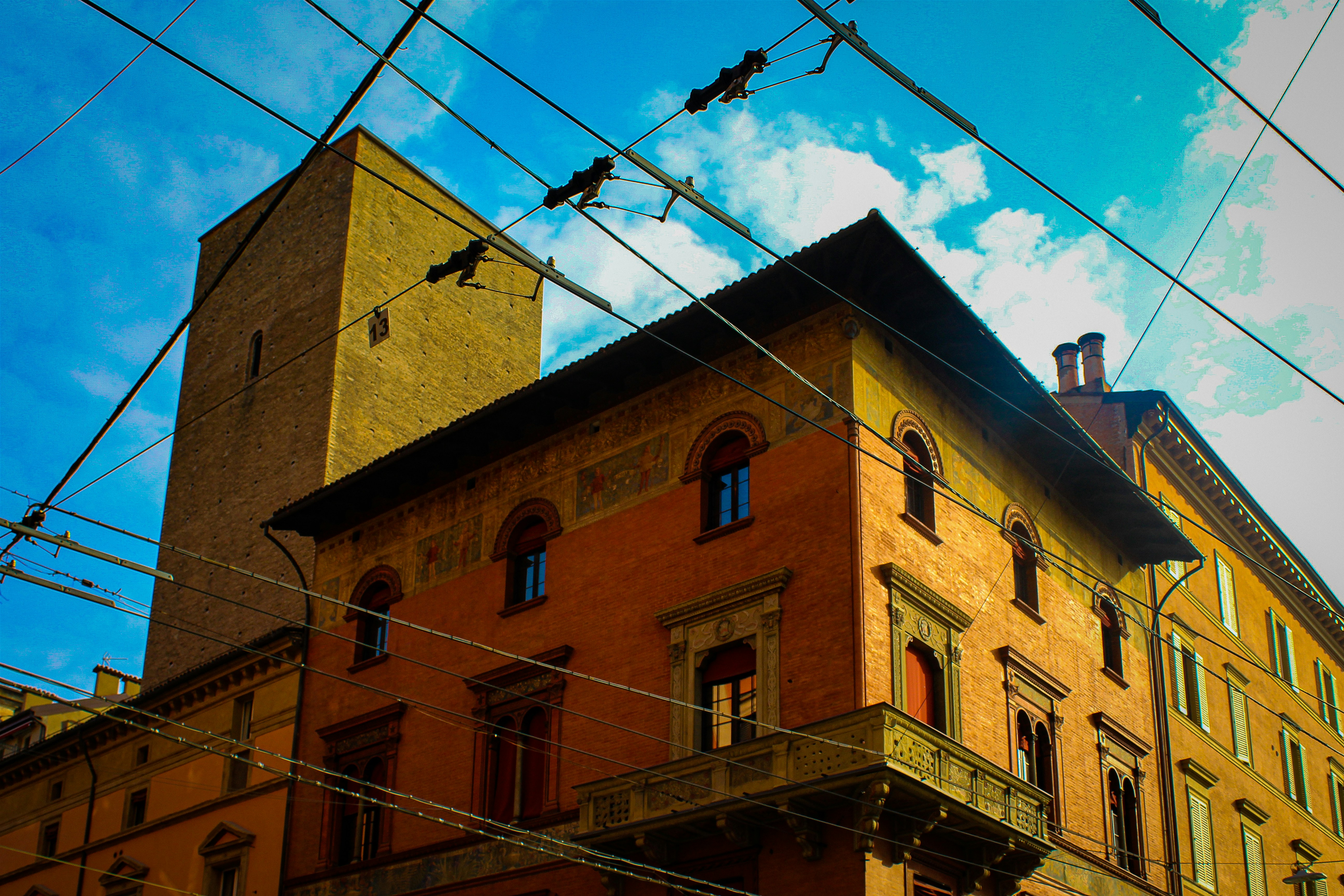
In medieval times, nearly 100 towers dotted the skyline, symbols of wealth and power erected by noble families competing for prestige. Today, fewer than 20 remain, but two dominate the landscape with undeniable presence. The Torre degli Asinelli and Torre Garisenda lean at precarious angles, their brick facades weathered by time yet still standing firm.
The taller Asinelli tower can be climbed – 498 wooden steps lead to a viewing platform where the entire city spreads out below. From this vantage point, the genius of medieval urban planning becomes apparent. Streets radiate outward from the central squares, the porticoes form continuous ribbons of shadow, and church domes punctuate neighborhoods that have maintained their character through centuries of change.
The Mother of Universities
Knowledge has been pursued here since 1088, when the first university in the Western world was established. The Archiginnasio, built in the 16th century to house the university's schools, stands as a monument to this scholarly tradition. Its walls bear thousands of coats of arms representing students from across Europe who came to study law, medicine, and philosophy.
The anatomical theater within the Archiginnasio particularly captivates visitors. Carved entirely from spruce wood, this chamber witnessed dissections performed for medical students in an age when such practices were controversial. The wooden benches rise steeply around a marble dissection table, ensuring every student could observe the proceedings. Apollo and Hippocrates gaze down from niches, while flayed figures support the lecturer's canopy – a reminder that understanding human anatomy required looking beneath the surface.
Where Food Becomes Art
The nickname "La Grassa" – the fat one – has been worn proudly for generations. This description refers not to appearance but to the richness of the culinary tradition cultivated here. In the Quadrilatero, the medieval market district, food shops display their wares with the pride of artists exhibiting masterpieces.
Fresh egg pasta gets rolled by hand each morning in small workshops, the dough stretched until nearly transparent before being cut into tagliatelle or folded into tortellini. These small, navel-shaped pasta pockets were supposedly inspired by Venus's belly button, according to local legend. The traditional filling – a mixture of pork loin, prosciutto, mortadella, Parmigiano-Reggiano, egg, and nutmeg – must be prepared according to a recipe officially deposited with the Chamber of Commerce.
Mortadella, that much-maligned cold cut known elsewhere as bologna sausage, achieves its highest expression here. The authentic product, made from finely ground pork studded with cubes of fat and pistachios, bears little resemblance to its overseas imitators. When sliced fresh and piled onto warm tigelle (small round breads), it reveals a delicate flavor that explains why this humble preparation has been celebrated for centuries.
Markets and Meeting Places
Piazza Maggiore has served as the city's heart since the 13th century. This vast square, purposely left unpaved in its center to accommodate crowds during festivals and markets, gets bordered by buildings that chronicle architectural evolution. The Basilica di San Petronio, though never completed according to its ambitious original plans, still impresses with its massive scale and the contrast between its finished marble lower facade and unfinished brick upper portion.
The Fountain of Neptune, created by Giambologna in the 16th century, commands attention in the adjacent square. The bronze sea god rises powerfully above water-spouting cherubs and mermaids, his muscular form having scandalized some viewers when first unveiled. Yet the fountain was deliberately designed to project civic power and sophistication, a statement that the city belonged among Italy's great cultural centers.
Hidden Canals and Secret Windows
Few visitors realize that Venice wasn't the only Italian city to develop an extensive canal network. Waters flowing from the Reno and Savena rivers once powered dozens of mills and workshops through a system of underground channels. These hidden waterways drove the silk industry that brought tremendous wealth during the Renaissance, when the city became one of Europe's major producers of silk fabric.
One small window on Via Piella reveals this forgotten aspect of urban life. Through this opening, a narrow canal can be glimpsed, its waters flowing quietly beneath buildings that seem to grow directly from the channel's banks. The scene recalls Venice so strongly that the spot has been nicknamed "Little Venice," though the comparison undersells the unique character of this hydraulic system.
Art Beyond the Expected
While lacking the overwhelming concentration of Renaissance masterpieces found elsewhere in Tuscany, the Pinacoteca Nazionale houses an impressive collection that rewards careful attention. Works by local masters like Guido Reni and the Carracci family demonstrate the sophisticated artistic culture that flourished here. The museum's rooms progress chronologically, showing how Byzantine traditions gradually gave way to more naturalistic styles, and how Counter-Reformation ideals shaped religious art in the 16th and 17th centuries.
The Basilica of San Domenico preserves the tomb of Saint Dominic, founder of the Dominican order, in a chapel adorned by sculptures from Nicola Pisano, Niccolò dell'Arca, and a young Michelangelo. The contrast between the Gothic severity of the main church and the baroque exuberance of later additions reflects changing aesthetic values across centuries.
The Rhythm of Daily Life
As evening approaches, the ritual of aperitivo transforms the city's bars and cafes. Unlike the hurried happy hours found elsewhere, this tradition encourages leisurely socializing over drinks accompanied by generous spreads of food. Locals gather at favorite spots, their conversations animated by the day's events and plans for the weekend.
The Teatro Comunale, one of Italy's most important opera houses, continues a musical tradition dating back centuries. Rossini premiered several operas here, and the theater still attracts world-class performers. On performance nights, the foyer fills with elegantly dressed patrons, their excitement palpable as the curtain time approaches.
A City of Substance
What strikes visitors most profoundly about this city might be its authenticity. Tourism hasn't been allowed to overwhelm daily life or transform neighborhoods into theme parks. Students still rush to lectures, market vendors still call out their offerings, and families still gather around Sunday tables for meals that stretch across hours.
The balance between preserving tradition and embracing contemporary life has been maintained with remarkable grace. Historic buildings house modern businesses, ancient recipes get prepared in both traditional trattorias and innovative restaurants, and the university continues attracting students from around the world while maintaining its centuries-old commitment to rigorous scholarship.
This authenticity extends to the pace of life itself. Things move deliberately here, with a rhythm that values quality over speed. Conversations aren't rushed, meals aren't abbreviated, and the simple pleasure of walking beneath the porticoes on a spring evening gets savored rather than taken for granted. Those who arrive seeking only to check attractions off a list often find themselves slowing down, drawn into a more thoughtful engagement with their surroundings.
The terracotta hues that dominate the cityscape seem to warm everything they touch, creating an atmosphere both grounded and uplifting. As afternoon light gilds the towers and casts long shadows beneath the porticoes, the city's timeless character becomes most apparent. For travelers seeking authentic Italian experiences beyond the well-trodden routes between Rome and the northern fashion capitals, few destinations offer such genuine rewards.




 Home
Home Wishlist