
Genoa: Where Maritime Glory Meets Urban Grit
The Republic That Ruled the Seas
Between the 11th and 15th centuries, immense wealth flowed through these harbors. Ships laden with spices, silks, and precious goods from the East were commanded by Genoese merchants who understood that control of the sea meant control of commerce itself. The Maritime Republic of Genoa stood as one of the most powerful states in the Mediterranean, its influence stretching from the Black Sea to North Africa.
The Palazzo San Giorgio, built in 1260, still watches over the old port. Within its walls, the world's first modern bank was established—the Banco di San Giorgio, which financed expeditions and managed the republic's vast colonial holdings. Christopher Columbus himself walked these docks before his voyage changed the world forever, though his native city would see little immediate benefit from his discoveries.
Today, remnants of that maritime glory can be traced throughout the historic center. Magnificent palaces line Via Garibaldi, their frescoed ceilings and marble staircases testament to the fortunes amassed through trade. These Palazzi dei Rolli, collectively recognized as a UNESCO World Heritage Site, were built by noble families who competed to display their wealth in increasingly elaborate architectural statements.
Things to do in Genoa
A City Built Vertically
The old town, one of the largest medieval quarters in Europe, sprawls across the hillside in a maze of caruggi—narrow alleyways that twist and climb unpredictably. Laundry hangs from wrought-iron balconies five stories up. Sunlight barely penetrates to street level, creating a perpetual twilight even at midday. These passages weren't designed for leisurely strolls but for defense, for quick escapes, for a city pressed between mountains and sea with nowhere to expand but upward.
Walking through these caruggi becomes an exercise in navigation and discovery. A sudden opening might reveal a tiny piazza with a baroque church facade, its interior dripping with gold and marble. Around another corner, the smell of fresh pesto wafts from a trattoria no wider than a corridor. The city reveals itself in fragments, never offering the grand vistas found in other Italian destinations.
This vertical architecture extended to innovations still visible today. The residential towers built during the medieval period housed entire clans, with shops on the ground floor, living quarters above, and defensive positions at the top. The density created a unique urban fabric where social classes mixed more freely than in other Italian cities, though wealth remained concentrated in the hands of the powerful merchant families.
The Port That Never Sleeps
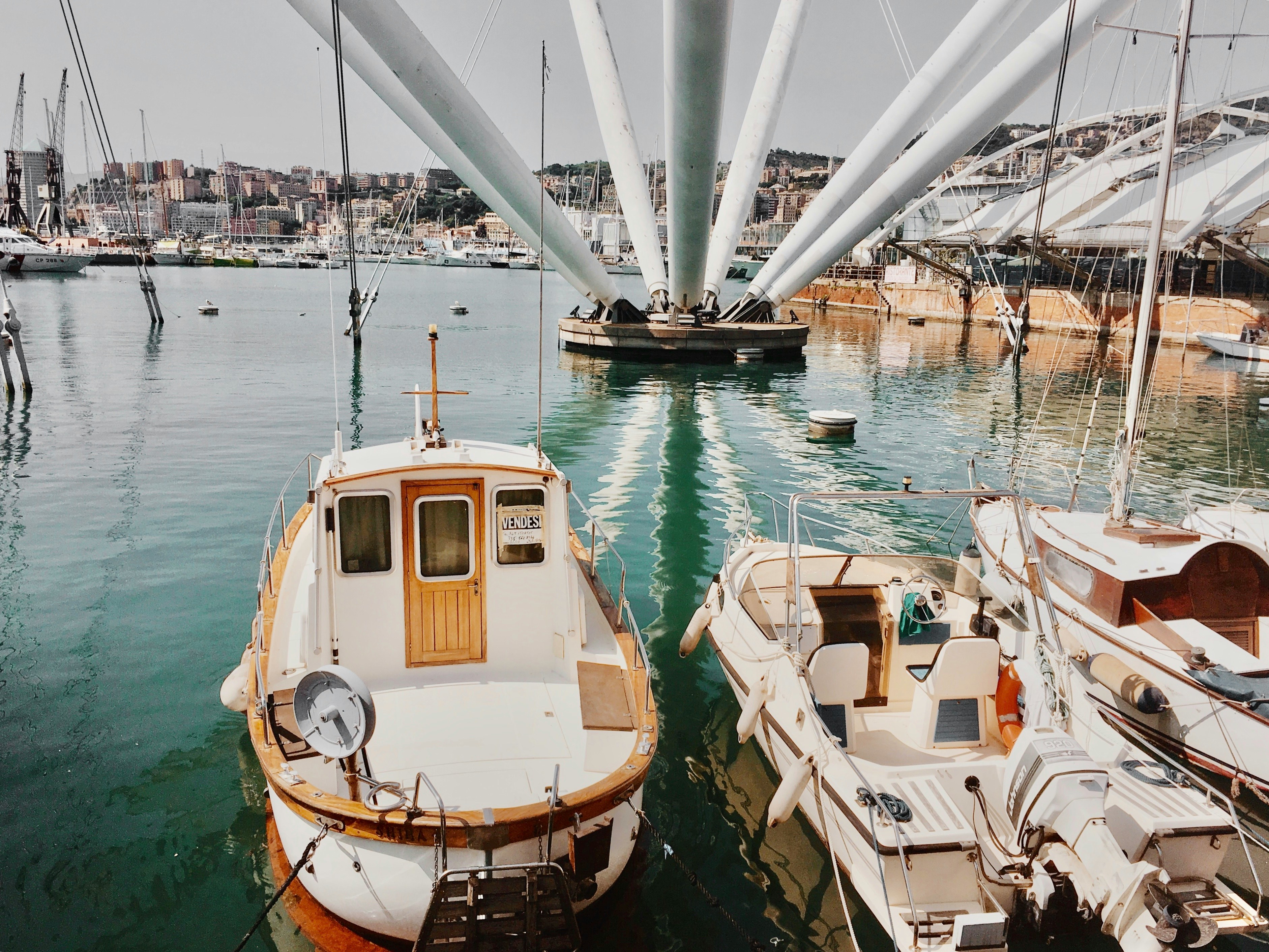
Down at the waterfront, Renzo Piano's renovation of the Porto Antico breathed new life into the historic harbor. The architect, himself a Genoese native, transformed derelict warehouses and piers into public spaces, museums, and attractions. The Bigo, a crane-like structure reminiscent of the port's industrial past, now lifts visitors high above the harbor for panoramic views.
The Aquarium of Genoa, the largest in Italy, occupies a converted pier where cargo was once loaded and unloaded. Its tanks house creatures from every ocean, a fitting tribute to a city whose fortunes were always tied to the sea. Nearby, the Galata Museo del Mare delves deeper into maritime history, with exhibits ranging from medieval galleys to modern container shipping.
But the working port extends far beyond the tourist-friendly Porto Antico. Container terminals stretch for kilometers along the coast, handling millions of tons of cargo annually. This remains Italy's busiest port, a vital economic engine that connects Europe to global markets. The cruise terminal welcomes hundreds of ships each year, though passengers often rush off to more famous destinations without pausing to explore the city itself.
Culinary Traditions Born from Necessity
Ligurian cuisine developed from the constraints of geography and the demands of seafaring. With limited flat land for agriculture, resourcefulness became essential. Pesto alla genovese, perhaps the region's most famous contribution to Italian gastronomy, originated as a way to preserve the aromatic basil that grows prolifically in the mild climate. The traditional recipe demands Genovese basil, pine nuts, Parmigiano-Reggiano, pecorino, garlic, and Ligurian olive oil, all ground together by hand in a marble mortar.
Focaccia, that deceptively simple flatbread, gets taken seriously here. The classic version, dimpled and brushed with olive oil and coarse salt, gets consumed at breakfast, as a snack, or as a base for sandwiches. Variations include focaccia col formaggio from nearby Recco, where thin layers of dough encase melting cheese, or focaccia di Voltri, studded with onions.
Seafood naturally dominates local menus. Fritto misto di mare—mixed fried seafood—showcases the daily catch. Acciughe, the anchovies from these waters, appear in countless preparations, from simple marinades to elaborate stuffed and baked dishes. Farinata, a thin pancake made from chickpea flour and baked in wood-fired ovens, provides a protein-rich street food that sustained workers and sailors for centuries.
Art Hidden in Plain Sight
The artistic heritage often gets overlooked in favor of more celebrated Italian art cities, yet masterpieces hide throughout the historic center. The Cathedral of San Lorenzo, with its striking black-and-white striped facade, houses a museum containing the Sacro Catino, once believed to be the Holy Grail. Nearby, the Chiesa del Gesù dazzles with its baroque interior, where Rubens' paintings hang amid gilded stucco and precious marbles.
The Strada Nuova Museums, comprising Palazzo Rosso, Palazzo Bianco, and Palazzo Tursi, contain collections built by the city's noble families. Works by Caravaggio, Van Dyck, and Veronese hang in rooms decorated with period furnishings and frescoes. These weren't public museums but private residences, and that intimate scale makes viewing the art feel like a privileged peek into aristocratic life.
Street art has claimed the city in recent decades, with murals appearing on building facades throughout the historic center. These modern additions spark debate—some view them as vandalism, others as legitimate artistic expression that brings color to weathered walls. The contrast between Renaissance frescoes and contemporary spray paint captures the tension between preservation and evolution that defines many historic European cities.
Beyond the City Limits
The Ligurian coast unfolds east and west of the city in a succession of dramatic cliffs, fishing villages, and resort towns. To the east, Camogli and Portofino attract visitors with their pastel-colored houses and yacht-filled harbors. The Abbey of San Fruttuoso, accessible only by foot or boat, sits in a secluded cove beneath Monte di Portofino, its medieval stones lapped by turquoise waters.
Westward, the palm-lined promenades of the Riviera di Ponente stretch toward the French border. Beach towns like Alassio and Finale Ligure cater to summer crowds, while hilltop villages maintain older rhythms of life. The coastal train line, carved into cliffsides and passing through dozens of tunnels, offers one of Italy's most scenic rail journeys.
Inland, the Apennine mountains rise steeply, their slopes terraced for olive groves and vineyards. Villages built around medieval watchtowers dot the ridges, many accessible only via narrow switchback roads. The contrast between the bustling port and these quiet mountain hamlets demonstrates the geographic diversity compressed into a small region.
The Weight of Complexity
Modern challenges weigh heavily on this ancient city. Economic decline following the loss of heavy industry has left scars in the urban fabric. Some neighborhoods struggle with poverty and neglect, their once-grand buildings crumbling from deferred maintenance. The centro storico, for all its historical significance, faces ongoing issues with preservation, gentrification, and maintaining livable conditions for residents.
Yet renewal efforts continue. The waterfront transformation initiated by Renzo Piano sparked broader redevelopment plans. The recent collapse of the Morandi Bridge in 2018, a tragedy that killed 43 people, led to soul-searching about infrastructure and investment. The new bridge, also designed by Piano, symbolizes resilience and the determination to rebuild.
Young entrepreneurs have opened innovative businesses in the historic center, breathing fresh energy into ancient spaces. Wine bars, craft breweries, and contemporary restaurants operate alongside traditional focaccerie and pesto shops. The university ensures a steady influx of students who help maintain the city's vitality despite demographic challenges facing many Italian urban centers.
The character forged by centuries of commerce, conflict, and survival hasn't softened with time. Rough edges remain visible everywhere—in cracked facades, in the unvarnished interactions of daily life, in a proud independence that sometimes borders on stubbornness. Those seeking postcard perfection might find more satisfaction exploring the rolling hills of Siena, where medieval beauty gets preserved and polished for visitors. But for travelers drawn to authenticity, to places where history lives not in museums but in every weathered stone and salt-sprayed wall, this Ligurian port offers rewards that transcend conventional tourism.


 Home
Home Wishlist