
Girona: Where Medieval Walls Meet Modern Spirit
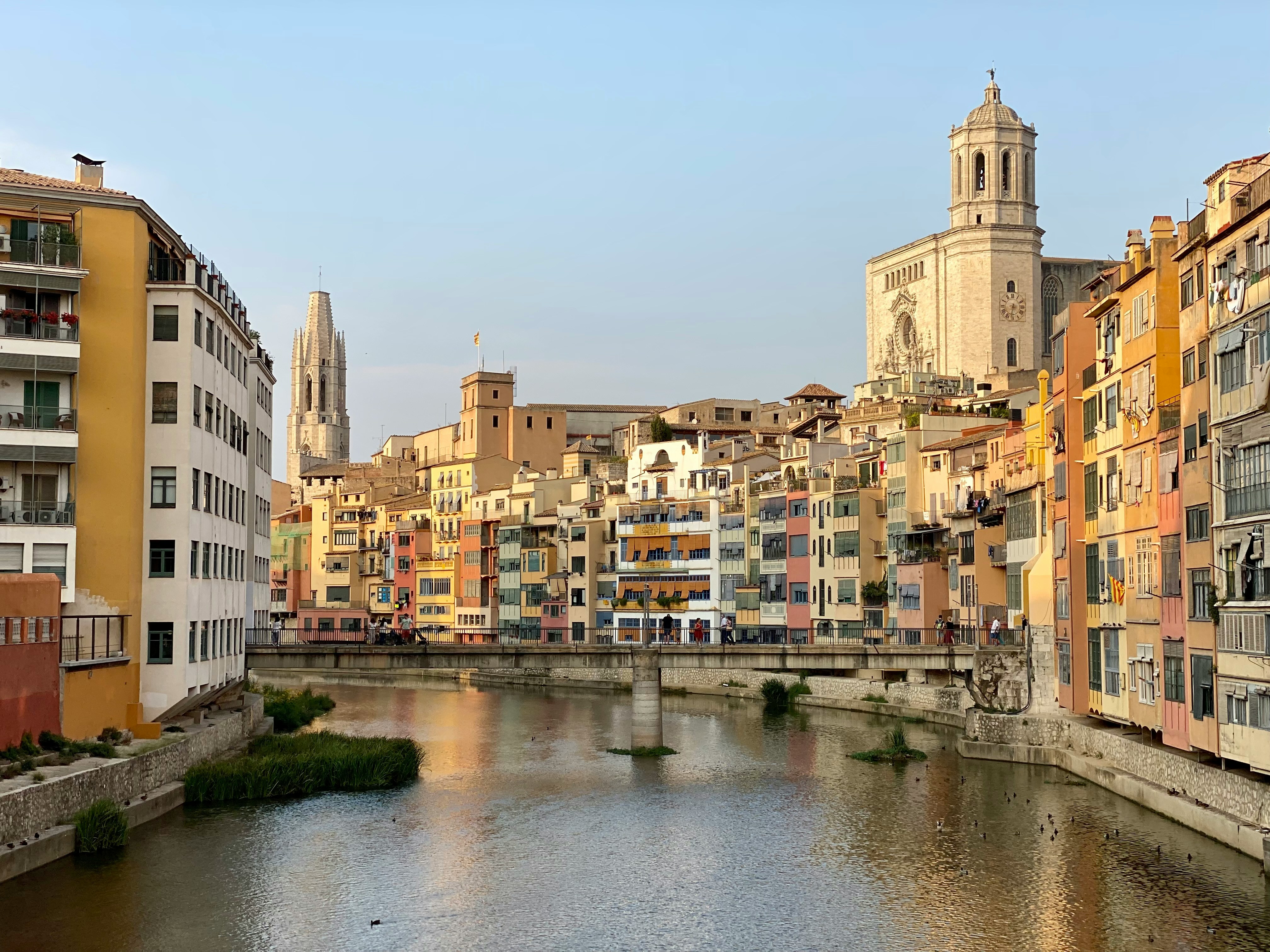
The City of Four Rivers
Four waterways – the Ter, Onyar, Güell, and Galligants – have shaped this territory for millennia. The Onyar, in particular, has been immortalized by the colorful houses that line its banks, their ochre, terracotta, and amber facades reflected in the slow-moving waters below. These buildings, some dating back to the Middle Ages, were constructed right up to the river's edge, their foundations kissed by the current during heavy rains.
Several bridges span the Onyar, but none capture the imagination quite like the Pont de les Peixateries Velles. Designed by Gustave Eiffel's company in 1877, this wrought-iron structure has become an icon. From its span, photographers and dreamers alike have captured some of the most recognizable views in all of Catalonia – a technicolor parade of houses that seem to defy both gravity and time.
Things to do in Girona
Within the Ancient Walls
The Força Vella, or old quarter, has been protected by defensive walls since Roman times. These fortifications, expanded and reinforced over centuries by Romans, Visigoths, Moors, and medieval Catalans, now offer one of Europe's finest examples of military architecture. A walk along the Passeig de la Muralla reveals panoramic views that stretch from the Pyrenees to the Mediterranean, a reminder of the strategic importance this location once held.
Within these walls, the Jewish quarter – known as El Call – stands as one of the best-preserved in Europe. Its labyrinthine streets, some so narrow that sunlight barely reaches the cobblestones, tell stories of a thriving Jewish community that flourished here until the expulsions of 1492. The Museum of Jewish History now occupies what was once the last synagogue, its exhibitions carefully documenting a culture that left an indelible mark on the city's character.
A Cathedral Above All
Ninety steps lead up to the Cathedral of Saint Mary, each one climbed by countless pilgrims, conquerors, and curious visitors over the centuries. This architectural marvel boasts the widest Gothic nave in the world – a staggering 23 meters across. The feat of engineering required to construct such a space in the 14th century cannot be overstated; debates among master builders raged for decades about whether such a design could even be achieved.
Inside, the Creation Tapestry – a Romanesque masterpiece from the 11th century – depicts the biblical story of creation with remarkable artistry. Its survival through wars, fires, and the simple passage of time feels almost miraculous. The cathedral's treasury also houses illuminated manuscripts and liturgical objects that span nearly a thousand years, each piece a testament to the devotion and craftsmanship of generations past.
Layers Upon Layers
History has been written and rewritten on these streets countless times. The Arab Baths, built in the 12th century and inspired by earlier Roman and Islamic traditions, feature a remarkable octagonal pool surrounded by slender columns. Though called "Arab," they were actually constructed by Christians following Moorish architectural principles – a beautiful example of cultural synthesis.
The Monastery of Sant Pere de Galligants, with its perfectly proportioned Romanesque bell tower, now houses the Archaeological Museum. Within its walls, artifacts from prehistoric settlements, Roman villas, and medieval workshops tell the story of continuous human habitation stretching back thousands of years. Each layer of occupation has left its mark, creating a palimpsest of cultures and civilizations.
A Canvas for Storytelling
In recent years, these ancient streets have been transformed into settings for epic tales. The medieval architecture proved perfect for certain fantasy productions, and suddenly, global audiences were introduced to these timeless stones. The cathedral steps, the Jewish quarter's narrow passages, and the Arab Baths all became characters in their own right, their authenticity lending weight to fictional narratives.
Yet this attention hasn't diminished the genuine atmosphere. If anything, it has renewed appreciation for the preservation efforts that have kept these spaces intact. Walking these streets early in the morning, before the day's visitors arrive, the connection to centuries past can still be felt viscerally.
Beyond the Walls
Outside the historic center, a different energy pulses through modern neighborhoods. The Devesa Park, one of the largest urban parks in Catalonia, provides green respite with its towering plane trees – some over a century old – creating natural cathedral-like arches overhead. Families gather for weekend picnics, cyclists cruise along shaded paths, and joggers circle the perimeter as they have for decades.
The city has also cultivated a reputation for culinary excellence. Restaurants here – from Michelin-starred establishments to family-run taverns – showcase the best of Catalan cuisine. Local markets overflow with produce from the surrounding countryside: tomatoes bursting with Mediterranean sunshine, pungent garlic from nearby fields, and seafood brought in daily from the Costa Brava.
Festivals and Traditions
Throughout the year, celebrations bring the community together in ways that have changed little over generations. The Temps de Flors, held each May, transforms the city into a botanical wonderland. Historic courtyards, churches, and public spaces that normally remain closed to visitors open their doors, each decorated with elaborate floral installations. Over a hundred venues participate, and hundreds of thousands of visitors wander through this temporary garden city.
Sant Narcís, the patron saint, is honored each October with processions, concerts, and traditional sardana dancing. The festival culminates in a spectacular fireworks display over the Ter river, the explosions of light reflecting off the water and illuminating the ancient bridges in brilliant flashes of color.
A Living City
What makes this place remarkable isn't just its preserved medieval core or its impressive monuments – though these certainly contribute to its appeal. Rather, it's the way contemporary life has woven itself seamlessly into the historic fabric. Students from the local university fill café terraces, debating ideas as scholars have done here for centuries. Boutiques selling cutting-edge fashion occupy ground floors of buildings where merchants traded goods in the Middle Ages. Modern art galleries sit comfortably alongside ancient stone churches.
The bicycle has become the preferred mode of transport for many residents, and dedicated lanes now wind through areas once traveled only by horses and carts. This commitment to sustainable urban living while respecting historical heritage has made the city a model for how old and new can coexist harmoniously.
As the sun sets and golden light bathes the riverfront houses in an amber glow, the timeless quality of this place becomes unmistakable. Bells ring from church towers just as they have for centuries, calling the faithful to evening prayers. Swallows dart between buildings, following flight paths established generations ago. And on the bridges, people pause – locals and visitors alike – to take in views that have inspired artists, writers, and wanderers for over a thousand years. The same sense of wonder might be experienced by travelers exploring Frankfurt am Main, where modern dynamism meets historical depth in equally compelling ways.


 Home
Home Wishlist