
Heidelberg: Where Romance and Scholarship Meet the Neckar
The Castle on the Hill
High above the Neckar River, the massive ruins of Schloss Heidelberg command attention from every angle. This Renaissance masterpiece, once among Europe's most magnificent palaces, was ravaged by French troops in the late 17th century and left partially destroyed. Yet somehow, the decision never to fully restore it proved inspired. The weathered red sandstone walls, half-swallowed by ivy, have been transformed into something more powerful than any intact fortress could be – a symbol of beauty persisting through devastation.
The castle grounds can be reached by a steep walk through terraced gardens or via the historic Bergbahn funicular. Either route rewards visitors with breathtaking vistas over the old town's terracotta rooftops. Within the castle complex, the Großes Fass – an enormous 18th-century wine barrel capable of holding 220,000 liters – speaks to the region's viticultural traditions. The Ottheinrich Building, with its elaborately carved Renaissance facade, demonstrates the refined artistic sensibilities that once flourished here.
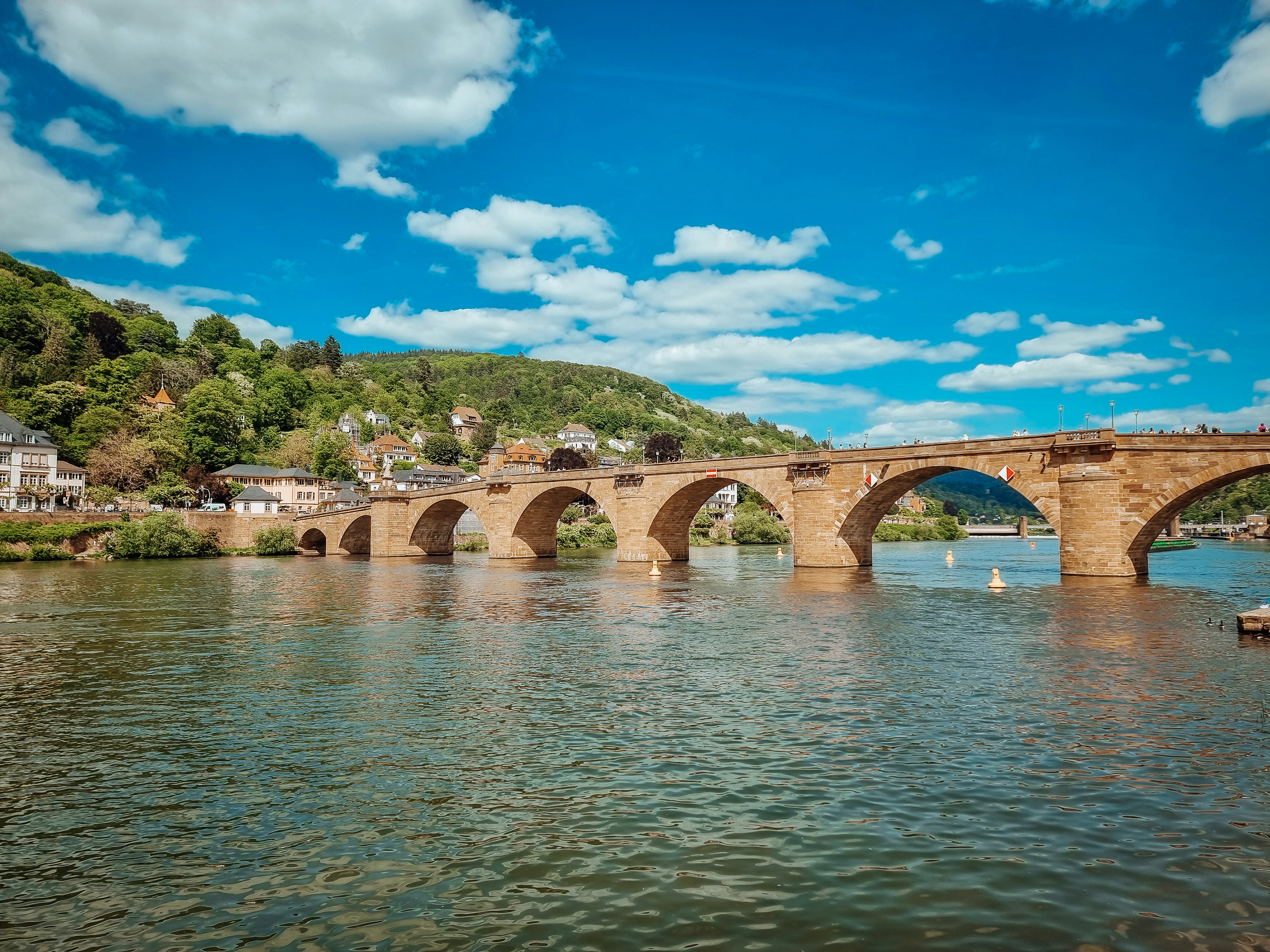
From the castle's Altan terrace, the entire sweep of the Neckar Valley unfolds. The river curves gracefully through the landscape, crossed by the baroque Alte Brücke with its twin towers and monkey statue. On summer evenings, this panorama has been painted countless times, photographed millions more, yet never loses its power to move those who witness it firsthand.
Things to do in Heidelberg
A Legacy Written in Latin
Ruprecht-Karls-Universität, established in 1386, has shaped this city's character for over six centuries. As Germany's oldest university, its influence permeates every street and square. The Old University building, with its austere baroque facade, houses the former Student Prison – the Studentenkarzer – where misbehaving scholars were once confined. Remarkably, incarceration here became a badge of honor, with walls covered in graffiti, silhouettes, and inscriptions left by imprisoned students between 1778 and 1914.
The university's reach extends far beyond a single campus. Lecture halls occupy historic buildings throughout the old town. Libraries hold manuscripts and first editions that scholars travel continents to study. The Philosophenweg, a pathway cut into the hillside opposite the castle, was named for the professors and thinkers who walked there while pondering difficult questions. Today, that same trail offers the best views of the old town and castle, proving that philosophers have always known where to find inspiration.
Scientific breakthroughs achieved here have altered human understanding. Spectral analysis was developed in 19th-century laboratories along the Neckar. Medical advances pioneered at the university hospital have saved countless lives. The city's intellectual tradition continues unbroken, with researchers still pushing boundaries in fields from chemistry to theology.
Streets That Tell Stories
The Hauptstraße, one of Europe's longest pedestrian streets, cuts through the heart of the Altstadt. This kilometer-long thoroughfare has been walked by everyone from medieval merchants to Romantic poets to modern tourists. Baroque townhouses line the route, their ground floors now occupied by cafes, bookshops, and boutiques. Street musicians stake out favorite corners, their melodies drifting through narrow side alleys where surprises wait around every turn.
Off the main artery, quieter lanes reveal intimate courtyards and hidden gardens. The Marstallhof, once royal stables, now provides a peaceful retreat from urban bustle. The Kornmarkt, dominated by a baroque Madonna statue, offers outdoor seating where locals nurse afternoon coffees while debating everything from politics to philosophy. Each plaza and passage carries layers of history, visible to those willing to look beyond the surface.
The Alte Brücke, dating to 1788, might be the most photographed spot in the entire city. Its medieval gate tower and baroque statues create a composition so perfect it seems almost staged. At dawn, when mist rises from the river and early light illuminates the castle above, the bridge becomes a portal to another era entirely.
Sacred and Scholarly Spaces
The Heiliggeistkirche – Church of the Holy Spirit – dominates the Marktplatz with its distinctive red sandstone tower. Built over several centuries beginning in 1398, this Gothic structure once housed the famous Bibliotheca Palatina, a library so important that during the Thirty Years' War, it was seized and transported to Rome as war booty. The church interior reflects both Catholic and Protestant traditions, with a wall once dividing the space between the two faiths during periods of shared use.
Nearby, the Jesuitenkirche presents a different architectural vision. This baroque masterpiece, completed in 1759, showcases the theatrical style associated with Counter-Reformation Catholicism. Its white-and-gold interior glows with an ethereal light, while trompe-l'œil ceiling paintings create illusions of height and space.
These sacred buildings served not only religious but also civic functions throughout the centuries. University ceremonies were held within their walls. Community gatherings brought townspeople together during times of crisis and celebration. Today, they host concerts where Bach and Handel resound beneath medieval vaults, connecting past and present through the universal language of music.
Tables and Traditions
The city's culinary identity draws from both Palatinate traditions and university culture. Studentenküsse – "student kisses" – are delicate chocolate confections created in the early 20th century when public displays of affection were frowned upon. These sweet wafers, layered with nougat and coated in chocolate, allowed courting students to give their sweethearts something romantic yet innocent.
Traditional taverns serve hearty regional fare: Saumagen (stuffed pig's stomach, far more delicious than it sounds), Leberknödel (liver dumplings in broth), and Handkäs mit Musik (marinated sour milk cheese). These honest dishes pair perfectly with wines from nearby vineyards. The Neckar Valley's protected climate allows grapes to thrive, producing Rieslings and Spätburgunders that rank among Germany's finest.
Historic beer halls maintain another important tradition. In wood-paneled rooms decorated with old photographs and student association flags, pitchers of local brew accompany animated conversations. These gathering spots have hosted generations of students, each believing their debates and discoveries to be unprecedented, each actually participating in dialogues stretching back centuries.
The Romantic Vision
During the early 19th century, Romantic writers and artists discovered this place and transformed it into a symbol. The castle ruins epitomized their fascination with medieval grandeur and the sublime power of decay. The old town represented an idealized German past. Poets like Joseph von Eichendorff wove the city into their verses, while painters like Carl Blechen captured its atmospheric beauty on canvas.
Mark Twain visited in 1878 and devoted several chapters of "A Tramp Abroad" to his experiences here, describing the castle by moonlight and the view from the Philosophenweg. His humorous observations introduced the city to American audiences who had never crossed the Atlantic. Later, countless students would arrive seeking the romantic Germany Twain described, finding both the reality and something more – a living city rather than a museum.
This romanticized image persists today, sometimes threatening to overwhelm the authentic character beneath. Yet look beyond the tourist groups and souvenir shops, and the genuine article remains: a community where intellectual pursuit continues, where history informs rather than imprisons the present, where natural beauty and human achievement exist in remarkable balance.
Seasons Along the Neckar
Spring brings almond and cherry blossoms to hillside orchards, their delicate pink flowers contrasting with ancient stone. University terms end with ceremonies and celebrations as graduates prepare to scatter across the globe. The Neckarwiese, a riverside meadow, fills with people reading, playing music, or simply watching the water flow past.
Summer means festivals and open-air concerts. The castle illuminations – firework displays commemorating the French destruction – paint the night sky in brilliant colors. Café tables spill onto every available plaza, and evening doesn't truly arrive until well past nine o'clock when the western sky finally darkens.
Autumn transforms the surrounding forests into a tapestry of rust and gold. Wine festivals celebrate the harvest, with new vintages tasted and debated. A certain melancholy settles over the city as days shorten and a new academic year begins, bringing fresh faces to classrooms where so many have studied before.
Winter, though cold, brings its own magic. Christmas markets fill the Marktplatz with the scent of Glühwein and roasted almonds. The castle, dusted with snow, looks like something from a fairy tale. Fewer tourists mean locals reclaim their streets, and the city's true character emerges more clearly.
What makes this place exceptional isn't any single monument or view, but rather how all elements combine. Natural beauty provides the setting. Historic architecture offers tangible connections to the past. The university ensures intellectual vitality and perpetual youth. Together, these create something impossible to fully capture in photographs or words – a lived experience that must be felt firsthand. Those seeking similar atmospheres might also discover the distinctive character found in Freiburg im Breisgau, where medieval charm meets Black Forest beauty in equally compelling ways.


 Home
Home Wishlist