
León: Where Stone Speaks and History Breathes
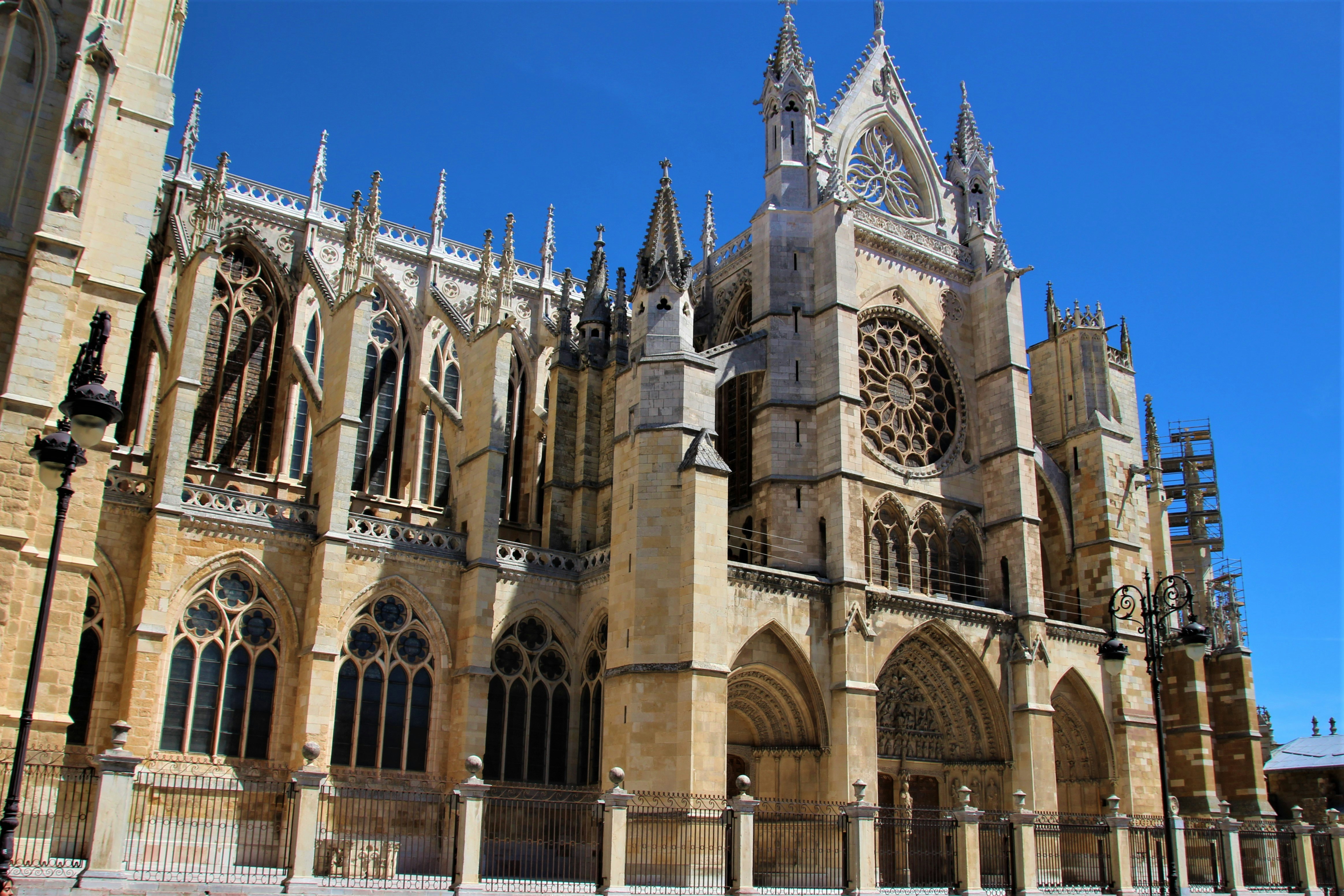
Gothic Splendor in Glass and Stone
The cathedral stands as one of Spain's most magnificent Gothic achievements. Construction was begun in the 13th century on the site of earlier Roman baths, its foundations laid with ambition that would take nearly three centuries to fully realize. What sets this structure apart can be experienced most profoundly from within—125 stained glass windows transform the interior into a kaleidoscope of light. Blues, reds, and golds shift across ancient flagstones as the sun moves through the day, creating an ever-changing dialogue between architecture and illumination.
The craftsmanship evident in every arch and column speaks to medieval mastery. Flying buttresses were employed to reduce wall mass, allowing for those extraordinary expanses of glass. The result was a building that seems to defy gravity, its walls more window than stone. Art historians have long noted the French influence in its design, connections that trace back to the marriage alliances and cultural exchanges of medieval European kingdoms.
Things to do in Leon
The Pilgrim's Path
For over a thousand years, footsteps have worn smooth the stones leading through this ancient capital. The Camino de Santiago passes directly through the historic center, making it an essential stop for pilgrims journeying toward Santiago de Compostela. The Hostal de San Marcos was originally constructed in the 16th century as a hospital and resting place for these weary travelers. Its Plateresque façade, stretching over 100 meters, ranks among the finest examples of Spanish Renaissance architecture.
Today, that same building has been transformed into a luxury parador, though its cloister and church remain open to visitors. Walking through its arcaded courtyard, the weight of centuries can be felt in every carved medallion and weathered column. Scallop shells—the symbol of the Camino—appear throughout the decoration, eternal reminders of the building's original purpose.
Roman Foundations
Before medieval pilgrims, before Gothic cathedrals, Roman legions established a military encampment here in the 1st century BCE. The Legio VI Victrix and later the Legio VII Gemina gave the settlement its name, and their presence shaped its character for centuries. Remnants of Roman walls can still be traced through the old quarter, their massive stones incorporated into later medieval fortifications.
The most impressive survival from that distant era stands just outside the historic center. A Roman bridge was built to carry traffic across the Bernesga River, and while modified and reinforced over the centuries, its original engineering can still be appreciated. During lower water levels, ancient foundations become visible beneath the current structure—tangible connections to legionaries who crossed this same river two thousand years ago.
A Pantheon of Kings
Adjacent to the Basilica of San Isidoro, the Royal Pantheon holds the remains of medieval monarchs and their families. What makes this space truly remarkable gets revealed when eyes adjust to the dim interior—the vaulted ceiling explodes with 12th-century Romanesque frescoes. These paintings have been called "the Sistine Chapel of Romanesque art," and standing beneath them makes clear why. Biblical scenes unfold across the stone with a vibrancy and detail that seems impossible given their age.
The colors—achieved with natural pigments—retain surprising intensity. Each figure was rendered with careful attention, from the folds of robes to the expressions on faces. Agricultural scenes appear alongside religious imagery, offering rare windows into medieval daily life. That these paintings survived centuries of warfare, fire, and neglect borders on miraculous.
Medieval Streets and Modern Rhythms
The Barrio Húmedo—the "Wet Quarter"—gets its name from the wine and drinks that have flowed there for generations. Narrow medieval streets lined with centuries-old buildings host dozens of bars and taverns. Here, the tradition of tapas reaches an art form. Unlike much of Spain, where tapas must be ordered, many establishments in this historic neighborhood still offer free small plates with each drink—a custom that has survived modernization.
As evening approaches, locals begin the ritual of the "chateo"—moving from bar to bar, sampling different tapas and house wines. Cecina, the air-dried beef that's a regional specialty, gets sliced paper-thin and served with olive oil. Morcilla, blood sausage made with rice and spices unique to this area, arrives grilled and steaming. Conversations flow as freely as the wine, with strangers becoming friends over shared plates and laughter.
Renaissance Grandeur
The Plaza Mayor, though smaller than those found in other Spanish cities, possesses distinctive character. Its arcaded galleries date from the 17th century, their design influenced by the Habsburg architecture popular during that era. The city hall, with its twin towers and baroque embellishments, presides over the square. Wednesday and Saturday mornings see the space transformed into a traditional market, stalls offering everything from local cheeses to fresh vegetables grown in the surrounding countryside.
Casa Botines, designed by Antoni Gaudí in the 1890s, stands as an unexpected architectural treasure. This neo-Gothic building, one of only three Gaudí structures outside Catalonia, was commissioned as a textile warehouse and residence. Its fairy-tale turrets and fantastic details hint at the architect's later, more famous works. After extensive restoration, it now functions as a museum, its interior spaces showcasing both Gaudí's vision and rotating art exhibitions.
Monastic Silence
Beyond the city center, the Monastery of San Miguel de Escalada offers profound tranquility. This 10th-century Mozarabic church, built by monks fleeing Muslim-controlled territories to the south, represents an architectural style rarely seen. Horseshoe arches, a feature borrowed from Islamic design, define both the exterior portico and interior nave. The isolation of its setting, surrounded by gentle hills and farmland, enhances the contemplative atmosphere.
Visiting this monastery requires intentionality—it's not stumbled upon accidentally. That remoteness has helped preserve its authentic character. Inside, light filters through small windows, illuminating simple stone and the faded remains of ancient frescoes. The silence feels absolute, broken only by birdsong from the surrounding fields.
Contemporary Creativity
MUSAC, the Museum of Contemporary Art of Castilla y León, announces its presence with a façade of 37 different colored glass panels. This 21st-century building deliberately contrasts with the medieval architecture dominating the cityscape. Its design, awarded the Mies van der Rohe prize for European architecture, references the cathedral's stained glass through a thoroughly modern lens.
Inside, rotating exhibitions showcase contemporary Spanish and international artists. The spacious galleries host installations, video art, and multimedia pieces that would be impossible in more traditional museum settings. This commitment to contemporary culture reflects a broader understanding that honoring the past doesn't mean remaining trapped in it.
Culinary Traditions
The cuisine of this region draws from its agricultural heritage and mountain proximity. Cocido maragato, a hearty stew traditionally eaten in reverse order—meat first, then vegetables, finally broth—originated in the nearby Maragatería region. Restaurants throughout the city serve this warming dish, particularly welcome during harsh winter months.
Local cheeses deserve special mention. Valdeón, a blue cheese from the nearby Picos de Europa, gets aged in caves, developing its characteristic intense flavor. Paired with local wines from the Bierzo or Tierra de León appellations, these regional products create combinations that speak to terroir and tradition.
University Legacy
Though not as ancient as universities in Salamanca or Valladolid, educational institutions have shaped the character of this city for decades. The current University was reestablished in 1979, but academic traditions stretch back centuries earlier. Today, thousands of students fill the streets, their energy contributing to a vibrant cultural scene. Bookshops, affordable restaurants, and cultural spaces cater to this demographic, ensuring the city maintains its youthful dynamism despite its ancient core.
The interplay between history and contemporary life defines the experience of visiting this corner of Castilla y León. Gothic masterpieces coexist with modernist surprises, medieval pilgrimage routes intersect with university students rushing to class, and centuries-old culinary traditions adapt to modern palates. For travelers exploring northern Spain, this combination offers rewards that extend far beyond typical tourist experiences—much like the cultural richness that awaits visitors who venture to places such as Dresden, where history and renewal create their own compelling narratives.


 Home
Home Wishlist