
Oxford: Where Ancient Stones Speak and Knowledge Flourishes
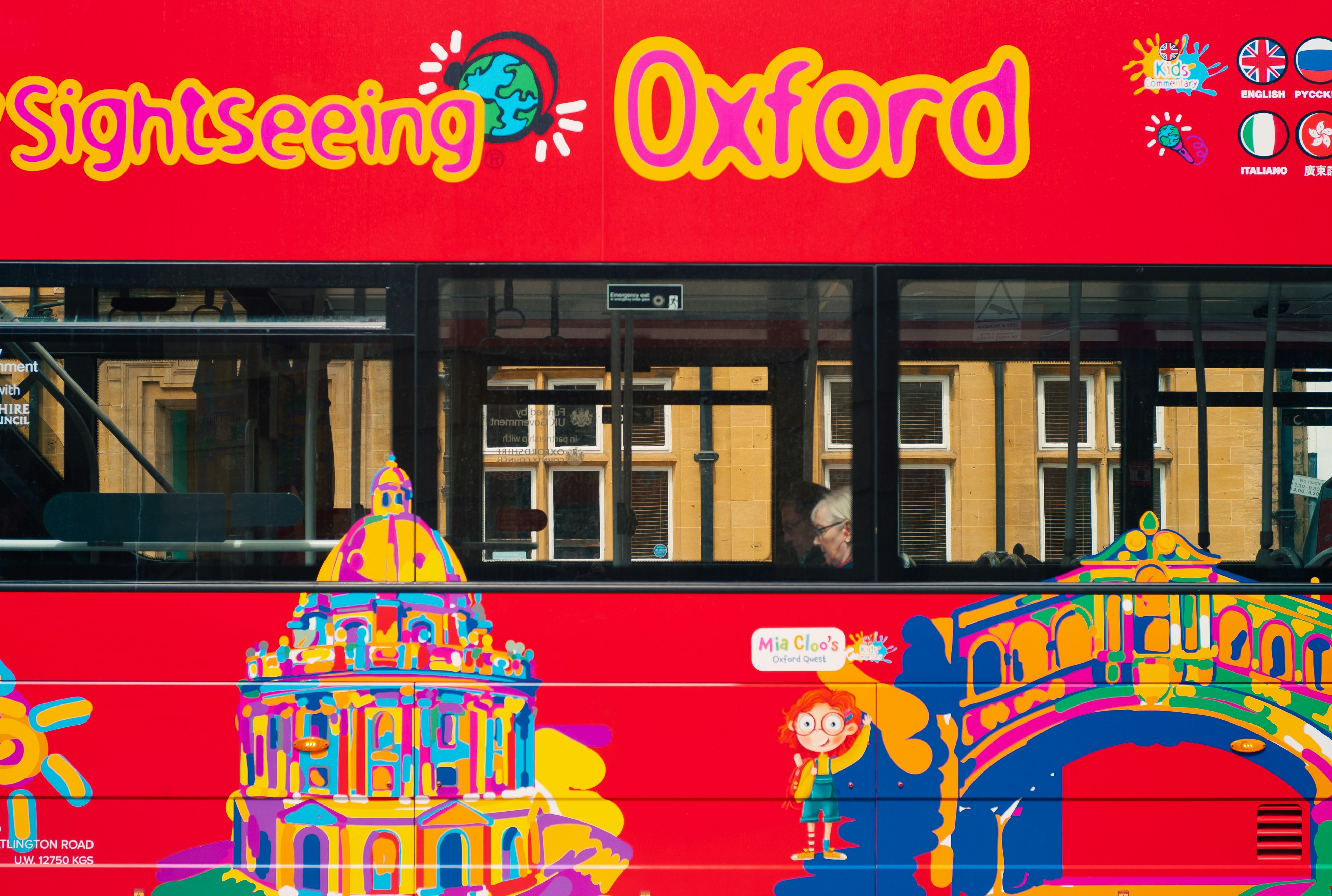
The Architecture of Learning
The city's architectural landscape was shaped by ambition and devotion stretching back nearly a millennium. Along narrow medieval lanes, college gates were carved from limestone that glows golden in morning light. Behind these portals, quadrangles have been maintained with meticulous care, their lawns manicured to perfection and their ancient walls draped with climbing roses and wisteria.
The Radcliffe Camera, completed in 1749, was designed as a reading room that would inspire scholarly contemplation. Its circular form and domed roof were conceived in the Palladian style, creating what has become one of Britain's most photographed buildings. Today, students still gather beneath its soaring interior, surrounded by thousands of volumes that have been consulted by seekers of knowledge across three centuries.
At the Bodleian Library, a right to receive a copy of every book published in the United Kingdom has been maintained since 1610. The library's collection was expanded over centuries, creating a labyrinth of reading rooms, storage vaults, and tunnels that snake beneath the city streets. In Duke Humfrey's Library, the oldest reading room still in use, wooden reading desks have been worn smooth by generations of scholars, each leaving behind invisible traces of their intellectual pursuits.
Things to do in Oxford
Voices Through the Centuries
The tutorial system—a method of intensive one-on-one or small-group teaching—was refined here over centuries and has been exported to universities worldwide. In wood-paneled rooms warmed by crackling fires, deep conversations about philosophy, literature, and science have been conducted between mentors and students since medieval times. These exchanges were never meant to be comfortable; ideas were challenged, assumptions questioned, and young minds pushed to defend their positions with rigor and clarity.
Great thinkers have walked these streets and contributed to the intellectual ferment that characterizes the city. In the 13th century, Roger Bacon conducted pioneering work in optics and astronomy. During the English Civil War, the city was made into a Royalist stronghold, with King Charles I establishing his court here. Later, the Oxford Movement sought to renew Anglican spirituality, while the Inklings—a literary group that included J.R.R. Tolkien and C.S. Lewis—gathered at the Eagle and Child pub to discuss their works in progress.
Where Ancient Meets Modern
While tradition gets honored at every turn, innovation has been woven into the city's fabric just as thoroughly. In laboratories scattered across the city, groundbreaking research gets conducted in fields ranging from particle physics to vaccine development. The Oxford-AstraZeneca COVID-19 vaccine was developed here, saving countless lives across the globe—a reminder that the pursuit of knowledge in this historic setting continues to have real-world impact.
Science parks on the city's outskirts have been established to foster collaboration between academic researchers and commercial enterprises. Start-ups founded by recent graduates work alongside multinational corporations, all drawn by the intellectual capital that flows from the colleges. The city has been transformed into a hub for biotechnology, publishing, and information technology while maintaining its quintessentially historic character.
The Rhythm of Academic Life
The academic year imposes its own rhythm on daily life. During Michaelmas, Hilary, and Trinity terms, the streets fill with students cycling to lectures, their black gowns billowing behind them like wings. In dining halls where portraits of past scholars gaze down from paneled walls, formal dinners get conducted in Latin, maintaining traditions that stretch back centuries.
Come summer, when terms have ended, tourists flood into the city to photograph the colleges and punt along the River Cherwell. Yet even in the quieter months, intellectual life doesn't cease. Researchers continue their work, summer schools attract visiting scholars, and the libraries remain full of those devoted to their studies regardless of the season.
Beyond the College Walls
The city's identity extends well beyond its academic institutions. At the Covered Market, operational since 1774, vendors have sold everything from fresh produce to artisan cheeses. The aroma of baking bread mingles with the scent of fresh flowers, creating a sensory experience that has been enjoyed by generations of residents and visitors.
Along Broad Street, bookshops have been run by families for decades, their shelves packed with rare editions and contemporary works. Blackwell's, established in 1879, grew from a single small shop into an institution whose massive underground Norrington Room houses over 160,000 books. Here, hours can be lost browsing subjects from ancient philosophy to cutting-edge quantum mechanics.
The Museum of Natural History was constructed in the Victorian era as a cathedral to science, its soaring glass roof supported by cast-iron columns. Within its walls, the famous 1860 debate between Thomas Huxley and Bishop Samuel Wilberforce over Darwin's theory of evolution was held—a pivotal moment in the relationship between science and religion that continues to resonate today.
A Living Heritage
Throughout the year, traditions get observed with ceremonial precision. May Morning has been celebrated since the 16th century, when crowds gather at dawn to hear the Magdalen College choir sing from the top of the Great Tower. The tradition was maintained even during wartime, a testament to the city's determination to preserve its customs despite upheaval.
At formal occasions, academic dress gets worn according to strict protocols. Subfusc—the formal attire of dark suit, white shirt, and black gown—must be donned for examinations and special ceremonies. After final exams, students get "trashed" by friends who spray them with champagne, confetti, and foam, a raucous celebration that contrasts beautifully with the solemnity of the preceding weeks.
Twilight Reflections
As evening descends and the last light fades from honey-colored stone, the city takes on a different character. Gas lamps flicker to life along cobbled lanes, casting pools of warm light that have guided footsteps for generations. Through lit windows, silhouettes of students can be seen bent over books, continuing the work of understanding that has been pursued here without interruption for nearly a thousand years.
In quieter corners, away from the tourist routes, the true spirit of this place reveals itself most clearly. A solitary figure crosses a quadrangle, footsteps echoing on ancient stone. Somewhere, a college bell tolls the hour. These simple moments connect the present to an unbroken chain of scholars, dreamers, and seekers who have made this city their temporary home while contributing to its permanent legacy.
The pursuit of knowledge was never meant to be easy or comfortable. Here, in these ancient streets and venerable halls, that truth gets reinforced daily. Yet the rewards—the sudden clarity of understanding, the thrill of discovery, the connection across centuries to minds long departed—make every challenge worthwhile. For those fortunate enough to spend time within its embrace, this remarkable city offers not just an education, but a transformation. The journey through Britain's academic heritage often leads travelers to explore other historic destinations, and Cambridge offers its own compelling vision of scholarly excellence worth experiencing.




 Home
Home Wishlist