
Málaga: Where Mediterranean Light Meets Andalusian Soul
Foundations in Antiquity
The origins of this coastal settlement can be traced back nearly three millennia. Phoenician merchants were drawn to the natural harbor around 770 BCE, establishing what they called Malaka. Under Roman rule, the settlement flourished as Malaca, a federated city that prospered from the export of salted fish and garum, the fermented fish sauce prized throughout the empire.
The most dramatic transformation, however, was wrought during the centuries of Moorish rule. From 711 CE, the city became part of Al-Andalus, and the landscape was reshaped with sophisticated irrigation systems, fragrant gardens, and formidable defensive structures. The Alcazaba, a palatial fortress begun in the 11th century, still dominates the hillside, its double walls and elegant arches testament to the engineering prowess of its builders. Higher up, the Gibralfaro castle was constructed to house troops and protect the Alcazaba below.
Things to do in Malaga
Canvas and Vision
On a quiet square in the old quarter, the house where Pablo Picasso was born in 1881 has been preserved as a foundation and museum. Though the artist would spend most of his revolutionary career in France, the luminous quality of Andalusian light and the corrida culture of his birthplace would haunt his work throughout his life. His connection to the city has been honored through the Museo Picasso, housed in the renovated Buenavista Palace, where over 200 works spanning his career can be viewed.
The artistic legacy hasn't remained frozen in the past. The Centre Pompidou Málaga, the first satellite of the Parisian institution outside France, was opened in 2015 within the striking glass cube of El Cubo at Muelle Uno. Contemporary installations and rotating exhibitions from the Pompidou's vast collection have drawn a new generation of culture seekers to the revitalized port area.
Flavors of the South
The rhythm of daily life here has long been dictated by meals shared among friends and family. In the historic center, around the narrow streets branching from Calle Larios, traditional establishments serve local specialties that have been perfected over generations. Espetos de sardinas – fresh sardines skewered and grilled over driftwood fires on the beach – represent one of the most elemental and beloved traditions.
The wine culture deserves particular attention. The nearby Axarquía region produces unique sweet wines from sun-dried grapes, while the Montes de Málaga denomination protects local viticulture. In the bodegas of the old town, these wines can be sampled alongside plates of local almonds, cured cheeses, and anchovies from the nearby fishing villages.
Morning routines typically begin with churros dipped in thick hot chocolate, or perhaps a mollete antequerano – the soft, flat bread from nearby Antequera – toasted and drizzled with local olive oil. These simple pleasures have been enjoyed the same way for centuries, a comforting constant in a rapidly changing world.
Transformation and Growth
The closing decades of the 20th century brought significant challenges. Economic stagnation had set in, and the city seemed content to rest in the shadow of its more famous Andalusian siblings, Seville and Granada. The transformation that would follow was neither accidental nor inevitable – it required vision, investment, and a willingness to reimagine what the city could become.
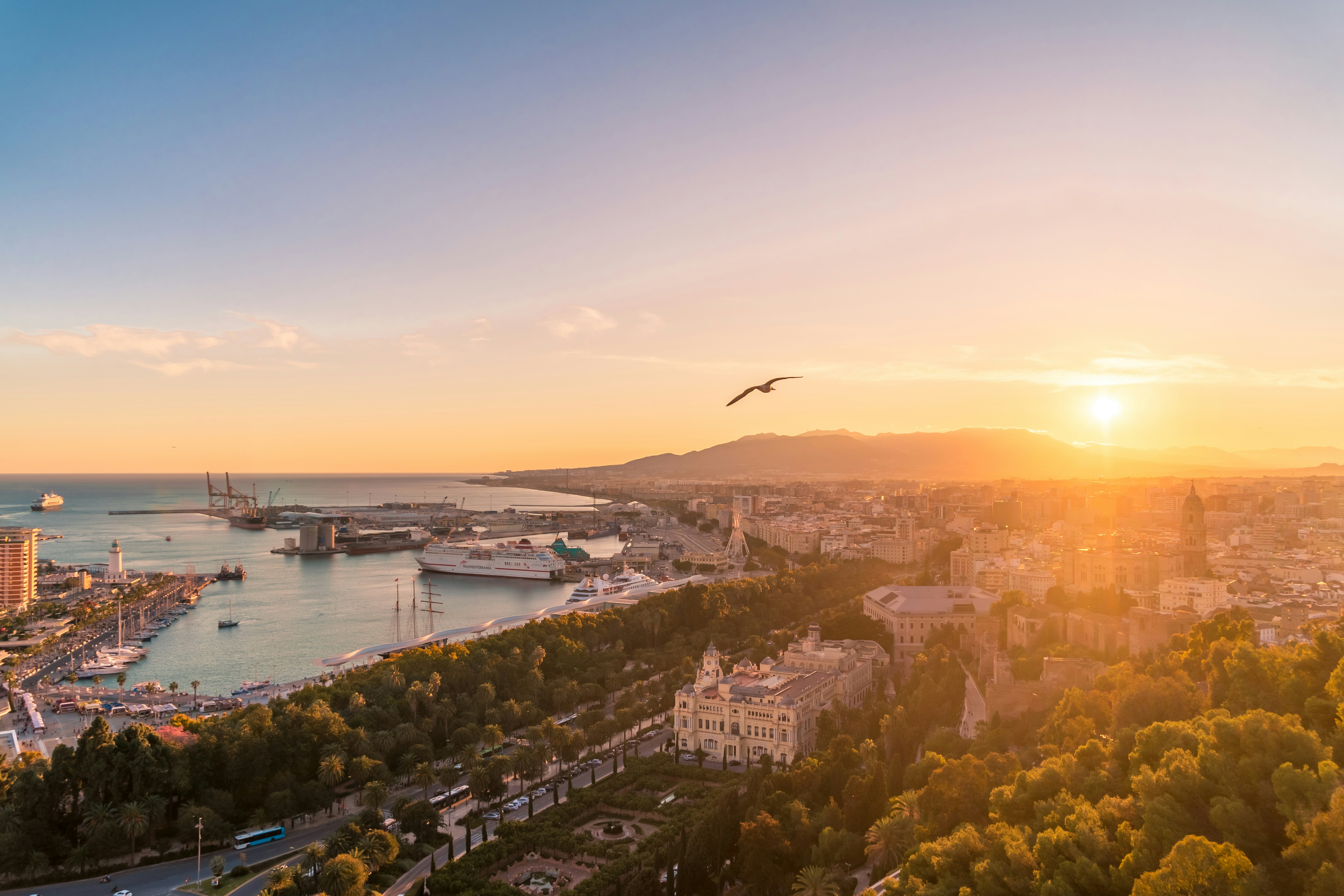
The port area, once an industrial barrier separating the city from its waterfront, was reimagined as a public space. The Muelle Uno promenade now draws residents and visitors to its restaurants, shops, and cultural venues. The Palmeral de las Sorpresas, with its distinctive architectural canopies and subtropical gardens, has become a beloved gathering place.
The museum boom of the 21st century put the city on the cultural map. Beyond Picasso and Pompidou, the Carmen Thyssen Museum showcases 19th-century Spanish painting in a restored 16th-century palace, while the Centre for Contemporary Art offers free admission to cutting-edge exhibitions. This cultural infrastructure has fundamentally altered perceptions and attracted a more diverse international audience.
Sacred Spaces and Festivals
The Cathedral of Our Lady of the Incarnation dominates the skyline with its peculiar asymmetry – the south tower was never completed, earning the structure the affectionate nickname "La Manquita" (the one-armed lady). Construction began in 1528 on the site of the former main mosque, and the building process stretched across more than two centuries. The result blends Renaissance, Baroque, and Neoclassical elements in a uniquely harmonious whole.
The religious calendar continues to structure the social year. Semana Santa, the week leading to Easter, brings an intensity of devotion and spectacle unmatched elsewhere. Elaborate pasos – platforms bearing religious statuary – are carried through the streets by teams of bearers, accompanied by the haunting sound of saetas, the traditional flamenco songs of devotion. The August feria, celebrating the city's reconquest from the Moors in 1487, transforms the fairgrounds into a riot of color, music, and dance that continues until dawn.
Between Sea and Mountain
The geographical position has always been one of the city's greatest assets. Beaches stretch along the coast in both directions, from the popular Malagueta to the quieter stretches toward Torremolinos and beyond. The Mediterranean maintains a relatively constant temperature, making beach life viable for much of the year.
Behind the coastal plain, the Montes de Málaga Natural Park offers a completely different landscape. Pine forests and hiking trails provide escape from urban heat, while mountain villages like Comares and Frigiliana – considered one of Spain's most beautiful pueblos blancos – can be reached within an hour's drive.
Living Traditions
Despite rapid modernization, certain rhythms persist. The evening paseo, when families and friends take to the streets to walk and socialize, still marks the transition from afternoon to night. The shaded tables of Plaza de la Merced fill with conversation and laughter. The tradition of tapas crawls – moving from bar to bar, sampling small plates and sharing wine – remains central to social life.
The Teatro Cervantes, dating from 1870, continues to host performances ranging from classical music to contemporary theater. Flamenco can be experienced in intimate peñas, the private clubs where the art form is preserved in its purest state, far from tourist-oriented tablaos. These spaces, often tucked away in unremarkable buildings, guard the soul of Andalusian artistic expression.
The relationship between past and present has been carefully negotiated here. Ancient fortresses cast their shadows over contemporary art installations. Traditional taverns operate alongside innovative fusion restaurants. A city once defined primarily by its past has discovered how to honor that heritage while writing new chapters. The journey from antiquity to modernity hasn't erased what came before but rather built upon those foundations, creating something both deeply rooted and perpetually evolving. Much like the transformation seen in Dresden, where historical reconstruction and contemporary culture have found harmony, the Andalusian coast has proven that reinvention need not mean abandonment of identity.


 Home
Home Wishlist