
Milan: Where Fashion, Art, and Ambition Collide
The Cathedral at the Center
The Duomo stands as the city's architectural soul. Construction was begun in 1386, though the façade wouldn't be completed until Napoleon ordered its finishing in 1805. Today, over 3,400 statues adorn its exterior, each one carved by hands that understood devotion could be expressed through stone. From the rooftop terraces, reached by climbing narrow staircases or taking a modern elevator, the entire metropolis can be surveyed – a sprawling testament to Lombardy's economic might.
Inside, the cathedral's five naves stretch toward heaven, supported by 52 columns that represent the weeks of the year. Light filters through stained glass windows, some dating back to the 15th century, casting colored patterns across the floor where millions of feet have walked in prayer, wonder, and contemplation. The golden statue of the Madonnina, perched at the highest point, has watched over the city since 1774, her presence felt even when obscured by fog or clouds.
Things to do in Milan
A Legacy Painted and Sculpted
Within the refectory of Santa Maria delle Grazie, Leonardo da Vinci's "The Last Supper" has been preserved since the late 1490s. The fresco, painted directly onto the wall using experimental techniques that began deteriorating almost immediately, has been restored multiple times. Yet something of Leonardo's genius remains untouched by time – the way each apostle's face captures a different response to Christ's announcement of betrayal, the mathematical precision of the perspective, the haunting calm at the composition's center.
At the Pinacoteca di Brera, masterpieces by Caravaggio, Raphael, and Mantegna have been gathered into what was originally a Jesuit college. The collection was assembled during the Napoleonic era, when artworks were seized from churches and monasteries across northern Italy. Walking through its halls, the evolution of Italian painting can be traced from the Byzantine rigidity of early religious art to the dramatic chiaroscuro of the Baroque period.
Fashion's Temple
The Quadrilatero della Moda – the fashion district bounded by four elegant streets – has been transformed into a pilgrimage site for those who worship at style's altar. In showrooms and ateliers along Via Montenapoleone and Via della Spiga, next season's trends get decided by designers whose names carry weight across continents. During Fashion Week, twice yearly, the streets become runways themselves, photographed and streamed to millions watching from Tokyo to New York.
But fashion here goes deeper than clothing. It reflects an attitude, a way of moving through the world with confidence and precision. At historic cafés like Cova, established in 1817, elegantly dressed Milanese have been gathering for centuries, their conversations blending business negotiations with artistic debates. The ritual of aperitivo, invented at Bar Basso in this very city, turns early evening into a social institution where Campari and Negroni Sbagliato flow as freely as gossip and ideas.
Industrial Heritage Reimagined
The Pirelli Tower, once Europe's tallest building when completed in 1958, signaled the city's post-war transformation into an industrial powerhouse. Its tapered form was designed by Gio Ponti to echo the grace of a cathedral spire, proving that even utilitarian structures could aspire to beauty. Today, it remains headquarters to one of the world's premier tire manufacturers, a symbol of Lombardy's manufacturing excellence.
More recently, abandoned industrial zones have been reimagined as cultural spaces. The Hangar Bicocca, a former locomotive factory, now houses large-scale contemporary art installations. Anselm Kiefer's "The Seven Heavenly Palaces" occupies the cavernous space with seven towers built from reinforced concrete and lead, each weighing 90 tons. The contrast between the rusted industrial architecture and cutting-edge art creates a dialogue between past and future that feels quintessentially Milanese.
Opera's Hallowed Ground
La Scala's reputation was built over centuries of premieres and performances. Verdi's Nabucco debuted here in 1842, launching both the composer's career and Italy's unification movement – the chorus "Va, pensiero" becoming an unofficial anthem. Puccini's Madama Butterfly, Bellini's Norma, and countless other masterpieces received their first performances on this stage.
The theater itself, designed by Giuseppe Piermarini and opened in 1778, reflects neoclassical restraint from the outside while the interior dazzles with red velvet and gilded boxes. The acoustics have been praised by every great singer who has performed here, from Maria Callas to Luciano Pavarotti. To attend an opening night at La Scala remains one of the world's most prestigious cultural experiences, where Italian society gathers in its finest attire to judge not just the performance but each other.
Canals and Forgotten Waterways
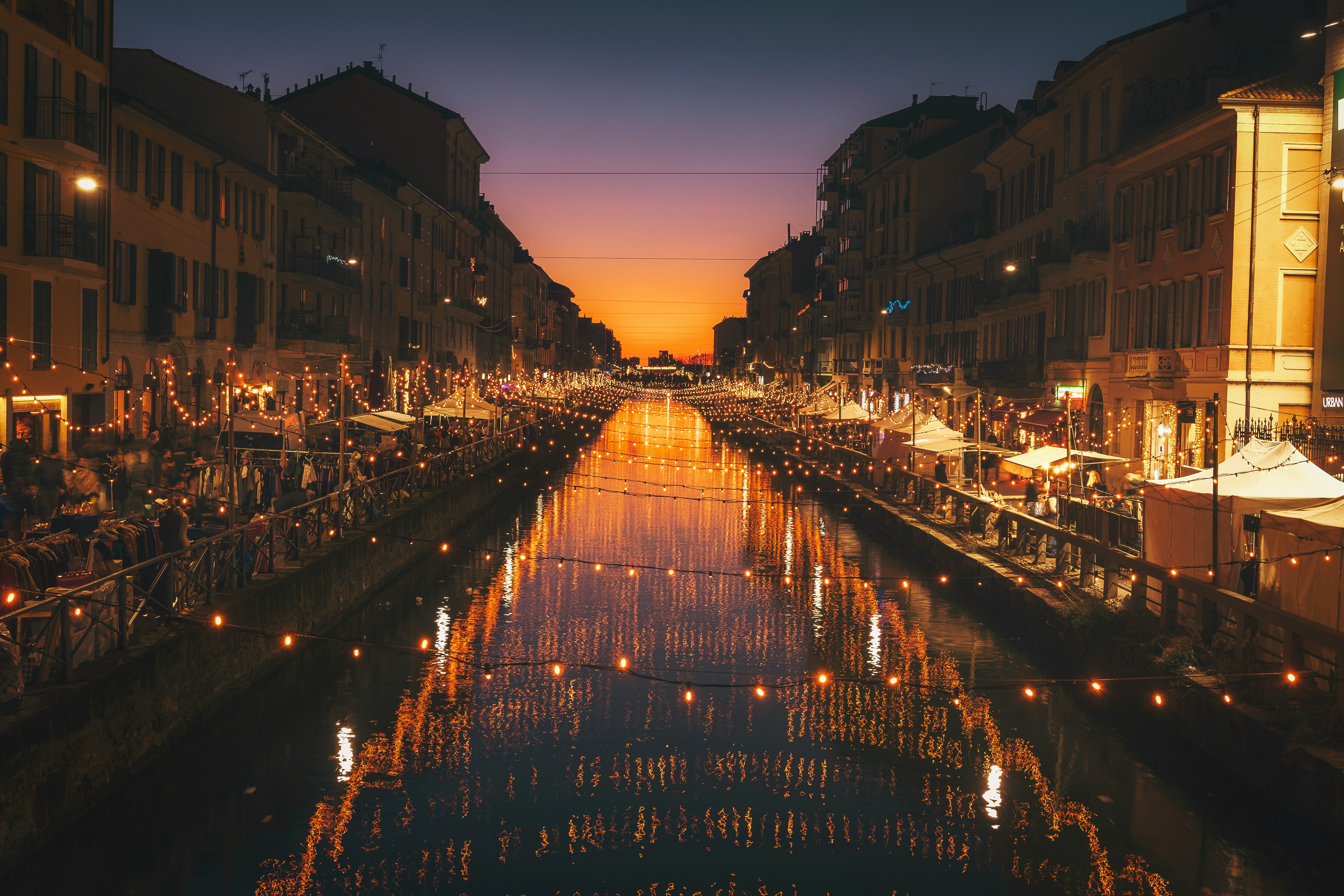
Few visitors realize that canals once crisscrossed the entire city. The Navigli district preserves remnants of this hydraulic network, engineered partly by Leonardo da Vinci, which connected the metropolis to northern Italy's lakes and rivers. Barges carried marble for the Duomo along these waterways, while goods from across Europe flowed through what was essentially an inland port.
Today, the Naviglio Grande and Naviglio Pavese have been transformed into bohemian quarters where artists' studios occupy former warehouses and restaurants line the waterfront. On summer evenings, the fondamenta fill with people enjoying wine and conversation, the water reflecting lights that dance until late into the night. Monthly antique markets along the canal banks draw treasure hunters searching for forgotten objects that might once have traveled these very waters.
Green Spaces and Modern Visions
Parco Sempione, created in the English landscape style during the late 19th century, offers respite from urban intensity. The park stretches from the Castello Sforzesco to the Arco della Pace, a triumphal arch begun by Napoleon and completed after his defeat. Families picnic on the lawns, couples row boats across the small lake, and joggers follow paths that wind between mature trees planted over a century ago.
The Bosco Verticale – Vertical Forest – represents contemporary urban planning at its most ambitious. Two residential towers, completed in 2014, support over 900 trees and 20,000 plants on their balconies, creating a living façade that changes with the seasons. The project, designed by Stefano Boeri, has been hailed as a model for sustainable high-density housing, proving that environmental consciousness and luxury need not be mutually exclusive.
Culinary Traditions Preserved
Milanese cuisine reflects the region's agricultural wealth and historical Austrian influences. Risotto alla milanese, tinted golden with saffron and enriched with bone marrow, has been prepared in local kitchens since the 16th century. The dish's origins trace to the construction of the Duomo, when a glass worker's assistant supposedly added saffron – used for coloring glass – to rice at a wedding feast, creating an accidental masterpiece.
Ossobuco, braised veal shanks served with gremolata, represents Lombard cooking at its most sophisticated – simple ingredients elevated through careful technique and time. At traditional trattorias like Trattoria Milanese, established in 1933, recipes have been passed down through generations, the same copper pots still used to achieve that perfect slow simmer.
Panettone, the dome-shaped sweet bread studded with candied fruit, was born here and remains a point of civic pride. During Christmas season, the city's master bakers compete to create the lightest, most flavorful version of this labor-intensive specialty that requires days of fermentation and precise temperature control.
Intellectual Capital
The Università degli Studi di Milano and Politecnico di Milano have educated generations of Italy's doctors, engineers, and architects. These institutions drive research in fields from biomedical science to sustainable design, attracting students and faculty from across the globe. The presence of these universities infuses the city with intellectual energy, creating a population that values innovation as much as tradition.
Publishing houses concentrated here have shaped Italian literature for over a century. Mondadori, Feltrinelli, and Rizzoli maintain headquarters in the city, their editorial decisions influencing what millions read. The Salone del Mobile, the world's premier furniture fair held annually, draws designers and manufacturers who shape how people live in their homes across continents.
The journey from this northern capital to other Italian destinations reveals how deeply interconnected the country's artistic heritage has become, with Florence offering complementary Renaissance treasures that complete any understanding of Italy's creative legacy.


 Home
Home Wishlist