
Salamanca: Where Golden Stone Tells Ancient Stories
The Golden Radiance
A particular quality of light can be observed here, one that transforms ordinary stone into something almost magical. The local Villamayor sandstone, from which most historic buildings have been constructed, possesses a warm honey color that seems to capture and hold the Spanish sunlight. By late afternoon, entire plazas appear to be illuminated from within, as if the buildings themselves have been storing sunshine all day only to release it in a golden glow.
This architectural signature was not chosen by accident. For centuries, master craftsmen have worked this soft stone, carving intricate facades that tell stories in relief. Gargoyles peer down from corners, saints stand watch over doorways, and heraldic symbols announce the importance of institutions that have endured through wars, plagues, and political upheavals. The stone weathers with grace, its surfaces softening over time, adding texture and depth to already magnificent structures.
Things to do in Salamanca
A Cathedral of Two Faces
The cathedral complex presents an unusual architectural puzzle – two cathedrals built side by side, separated by centuries yet joined in purpose. The older Romanesque structure, begun in the 12th century, demonstrates the robust, fortress-like quality characteristic of its era. Heavy columns support rounded arches, and light filters through small windows into a space designed as much for protection as for prayer.
Adjacent to this ancient sanctuary, the New Cathedral rises with Gothic ambition. Construction began in 1513 and continued for more than two centuries, meaning multiple architectural styles have been woven into its fabric. Soaring vaults draw the eye heavenward, while elaborate stonework displays the technical mastery achieved by Renaissance craftsmen. Perhaps most surprisingly, a small carved astronaut can be found among the figures adorning one portal – added during 20th-century restoration work as a playful nod to modernity.
The University's Enduring Legacy
Founded in 1218, one of Europe's oldest universities has been shaping minds here for over eight centuries. The institution's influence permeates every aspect of the town, from the bookshops lining narrow streets to the animated discussions that spill out of centuries-old lecture halls. Students from around the world have long been drawn to these venerable classrooms, creating a continuous flow of fresh ideas into ancient spaces.
The university's Plateresque facade stands as one of the finest examples of this ornate Spanish Renaissance style. Every inch has been covered with intricate carvings – medallions, coats of arms, mythological figures, and symbolic representations of knowledge and power. Hidden among this riot of decoration, a small frog sits atop a skull, and tradition holds that students who spot it without help will be blessed with good luck in their studies. Crowds gather daily, necks craned upward, searching for this tiny amphibian among thousands of carved details.
Where Scholars Once Walked
The atmosphere in certain quarters feels unchanged by time. Narrow medieval streets wind between tall buildings, their worn cobblestones polished smooth by countless feet over countless years. Small placas mark houses where famous writers, philosophers, and theologians once lived and worked. Miguel de Unamuno, one of Spain's most influential 20th-century intellectuals, served as university rector, and his former residence now houses a museum dedicated to his life and work.
The historic lecture halls continue to function as they have for centuries. Wooden benches bear the carved initials of long-dead students, a tradition that connects today's scholars with those who pondered the same questions in ages past. Libraries hold manuscripts and early printed books that represent irreplaceable fragments of human knowledge, carefully preserved through wars and revolutions that might have destroyed them.
The Plaza Mayor's Theater
Few public squares in Europe can match the architectural harmony achieved here. Completed in 1755, the Plaza Mayor presents a perfect example of Spanish Baroque design – a vast rectangular space enclosed by arcaded buildings of uniform height and style. The golden stone glows with particular intensity in this concentration, and the play of light and shadow across the medallion portraits of Spanish kings and heroes changes throughout the day.
This plaza serves as the town's living room, a gathering place where different generations and social classes mix freely. Morning brings coffee drinkers reading newspapers beneath the arches. Afternoons see tourists admiring the architecture while street musicians provide a soundtrack. Evenings transform the space into an outdoor salon where locals meet friends for drinks and conversation that often stretches late into the night. The energy never quite dissipates – even in the small hours, footsteps echo across the stones, and laughter drifts from bars tucked into the surrounding arcades.
Culinary Traditions
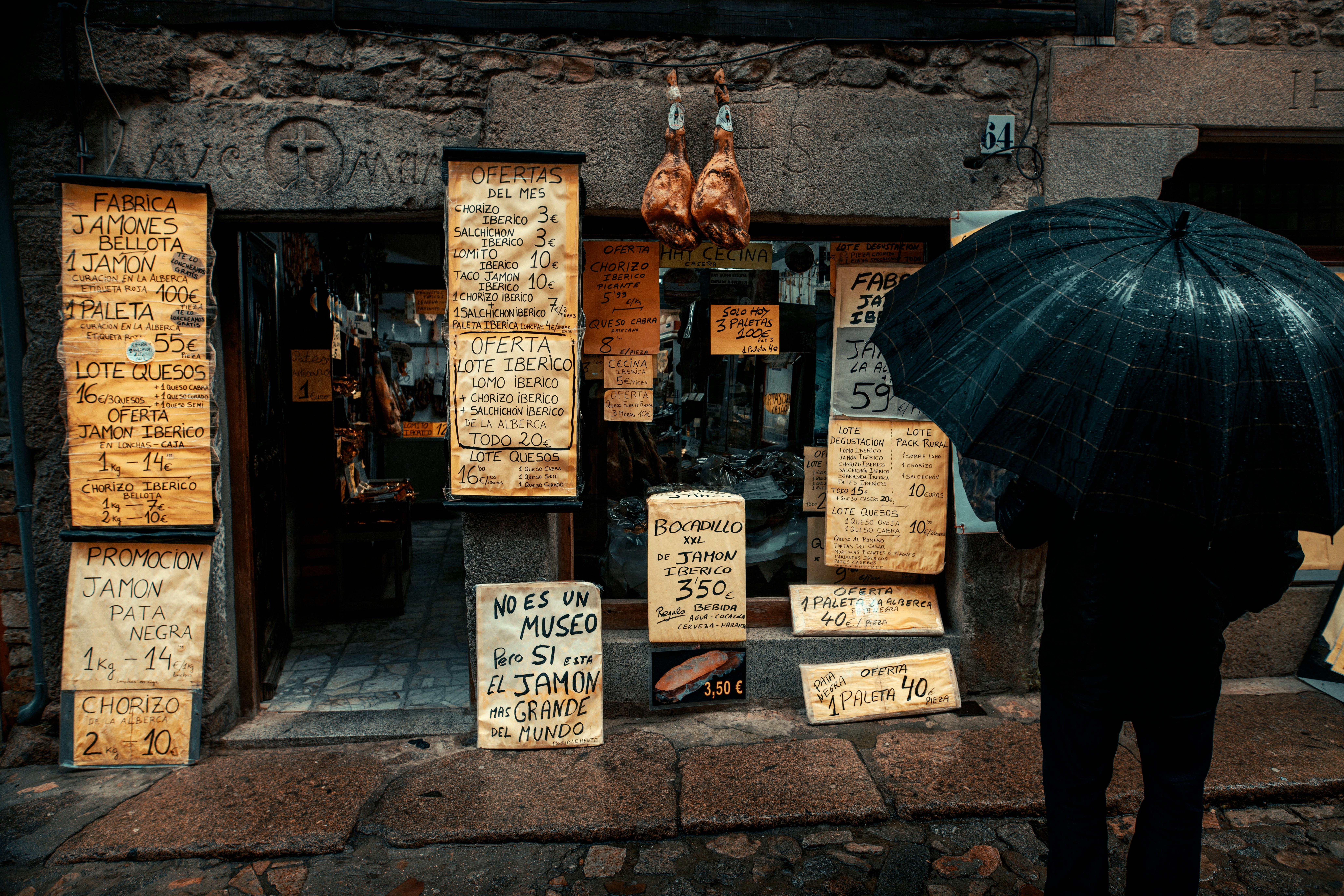
The gastronomy of this region reflects Castile's agricultural heritage and the influence of university culture. Hearty dishes designed to sustain through cold winters dominate traditional menus. Jamón ibérico, carved paper-thin from acorn-fed pigs, appears on nearly every table. Chanfaina, a rich stew made from rice and meat, provides comfort on chilly evenings. Hornazo, a meat-filled bread traditionally eaten during spring festivals, can be found in bakeries year-round.
The student population has always demanded affordable sustenance, and tapas culture thrives in response. Small bars compete to offer the most generous free tapas with each drink ordered – a custom that allows visitors to sample multiple dishes while moving from one establishment to another. Local wines from the nearby Ribera del Duero and Toro regions complement the food perfectly, their robust character matching the intensity of Castilian flavors.
The River's Quiet Presence
The Tormes River flows past the historic center, spanned by a Roman bridge that has carried traffic for nearly two thousand years. This ancient structure, with its weathered arches and time-smoothed stones, serves as a reminder that human settlement here predates even the medieval town. On summer evenings, the riverbanks fill with locals seeking relief from the heat, and the sound of water provides a peaceful counterpoint to the urban energy just steps away.
From certain vantage points along the river, the entire historic skyline can be taken in at once – cathedral towers rising above a sea of golden rooftops, church domes punctuating the horizon, and the university's historic buildings standing as monuments to centuries of intellectual pursuit. Photographers wait for the perfect light, knowing that the view changes dramatically with each passing hour.
Festivals and Traditions
The academic calendar dictates much of the town's rhythm. September brings an influx of students, filling empty apartments and breathing new life into neighborhoods that drowse through the summer heat. The feast of San Juan in June traditionally marked the end of the academic year, and though dates have shifted, the celebratory atmosphere remains. Throughout the year, religious festivals, cultural events, and university celebrations provide excuses for the entire community to gather in the streets.
Holy Week processions wind through the old town with solemn grandeur, while the September fair brings carnival rides and late-night revelry. Each event adds another layer to the town's complex identity – part medieval city, part university town, part living museum, and entirely itself.
Beyond the Center
While the historic core captures most attention, the modern neighborhoods extending beyond the old walls tell their own story of adaptation and growth. Art Nouveau and Art Deco buildings from the early 20th century line certain streets, evidence of prosperity during Spain's industrial expansion. Contemporary architecture has been added more recently, creating a dialogue between old and new that doesn't always achieve harmony but demonstrates a city unwilling to become merely a monument to its past.
Markets in newer neighborhoods offer a different perspective on daily life – one less filtered through the tourist lens. Here, elderly women still do their daily shopping for fresh produce, fishmongers call out their catches, and the rhythm of ordinary Spanish life continues much as it has for generations, albeit with modern conveniences that would astound earlier residents.
As evening settles over the golden stone and lights begin to glow in windows throughout the historic quarter, the timeless quality of this place becomes even more apparent. The same bells that have marked hours for centuries continue their ancient duty. Students hurry to evening classes in buildings that have hosted lectures since medieval times. And somewhere in the Plaza Mayor, a group of friends gathers for conversation and wine, unknowingly recreating a scene that has played out countless times across the centuries. Those seeking similar historic atmosphere might also find it worth exploring Heidelberg, where another ancient university town preserves its own distinctive character along a different European river.


 Home
Home Wishlist