
Palermo: Where Centuries Collide in Sicily's Capital
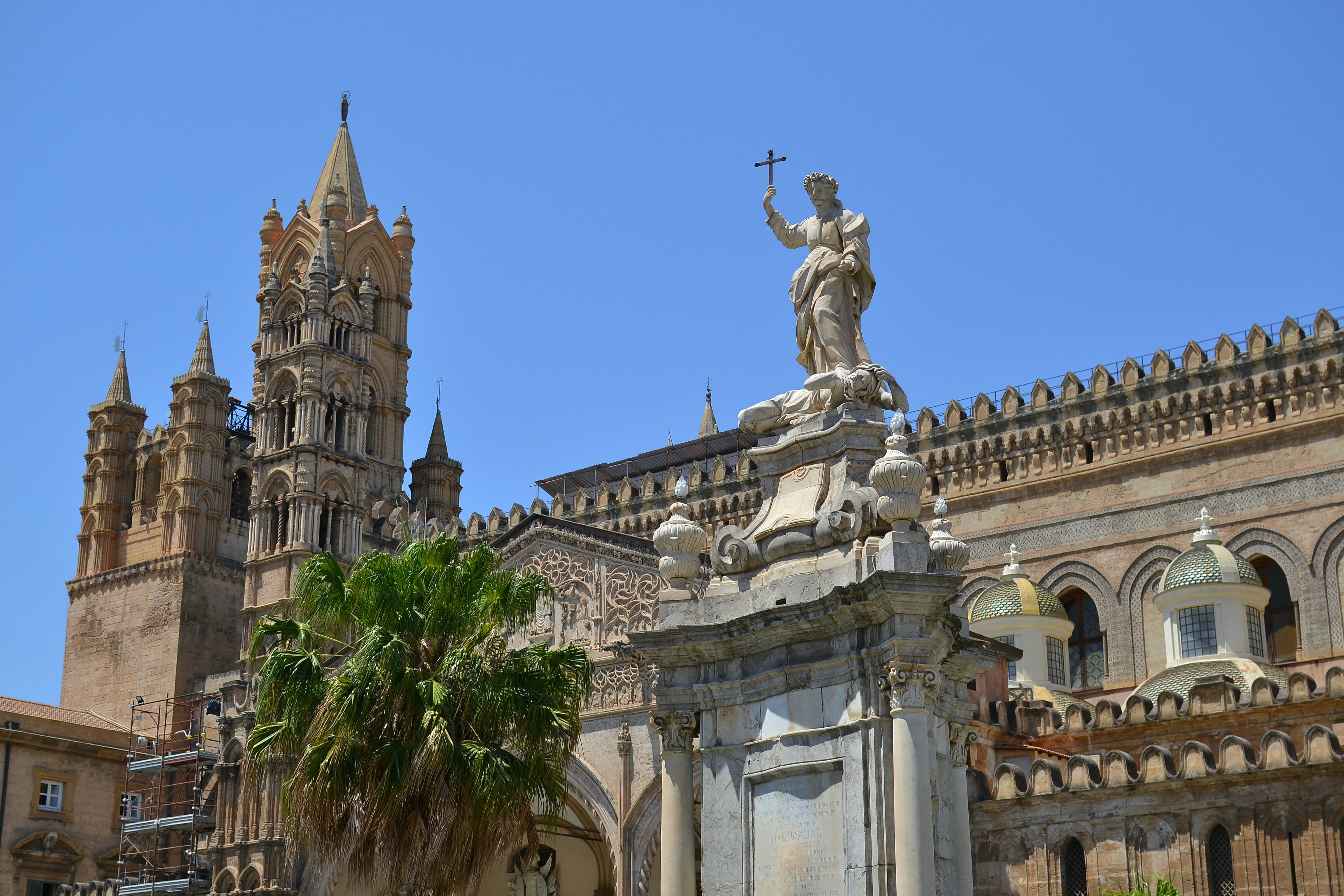
Echoes of Empire
Walking through the old quarter, footsteps have been retraced countless times over cobblestones that have known Phoenician merchants, Roman legions, Byzantine bureaucrats, Arab emirs, Norman knights, and Spanish viceroys. Each civilization was drawn to this strategic harbor, and each left something behind when forced to leave.
The Palazzo dei Normanni, perched on the highest point of the ancient city, has been transformed repeatedly since its foundations were laid by Phoenician settlers. What began as a Punic fortress was expanded by Romans, rebuilt by Arabs, and gloriously renovated by Norman kings. Inside, the Cappella Palatina dazzles visitors with its fusion of architectural styles – Byzantine mosaics depicting Christ Pantocrator gaze down from gilded ceilings while intricate Arab honeycomb muqarnas and Latin inscriptions coexist in harmonious contradiction.
These weren't merely conquered and abandoned by successive waves of invaders. Instead, knowledge was absorbed, techniques were blended, and aesthetics were married in ways that created something entirely new. The Arab-Norman style, recognized by UNESCO as a unique cultural achievement, can be seen throughout the historic center in churches, palaces, and fortifications.
Things to do in Palermo
Markets of Memory
The sensory assault of the Ballarò market has been experienced by generations since medieval times. Vendors' calls echo off ancient walls in dialect so thick it barely resembles standard Italian. Stalls overflow with produce that speaks to Sicily's crossroads position – North African spices, Spanish tomatoes, Arab-inspired sweets, and fish hauled from waters that have been fished for three thousand years.
At the Vucciria market, once the city's main commercial hub, the chaos has given way to a quieter atmosphere during daylight hours, though by night the area has been reclaimed by young people gathering in bars occupying the same spaces where medieval merchants once haggled over silk and ceramics. The famous "Vucciria" mural by Renato Guttuso captures this market life in vibrant, almost violent colors – a reminder that beauty here has never been delicate or refined, but raw and vital.
Sacred Spaces
Religion has been practiced in myriad forms within these city walls. The Cathedral, begun in 1185, embodies the architectural confusion that comes from centuries of additions and modifications. Norman-Arab exterior walls were given Catalan Gothic porticos, a neoclassical dome was added in the 18th century, and royal Norman tombs rest inside alongside Spanish viceroys. The building shouldn't work aesthetically, yet somehow it does – a metaphor for the city itself.
San Giovanni degli Eremiti, with its distinctive red domes, was built by the Normans on the site of a mosque, which itself had been constructed over an earlier Christian church. These layers weren't erased but absorbed, with Arab architectural elements deliberately preserved by Norman patrons who understood the value of continuity alongside conquest.
In the Kalsa district, the church of Santa Maria dello Spasimo stands roofless, its Gothic nave open to the sky after the roof collapsed centuries ago. Rather than being rebuilt, the space has been repurposed for concerts and exhibitions – history repurposed rather than merely preserved.
Scars and Survival
The Second World War was not kind to the historic center. Allied bombing campaigns, aimed at dislodging German forces, left entire neighborhoods in ruins. Post-war reconstruction was carried out hastily and often poorly. Entire Baroque palaces were left to crumble, and by the 1970s and 80s, much of the old city had been abandoned by those who could afford to leave.
This neglect, paradoxically, has been credited with preventing the kind of heavy-handed restoration that destroyed the character of other historic Italian cities. Buildings that might have been "restored" to within an inch of their lives were instead left alone, their faded frescoes and crumbling stucco creating an aesthetic of beautiful decay.
In recent decades, grassroots restoration efforts have been undertaken by cultural associations, young entrepreneurs, and determined locals who refused to surrender these spaces to entropy. Palaces have been converted into cultural centers, bombed-out buildings transformed into gardens, and abandoned churches given new life as performance venues.
Tables and Traditions
Sicilian cuisine, as practiced in its capital, has been shaped by the same cross-cultural influences visible in its architecture. Dishes incorporate Arab techniques like the use of raisins with savory foods, Spanish ingredients like tomatoes, and French refinements brought by Bourbon rulers.
The city's street food culture has been developed over centuries into a cuisine unto itself. Panelle (chickpea fritters) and crocchè (potato croquettes) can be found stuffed into sesame bread at friggitorie throughout the old quarter. Sfincione, a thick-crusted pizza topped with onions, anchovies, and breadcrumbs, was created here and remains beloved despite (or because of) its humble origins.
At the Antica Focacceria San Francesco, which has been operated continuously since 1834, specialties like pani ca' meusa (spleen sandwich) continue to be prepared according to recipes passed down through generations. The dish might sound shocking to outsiders, but it speaks to a cuisine born of necessity, where nothing was wasted and every part of the animal was transformed into something delicious.
Art from Ashes
The city's contemporary art scene has been energized by young Sicilians who stayed or returned, determined to create something new from the city's complicated legacy. The Manifesta 12 biennial, hosted in 2018, transformed neglected palaces and marginal spaces into cutting-edge exhibition venues. Many of these spaces have remained active cultural centers, creating a network of contemporary art venues throughout the historic center.
Theater has long been taken seriously here. The Teatro Massimo, Italy's largest opera house, reopened in 1997 after being closed for more than two decades due to corruption and mismanagement. Its restoration was seen as symbolic of the city's potential for renewal. Today, performances are attended by audiences that range from elderly season ticket holders to curious tourists to young locals discovering opera for the first time.
Living History
What strikes visitors most powerfully about Sicily's capital might not be any single monument or museum, but the way history has been lived in rather than simply preserved. Laundry hangs from Baroque balconies. Children play soccer in squares where medieval knights once jousted. Modern Vespas have been parked against walls built by Arab craftsmen a millennium ago.
This hasn't happened by accident or through careful urban planning. Rather, it emerged from necessity, from poverty, from a certain Sicilian stubbornness that refuses to abandon what previous generations built. The result feels authentic in a way that more carefully curated historic centers sometimes don't.
As evening settles over the Tyrrhenian Sea and the city's lights begin to glow against darkening skies, the same transformation that has occurred for centuries takes place once more. The heat of the day dissipates, families emerge for the passeggiata, and another chapter in this ancient city's story begins to be written. For travelers seeking a more raw and authentic experience beyond the typical tourist trails, the medieval character and artistic treasures found in Siena offer a compelling contrast to Sicily's sun-drenched complexity.


 Home
Home Wishlist