
Perugia: Where Ancient Stones Whisper Stories of Power and Beauty
Layers of Empire
The foundations were laid long before Rome became an empire. Etruscan builders shaped massive blocks of travertine into walls that still stand today, their weathered surfaces bearing witness to 2,500 years of history. These fortifications were constructed with such skill that later conquerors chose to build upon them rather than replace them.
Through the Porta Marzia, an Etruscan archway incorporated into later medieval walls, the layers of time can be read like pages in a book. Roman additions rest upon Etruscan bases. Medieval towers were built from Roman ruins. Renaissance facades were added to medieval structures. Each era left its mark without erasing what came before.
The Rocca Paolina, a papal fortress constructed in the 16th century, was built directly over an entire medieval neighborhood. Rather than demolishing the old streets completely, they were incorporated into the fortress's foundations. Today, visitors can walk through these underground passages, their footsteps echoing in spaces that once buzzed with daily life – shops, homes, and workshops preserved in shadow.
Things to do in Perugia
The Weight of Art
Within the Galleria Nazionale dell'Umbria, centuries of artistic achievement have been gathered and preserved. The collection begins with Byzantine icons, their gold backgrounds glowing in carefully controlled light. Panel paintings from the 13th and 14th centuries show the gradual evolution toward naturalism, each generation of artists pushing slightly beyond the conventions inherited from their teachers.
Works by Perugino fill several rooms, his serene Madonnas and graceful figures demonstrating why he was considered among the finest painters of his age. His student, Raphael, learned his craft in these hills before departing for greater fame elsewhere. The influence can be traced clearly – the same soft modeling of faces, the same careful balance of composition.
Piero della Francesca's Polyptych of Sant'Antonio commands attention in its own chamber. The mathematical precision of his perspective, the weight and solidity of his figures, the luminous quality of his color – all demonstrate why his works were studied by artists for centuries afterward.
Knowledge and Youth
One of Europe's oldest universities was established here in 1308, and its presence transformed the character of the place entirely. Students from across Italy and beyond were drawn to study law, medicine, and the liberal arts. Lecture halls filled with debate. Libraries accumulated precious manuscripts. The pursuit of knowledge became woven into the fabric of daily life.
Today, that tradition continues with renewed vigor. More than 30,000 students attend the university, their energy animating streets and piazzas. Cafes fill each afternoon with animated discussions over espresso. Bookshops do steady business. The rhythm of the academic calendar – the rush of exam periods, the quiet of holidays, the excitement of new beginnings each fall – provides structure to the passing year.
The Università per Stranieri, established in 1921, draws thousands of international students who come to study Italian language and culture. Their presence adds another layer of diversity, another set of perspectives to the ongoing conversation that defines urban life here.
Sacred Spaces
The Cathedral of San Lorenzo dominates the Piazza IV Novembre, though its facade was never completed. The bare stone face, unadorned by marble cladding, somehow suits the austere dignity of this hilltop setting. Within, the Chapel of San Bernardino contains a relic that draws pilgrims from across Italy – the wedding ring of the Virgin Mary, or so tradition maintains.
Across the piazza, the Fontana Maggiore stands as a masterpiece of medieval sculpture. Completed in 1278, the fountain's two marble basins feature panels depicting months of the year, signs of the zodiac, scenes from the Old Testament, and Aesop's fables. Water still flows from the mouths of bronze griffins and lions, just as it has for more than seven centuries.
Churches dot every neighborhood, each with its own history and artistic treasures. Sant'Angelo, a small circular temple from the 5th or 6th century, may have been built upon an even older pagan site. Its ancient columns, no two identical, were likely salvaged from earlier Roman buildings – a physical manifestation of how the past constantly reshapes itself into new forms.
Flavors of Tradition
The cuisine of Umbria reflects the surrounding landscape – hills covered with olive groves, forests rich with truffles, fields planted with ancient grain varieties. Simplicity gets valued above complexity, quality of ingredients above elaborate preparation.
In small trattorias tucked along side streets, dishes are prepared according to recipes passed down through generations. Strangolapreti – literally "priest stranglers" – a type of hand-rolled pasta, gets served with simple sauces that allow the flavor of the grain to shine through. Wild boar appears in rich ragù, the meat slowly braised until it falls apart at the touch of a fork.
Black truffles, harvested from the surrounding woods, get shaved over fresh pasta or scrambled into eggs. Their earthy, pungent aroma fills the air of restaurants during autumn and winter months. White chocolate Baci Perugina, created here in 1922, have been enjoyed worldwide, though the original factory still operates just outside the old town.
Local wines, from nearby vineyards planted on volcanic soil, pair perfectly with these robust flavors. Sagrantino di Montefalco, a powerful red wine with remarkable aging potential, has gained international recognition while remaining deeply rooted in regional tradition.
Living Canvas
Each July, the city transforms into a stage for Umbria Jazz, one of Europe's premier jazz festivals. Musicians from around the world perform in piazzas, theaters, and parks. The ancient stones provide acoustics shaped by centuries, lending a unique resonance to contemporary sounds. Audiences sit on medieval steps, sip wine under Roman arches, and experience music in settings that blur the boundary between past and present.
The festival's success reflects a broader cultural vitality. Theaters mount productions throughout the year. Art galleries show contemporary work alongside old masters. Street performers and buskers add spontaneous entertainment to daily life. Culture gets lived here, not merely preserved.
The View From Above
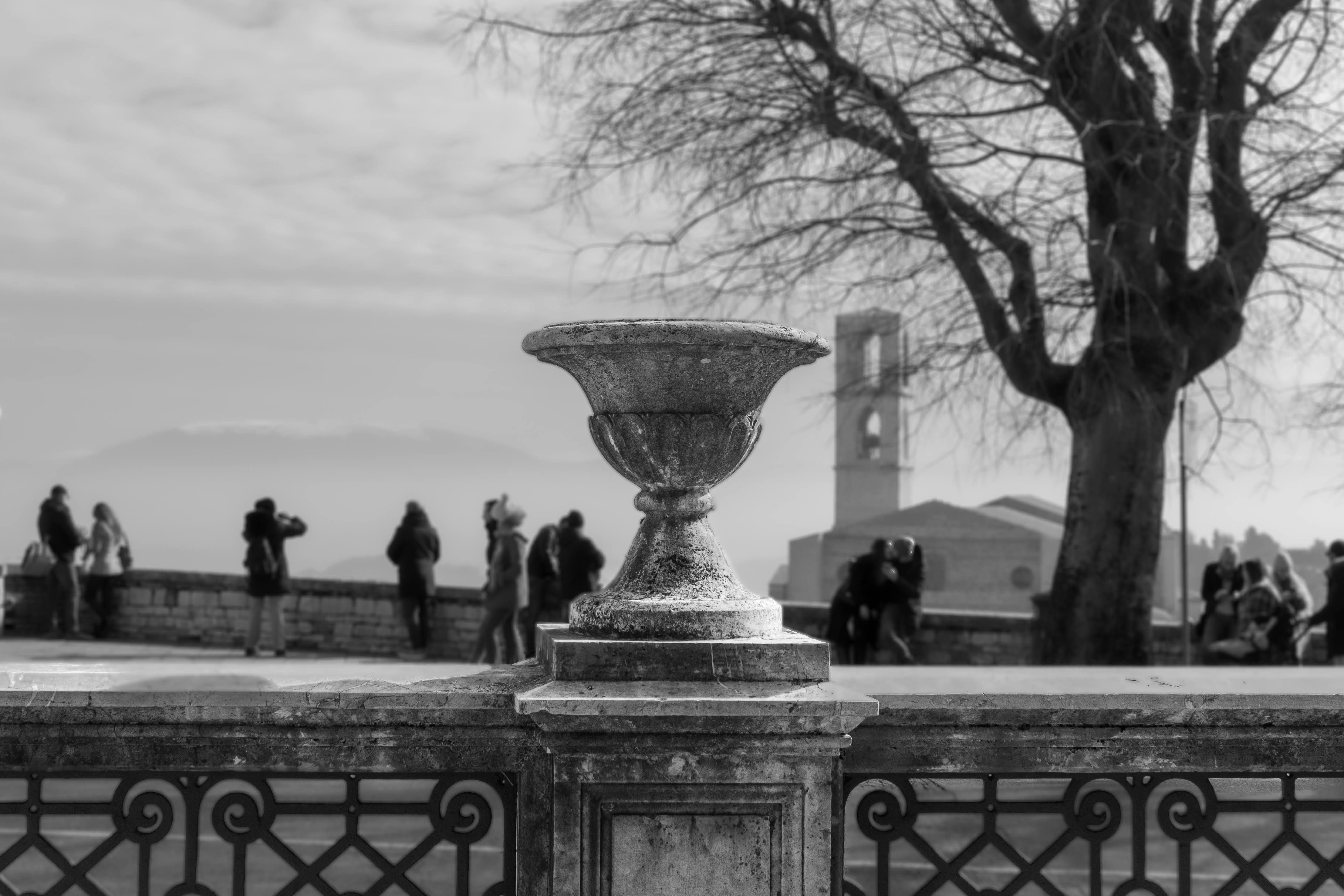
From various terraces and lookout points scattered throughout the upper town, the Umbrian landscape spreads out in all directions. Rolling hills fade into blue distance. Red tile roofs cascade down the slope below. Church bells mark the hours, their tones carrying across the valley. In early morning or late afternoon, when the light slants across the landscape, it becomes clear why so many painters were drawn to these hills.
The perspective gained from these heights extends beyond mere geography. Looking out across land that has been continuously inhabited for millennia, where generation after generation has worked the same soil, walked the same paths, and faced the same essential questions about how to live well, a certain humility gets instilled. We pass through briefly, while the land endures.
The same timelessness found here can also be experienced in other Italian cultural centers – the art treasures of Florence offer another profound encounter with Renaissance genius and enduring beauty.


 Home
Home Wishlist