
San Sebastián: A Basque Jewel Between Mountains and Sea
A Bay Worthy of Royalty
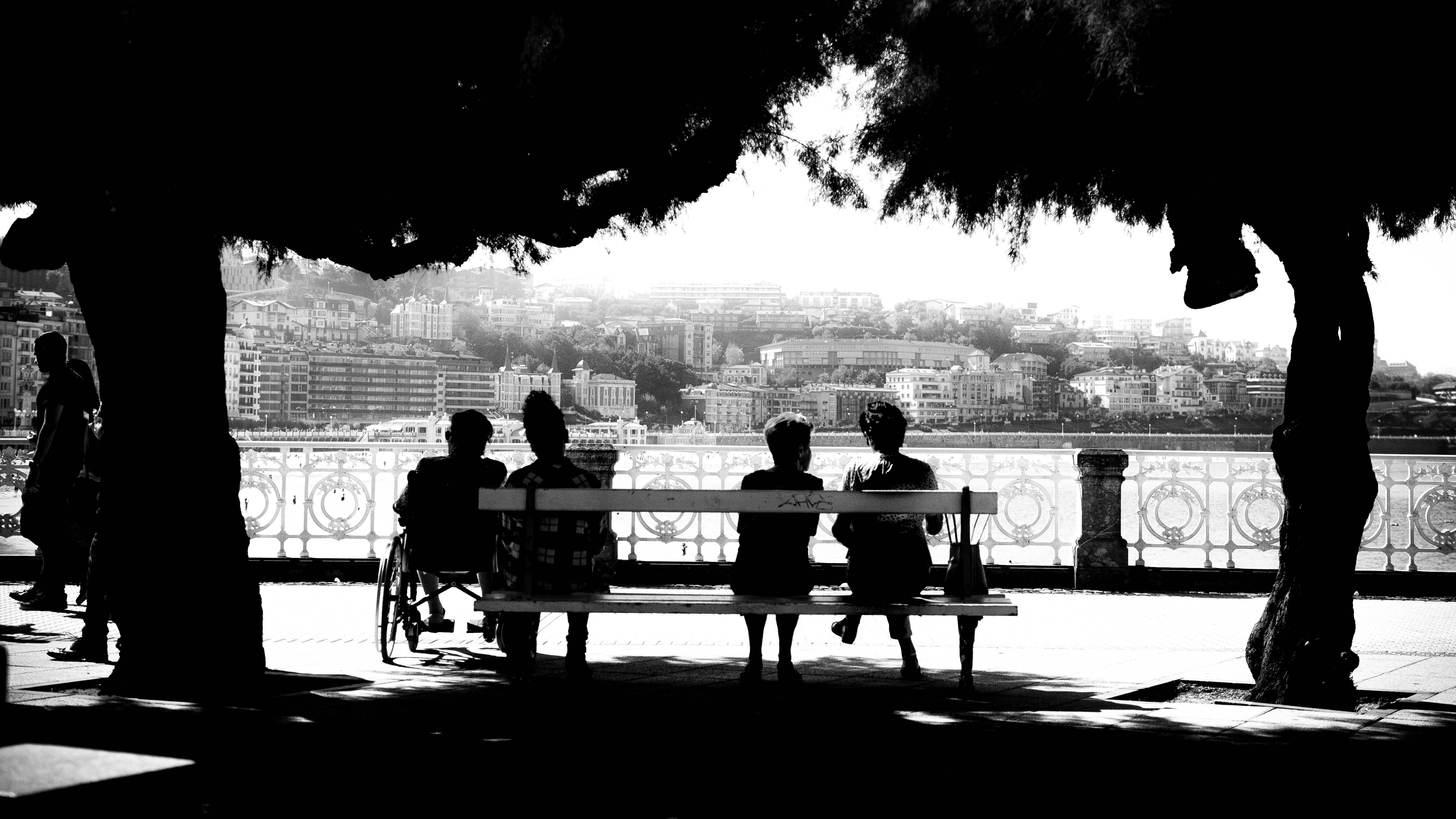
La Concha Bay has been celebrated as one of the most beautiful urban beaches in Europe. The crescent-shaped stretch of golden sand gets framed by Monte Urgull and Monte Igueldo, creating a natural amphitheater that has drawn visitors for over a century. The symmetry of the bay was enhanced in the 19th century when European aristocracy discovered its charms, transforming what had been a modest fishing port into a fashionable resort destination.
The promenade that borders the beach was designed with elegance in mind. White railings run along the waterfront, echoing the Belle Époque period when the city became the summer residence of Spanish royalty. Even today, that sense of refined leisure gets preserved in the grand hotels and casino that face the water, their facades maintained with evident pride.
Things to do in San-Sebastian
Old Town: Where Tradition Breathes
The Parte Vieja, rebuilt after a devastating fire in 1813, beats with the authentic rhythm of Basque life. Within its compact grid of streets, pintxo bars stand shoulder to shoulder, their counters laden with miniature culinary masterpieces. The tradition of hopping from bar to bar, savoring a small bite with a glass of txakoli at each stop, has been refined here into an art form.
Plaza de la Constitución serves as the district's historic heart. The numbered balconies that surround the square recall its former use as a bullring, when spectators would rent these prime viewing spots. Today, the plaza gets filled instead with the chatter of locals meeting for coffee or tourists pausing to admire the colorful facades that seem to lean in conspiratorially over the cobblestones.
The Basilica of Santa María del Coro stands as the old quarter's most striking religious monument. Its elaborate Baroque portal and somber stone exterior conceal an interior where gilded altarpieces gleam in the dim light, testament to centuries of devotion and artistic patronage.
Culinary Capital
The gastronomic reputation of this Basque city has been earned through unwavering dedication to quality and innovation. More Michelin stars per capita can be found here than almost anywhere else on earth. Yet haute cuisine represents just one facet of a food culture that permeates every level of society.
Traditional cider houses in the surrounding hills offer a more rustic but equally authentic experience. Long communal tables get laden with thick steaks, salt cod omelets, and sheep's milk cheese, while cider gets poured in thin streams from enormous barrels in a ritual called txotx. The sharp, slightly funky cider cuts through the richness of the food, cleansing the palate between bites.
Gastronomic societies, or txokos, represent a uniquely Basque institution. These private cooking clubs, traditionally male-only domains though that has begun to change, serve as places where members gather to cook elaborate meals and socialize. The emphasis placed on cooking as a communal, almost sacred activity reveals much about local values.
Cultural Currents
The Kursaal Congress Centre and Auditorium, with its two translucent glass cubes designed by Rafael Moneo, has become an iconic symbol of the city's contemporary identity. By day, natural light floods through the structures; by night, they glow like massive lanterns on the beach. World-class performances and film festivals get hosted within, cementing the city's status as a cultural hub.
Across the river, the Tabakalera International Centre for Contemporary Culture occupies a converted tobacco factory. Exhibition spaces, screening rooms, and production facilities have been carved from the industrial architecture, creating a dynamic venue where Basque and international artists push creative boundaries.
The San Telmo Museum, built into the slope of Mount Urgull and incorporating a 16th-century Dominican convent, traces Basque history from prehistoric times through the present. Contemporary murals by artist Ignacio Zuloaga wrap around the Renaissance cloister, creating a dialogue between past and present that characterizes the city's approach to heritage.
Mountain Escapes
Monte Igueldo can be reached via a century-old funicular railway that climbs at a steep angle, offering expanding views of the bay below. At the summit, a vintage amusement park maintains its old-world charm, while the viewing terrace provides panoramic vistas that have been photographed countless times yet never lose their power to impress.
Monte Urgull, by contrast, gets explored on foot via winding paths through shaded parkland. The historic fortifications that crown the hill bear witness to the city's strategic importance over centuries. At the very top, an enormous statue of Christ overlooks the bay, arms outstretched as if to embrace the city below.
Island Mystique
Santa Clara Island sits in the middle of La Concha Bay like a green jewel. During summer months, boats ferry visitors to this tiny speck of land where a small beach, lighthouse, and little else can be found. The island becomes a favorite destination for locals seeking a brief escape, the short boat ride enough to create a sense of adventure.
Stronger swimmers sometimes cross the channel from Ondarreta Beach, though currents can prove deceptive. From the island, the city's elegant curve becomes fully apparent, the mountains rising behind the buildings in layers of blue-green that fade toward the horizon.
Festivals and Fervor
The Tamborrada of San Sebastián, held every January 20th, transforms the city into a thunderous celebration. For 24 hours straight, groups of participants dressed as cooks and soldiers march through the streets beating drums in precise rhythms. The din becomes almost unbearable, yet the tradition gets fiercely protected, passed from generation to generation.
The San Sebastián International Film Festival, held each September, brings a touch of Hollywood glamour to this corner of Spain. Red carpets get rolled out, celebrities walk the beach promenade, and cinema lovers from around the world gather to celebrate both established masters and emerging voices in film.
Waves and Wanderers
Zurriola Beach, on the eastern side of the river, attracts a younger, more bohemian crowd. Surfers paddle out into the Atlantic swells year-round, their dark forms bobbing beyond the break. The neighborhood behind the beach, Gros, has been transformed in recent years from working-class district to hip enclave, with craft beer bars and international restaurants complementing traditional pintxo spots.
The coastal path that connects beaches and neighborhoods offers an alternative way to experience the city. Joggers, cyclists, and wanderers share the route, pausing at viewpoints where the Cantabrian Sea crashes against rocks or spreads out in calm, glittering expanses depending on the day's mood.
Living Language
Basque, or Euskara, one of Europe's oldest languages and unrelated to any other known tongue, gets heard throughout the city. Street signs appear in both Spanish and Basque, with the latter's distinctive x's and k's marking a linguistic world unto itself. Efforts to preserve and promote the language have met with considerable success, and young people can be heard speaking Euskara with an ease that would have seemed unlikely just decades ago.
This commitment to cultural preservation while embracing modernity defines much of what makes the city special. The past hasn't been abandoned or turned into mere tourist spectacle, but rather gets lived and reinterpreted by each generation.
The experience offered by this Basque coastal gem proves difficult to replicate elsewhere, though travelers seeking other European destinations with distinct character might find similar satisfaction in cities like Dresden, where history and culture blend to create unique urban landscapes.




 Home
Home Wishlist