
Portsmouth: Britain's Naval Gateway to the World
A Harbor Steeped in History
The natural deep-water harbor was recognized for its strategic value long before the modern city took shape. By the 12th century, the waterfront had been chosen as a departure point for military expeditions, and royal attention soon followed. Richard I's fleet was assembled here before setting sail for the Third Crusade, marking the beginning of an enduring relationship between Crown and harbor.
Centuries later, the dockyard was established by royal decree, transforming the modest settlement into Britain's premier naval base. Through the Tudor period and beyond, ships of increasing size and complexity were built along these shores. The dry docks carved from solid rock in the 18th century still stand today, monuments to engineering ambition and naval supremacy.
Things to do in Portsmouth
The Pride of the Fleet
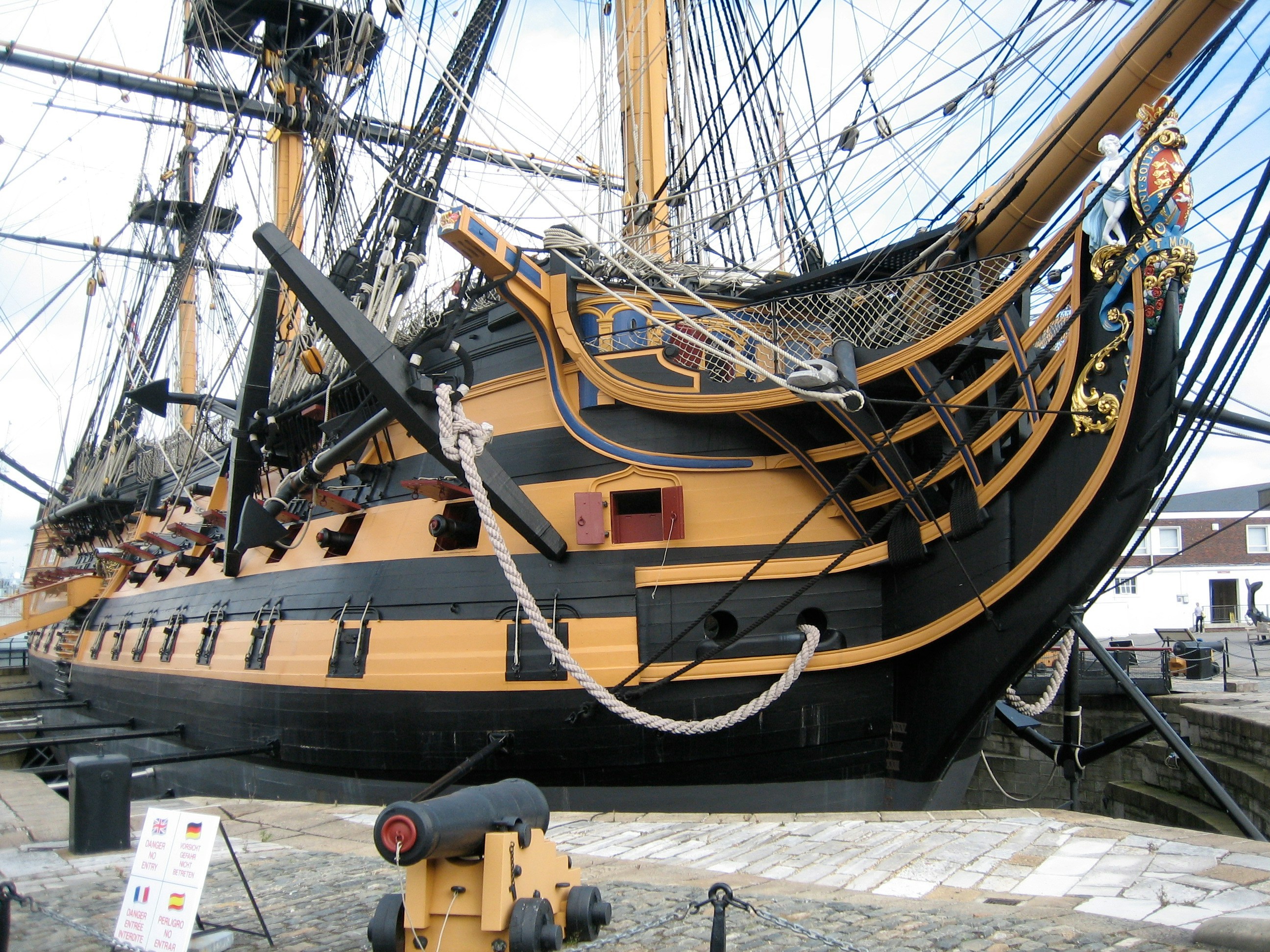
No visit can be considered complete without standing on the deck of HMS Victory. This First Rate ship of the line, launched in 1765, was already a veteran of numerous campaigns before her date with destiny at Trafalgar. Now preserved in the oldest dry dock still in use, the vessel draws visitors into the cramped quarters where hundreds of sailors lived, fought, and died.
The spot where Admiral Nelson fell during his greatest triumph was marked for posterity, allowing modern visitors to stand where history pivoted. The smell of hemp rope and tar, the low beams forcing even average-height visitors to stoop, the narrow hammock spaces – all serve as visceral reminders of life at sea during the age of sail.
Nearby, HMS Warrior commands attention with her revolutionary iron hull and steam-assisted propulsion. Built in 1860, this warship represented such a leap forward in naval technology that every other warship afloat was rendered obsolete overnight. Her gleaming black and white hull, restored to Victorian splendor, offers a stark contrast to Victory's weathered oak timbers – a perfect illustration of the rapid technological change that defined the 19th century.
Where the Modern Navy Was Born
The Historic Dockyard holds more than historic vessels. The vast complex of workshops, storehouses, and administrative buildings tells the story of how Britain maintained naval dominance for over two centuries. The ropery, stretching nearly a quarter-mile in length, still demonstrates the traditional techniques used to create the miles of cordage required by sailing ships. Visitors watch as natural fibers are twisted and combined, just as they were when the building was constructed in 1776.
The National Museum of the Royal Navy houses countless artifacts that bring maritime history to life. From intricate ship models to recovered treasures from the Mary Rose, Henry VIII's flagship that capsized in the Solent in 1545, the collections span five centuries. The Mary Rose Museum itself presents one of the most ambitious maritime archaeology projects ever undertaken. The preserved hull, painstakingly recovered from the seabed in 1982, now rests in a purpose-built gallery where controlled humidity prevents further deterioration.
Beyond the Waterfront
The Old Town, clustered around the original harbor, rewards those who venture beyond the naval attractions. Half-timbered buildings lean at precarious angles along narrow cobbled streets that have changed little since medieval times. The Square Tower, built in 1494 as part of the coastal defenses, offers panoramic views across the harbor entrance where ships have passed for nearly a millennium.
At the opposite end of Portsea Island, Southsea presents a different face to visitors. This Victorian seaside resort, developed in the 19th century as the town expanded, features a long shingle beach, elegant terraces, and the distinctive Southsea Castle. Built by Henry VIII in the 1540s, the castle has been adapted and modified through the centuries, serving various military purposes before opening to the public.
The D-Day Story museum at Southsea pays tribute to Operation Overlord, the largest amphibious invasion in history. The harbor played a crucial role in 1944 as thousands of troops embarked for Normandy. The centerpiece of the collection, the Overlord Embroidery, stretches 272 feet and depicts the entire campaign in needlework, a modern counterpart to the Bayeux Tapestry.
A Living, Working Port
Despite its historical treasures, this remains an active naval base and commercial port. Modern warships berth alongside their historic predecessors, and the sight of Royal Navy vessels departing for deployment reminds visitors that the maritime tradition continues unbroken. The continental ferry terminal sees thousands of passengers pass through each week, maintaining connections to France and Spain that have existed for centuries.
The Spinnaker Tower, completed in 2005, represents the city's modern aspirations. Rising 560 feet above the waterfront, its distinctive sail-like silhouette can be seen for miles. The viewing platforms offer breathtaking vistas across the Solent to the Isle of Wight, while glass floor panels provide a vertigo-inducing glimpse straight down to the quayside below.
Maritime Flavors
The culinary scene reflects the waterfront location, with fresh seafood featuring prominently on local menus. Traditional fish and chips remain popular, best enjoyed on the seafront while watching vessels navigate the harbor entrance. The covered market in the Guildhall Square has served the community for over a century, offering local produce alongside international specialties brought by successive waves of immigration.
Pubs throughout the old town claim connections to famous sailors and historic events. Whether these associations can be verified matters less than the authentic atmosphere found in these centuries-old establishments. Low ceilings, uneven floors, and walls adorned with maritime memorabilia create the perfect setting for contemplating the stories that have unfolded along these shores.
A City Shaped by the Sea
Every aspect of life here has been influenced by proximity to the water. The local accent, the street names, the architecture, the very layout of the town – all bear the imprint of naval and maritime heritage. Generations of families have served at sea or in the dockyard, creating a community bound by shared experience and pride in their role supporting the fleet.
As evening falls and lights begin to twinkle across the harbor, the enduring appeal becomes clear. This place offers something increasingly rare – authentic connection to the forces that shaped the modern world. While other destinations have reinvented themselves, sometimes losing their character in the process, these dockside streets and historic vessels remain true to their essential nature. For anyone drawn to maritime history, or simply curious about how Britain became a global power, a journey to this remarkable coastal destination proves time well spent. Those planning to explore more of Britain's southern coast might also consider Southampton, another significant maritime hub with its own fascinating connections to ocean travel and commerce.


 Home
Home Wishlist