
Potsdam: Where Prussian Grandeur Meets Modern Creativity
A Royal Vision Realized
The transformation from a modest settlement into a residence worthy of royalty was orchestrated primarily during the 18th century. Under Frederick the Great, an ambitious vision was brought to life—one that would rival the greatest European courts. Architects were commissioned from across the continent, gardens were designed with mathematical precision, and no expense was spared in creating what would become a UNESCO World Heritage landscape.
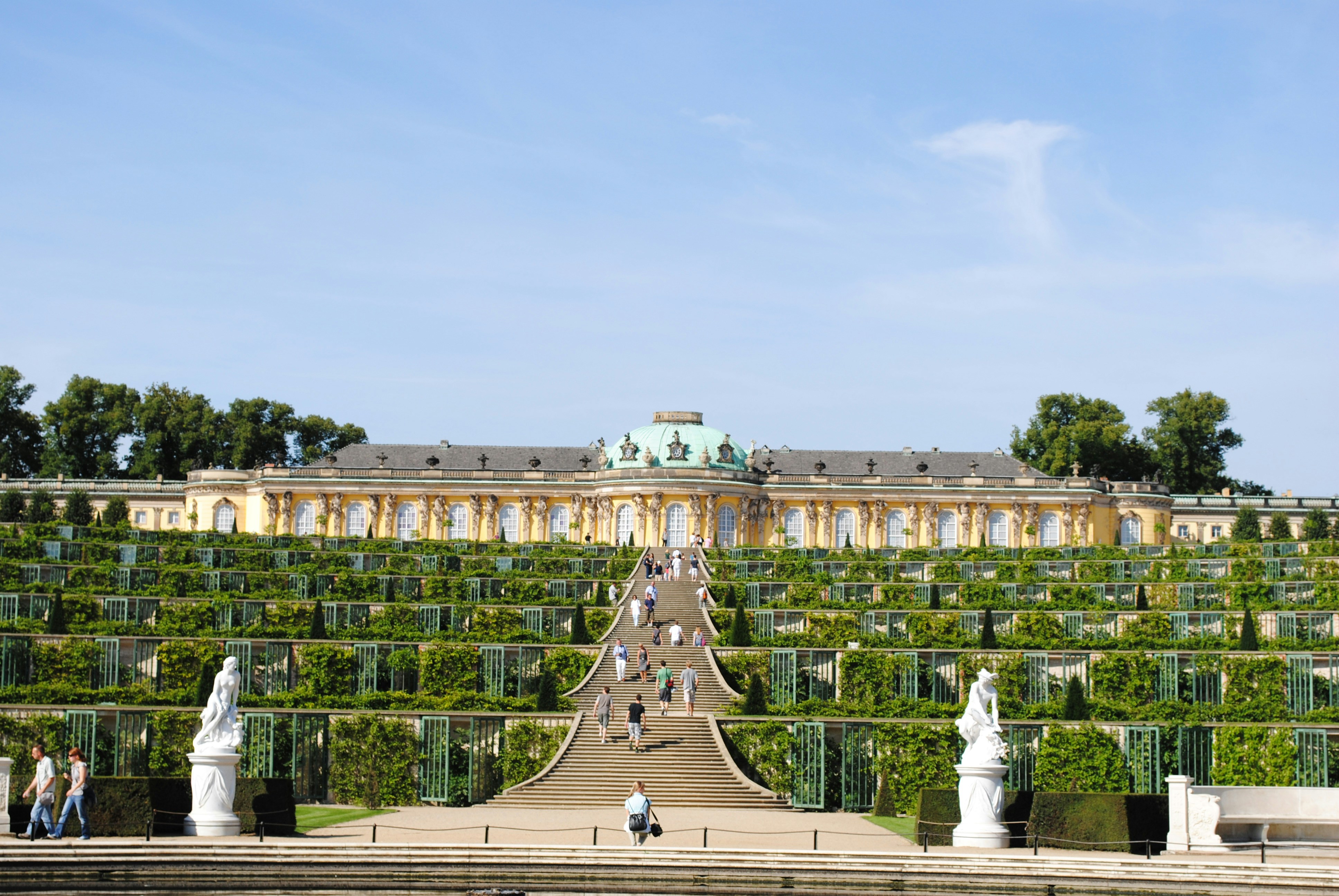
Sanssouci Palace stands as the crowning jewel of this royal ambition. The name itself, meaning "without care" in French, reflects the king's desire for a private retreat where philosophy, music, and intellectual discourse could flourish away from courtly obligations. The rococo masterpiece was completed in 1747, its distinctive yellow facade and vine-covered terraces becoming an enduring symbol of Enlightenment ideals made manifest in stone and stucco.
Beyond Sanssouci, an entire network of palaces was constructed throughout the surrounding parklands. The Neues Palais, built to demonstrate Prussian strength following the Seven Years' War, impresses with its sheer scale and opulence. The Orangery Palace, inspired by Italian Renaissance villas, houses remarkable collections of art. Each structure was carefully positioned within the landscape, creating sight lines and harmonious vistas that still captivate visitors today.
Things to do in Potsdam
Gardens as Philosophy
More than mere decoration, the expansive park system was conceived as a three-dimensional expression of Enlightenment thought. Influenced by both French formal gardens and English landscape design, these green spaces were laid out to inspire contemplation and demonstrate humanity's ability to shape nature according to reason and aesthetics.
Walking through these grounds today, the original intentions remain readable. Geometric patterns give way to more naturalistic groves. Classical sculptures punctuate pathways at calculated intervals. Water features—fountains, reflecting pools, and artificial lakes—were engineered with remarkable technical sophistication for their time, some only recently restored to their intended functioning after centuries of disrepair.
The park's 290 hectares invite endless exploration. Hidden temples and follies appear unexpectedly around wooded bends. The Chinese House, with its gilded figures and exotic architectural details, reflects 18th-century European fascination with distant cultures. The Roman Baths, though purely decorative rather than functional, showcase the period's romanticization of classical antiquity.
From Destruction to Reconstruction
The 20th century brought profound challenges to this architectural paradise. On April 14, 1945, Allied bombing raids targeting the city center resulted in catastrophic destruction. The historic Stadtschloss, once the second royal residence, was left in ruins. The Garnisonkirche, where Frederick the Great had been laid to rest, suffered severe damage. Entire neighborhoods were reduced to rubble.
What followed was complicated by Germany's division. Located in East Germany, the city underwent reconstruction according to socialist urban planning principles. Some ruins were cleared entirely, their sites repurposed for modern buildings. Others were rebuilt, though often with simplified details. The Stadtschloss ruins were controversially demolished in 1960, erasing a major landmark from the cityscape.
Reunification opened new possibilities for historical restoration. Painstaking work began on repairing war damage to the palaces and gardens. The Stadtschloss was eventually rebuilt between 2010 and 2013, now serving as the state parliament building. The reconstruction of the Garnisonkirche's tower began in 2017, though not without public debate about the appropriateness of restoring structures associated with Prussian militarism.
A City of Film and Science
While royal heritage defines much of the city's identity, another legacy has taken root here—one of creativity and innovation. Studio Babelsberg, established in 1912, holds the distinction of being the oldest large-scale film studio in the world. Within its stages and backlots, cinema history was written.
During the Weimar era, groundbreaking films like "Metropolis" and "The Blue Angel" were produced here. The studio witnessed the golden age of German Expressionist cinema, where directors like Fritz Lang pioneered visual techniques that would influence filmmakers globally. After World War II, the facility became the primary production center for East German state cinema, then was privatized following reunification and has since hosted major international productions.
Scientific research has also flourished in this environment. Numerous institutions specializing in fields from climate research to geosciences have established themselves here. The proximity to academic resources, combined with the quality of life offered by the historic setting and natural surroundings, has attracted researchers and scholars from around the world.
Dutch Quarter and Architectural Diversity
Not all architectural treasures here trace back to Prussian royalty. The Dutch Quarter, Europe's largest collection of Dutch-style buildings outside the Netherlands, was constructed in the early 18th century to house Dutch craftsmen invited to settle in the city. Red brick gabled houses line cobblestone streets, creating an atmosphere distinctly different from the Baroque grandeur found elsewhere.
Today, this quarter has evolved into a vibrant neighborhood filled with independent boutiques, artisan workshops, and cafes. The buildings, carefully preserved and restored, demonstrate how adaptive reuse can breathe new life into historic structures while respecting their original character. Quarterly markets and cultural events draw both residents and visitors, making these streets some of the most animated in the city.
The Russian Colony of Alexandrowka presents yet another architectural curiosity. Built in 1826-27 for Russian military singers, this settlement consists of thirteen log houses arranged in the shape of a St. Andrew's cross. Orthodox chapel, traditional gardens, and distinctive construction techniques were maintained, creating a unique cultural enclave that persists to this day.
Living Among Lakes
Geography has always played a crucial role in shaping life here. Situated where the Havel River widens into a series of interconnected lakes, the region offers abundant opportunities for water-based recreation. Sailboats glide across the Heiliger See. Kayakers navigate quieter channels. Swimming spots attract sun-seekers during summer months.
These waterways also served historically important functions. They provided transportation routes for goods and materials needed to construct the palaces. They supplied water for the elaborate fountain systems. They defined the boundaries of parks and created natural moats for defensive purposes. Today, tour boats offer alternative perspectives on the architectural ensembles, approaching them as they might have been viewed by royal guests arriving by water centuries ago.
The landscape's gentle topography, shaped by glacial activity during ice ages, creates a varied terrain of hills, valleys, and level plains. This natural diversity was skillfully incorporated into garden designs, with elevated viewpoints offering panoramas over palace complexes and distant church spires marking the city center.
Cultural Continuity and Contemporary Life
Despite its royal origins and war-torn 20th century, everyday life here has found a rhythm that honors the past while embracing present realities. University students occupy apartments in restored buildings. Technology companies operate in former industrial sites. Farmers markets fill historic squares with regional produce.
Cultural institutions maintain active programming throughout the year. The Hans Otto Theater presents contemporary productions in its modern lakeside building. The Museum Barberini, opened in 2017 in another reconstructed palace, hosts world-class art exhibitions. Music festivals take advantage of the exceptional acoustics in palace theaters and gardens.
The commitment to sustainability and livable urban design has earned recognition from city planning experts. Extensive cycling infrastructure encourages car-free transportation. Green spaces are protected and expanded. Historic preservation and environmental responsibility are treated not as competing priorities but as complementary goals.
Flavors of Brandenburg
Regional cuisine reflects the surrounding agricultural landscape. Root vegetables, potatoes, and freshwater fish feature prominently on traditional menus. Wild game from the extensive forests appears seasonally. Asparagus harvested from nearby fields becomes a spring obsession, prepared in countless ways.
Local breweries continue traditions stretching back centuries, producing distinctive styles suited to the region's water and climate. Small wineries in the surrounding areas have gained reputations for their Rieslings and other varieties, benefiting from the same temperate conditions that made these lands attractive to royal gardeners.
Contemporary chefs have begun reinterpreting these traditional ingredients through modern techniques, creating a culinary scene that respects heritage while avoiding stagnation. Farm-to-table concepts find natural expression here, where urban and agricultural landscapes blend seamlessly.
As twilight descends over the palace gardens and lights begin glowing in windows across the Dutch Quarter, the unique character of this place becomes especially apparent. History has been preserved here not as a museum piece but as a living context for contemporary life. The gardens designed for royal contemplation now offer recreation to families and students. Palaces built to project power now inspire visitors with their artistic achievement. From the devastation of war, careful reconstruction has created something both authentic and forward-looking—a city that understands its past well enough to build thoughtfully toward its future. Those seeking similar historical richness might also explore Dresden, where reconstruction efforts have similarly restored architectural masterpieces to their former glory.


 Home
Home Wishlist