
Edinburgh: A Capital Carved in Stone and Story
Foundations Built on Fire and Ice
The story begins with geology. An extinct volcano, dormant for 350 million years, created the crag upon which defenses were first erected. Castle Rock rises dramatically above the surrounding landscape, its sheer cliffs providing natural fortification that attracted settlers from the Bronze Age onward. During the Ice Age, glaciers carved the land around this volcanic plug, leaving behind the distinctive tail of rock that slopes eastward—a ridge upon which the Old Town would eventually be built.
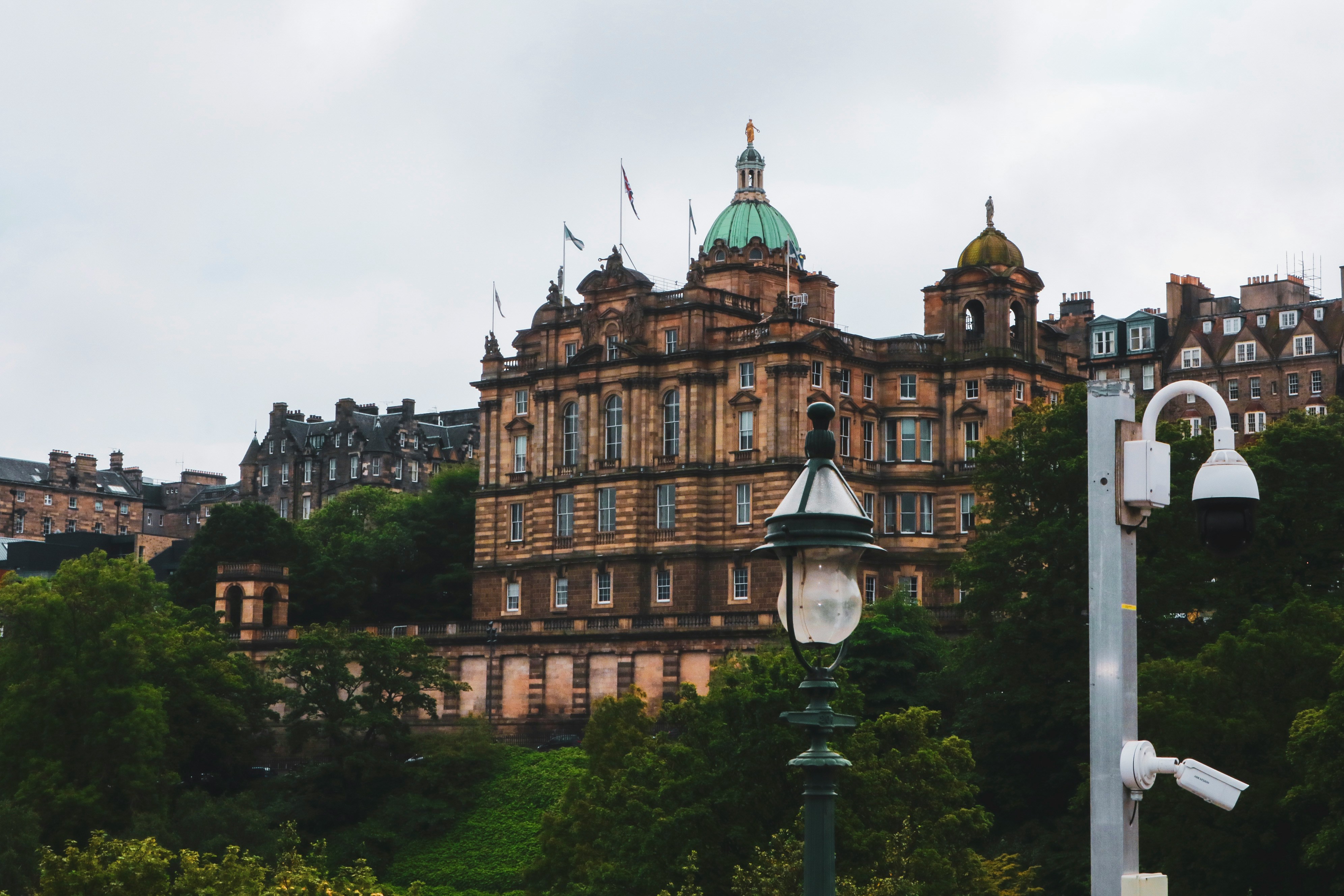
This geological quirk determined everything that followed. The Royal Mile, that famous cobbled thoroughfare, was laid along the spine of this ridge, connecting the fortress at its peak to the Palace of Holyroodhouse at its base. Between these two poles of power, a medieval city took shape, one that would grow not outward but upward, creating the towering tenements that still define the Old Town's dramatic skyline.
Things to do in Edinburgh
The Weight of Centuries
Within the Old Town's labyrinthine closes and wynds, evidence of turbulent times can still be found. The fortress that crowns Castle Rock has been besieged more times than almost any other stronghold in Britain. Battles were fought, monarchs crowned, and prisoners held within its thick walls. The Crown Jewels of Scotland—the oldest regalia in Britain—remain displayed here, having survived Cromwell's attempts at destruction by being hidden beneath church floorboards.
Below the castle, the medieval city grew dense and vertical. By the 16th century, buildings reached ten or eleven stories—skyscrapers by the standards of their time. Rich and poor lived stacked atop one another in these towering lands, with wealthier families occupying middle floors while the poorest residents took rooms at street level or in the rafters. This vertical social structure created a uniquely egalitarian urban culture, one quite different from other European cities where class segregation happened horizontally.
Enlightenment and Expansion
The 18th century brought transformation. As the Old Town grew ever more crowded and unsanitary, attention turned northward across the valley where the Nor' Loch once stood. An ambitious plan for a New Town was drawn up by a young architect named James Craig. His design, with its rational grid of streets and elegant Georgian terraces, embodied Enlightenment principles of order, reason, and classical proportion.
This New Town became home to some of the greatest minds of the Scottish Enlightenment. David Hume pondered philosophy in its drawing rooms. Adam Smith developed economic theories that would reshape the world. Medical pioneers advanced surgical techniques while geologists deciphered the ancient history written in Scotland's rocks. The concentration of intellectual talent during this period earned the capital its nickname: the Athens of the North.
Literary Ghosts and Living Traditions
Few places have inspired writers as profoundly. Sir Walter Scott's romantic novels helped reshape how Scotland saw itself and how the world saw Scotland. Robert Louis Stevenson drew on the city's darker corners and dual nature when crafting "The Strange Case of Dr Jekyll and Mr Hyde." In the 1990s, J.K. Rowling sat in cafes crafting tales of a young wizard, with the city's Gothic architecture and magical atmosphere seeping into her imagination.
The connection between place and literature runs deeper still. The Writers' Museum celebrates Burns, Scott, and Stevenson, while literary tours guide visitors through locations that inspired countless works. Every August, the International Book Festival draws authors and readers from around the globe, continuing centuries of literary tradition.
Festival City
Speaking of August, the city transforms each summer into what might be called the world's greatest arts festival. What began in 1947 as a post-war cultural initiative has grown into multiple simultaneous festivals that completely take over the capital for weeks. The International Festival presents classical music, opera, and theater. The Fringe—originally an alternative to the main festival—has become the world's largest arts festival, with thousands of performances happening in hundreds of venues.
Comedy shows happen in underground vaults. Experimental theater takes over abandoned warehouses. Street performers fill every public space. The Royal Military Tattoo stages its spectacular show against the backdrop of the floodlit castle. During these weeks, the population nearly doubles, and the entire city becomes a stage.
Living Heritage
Yet beyond festival season, daily life continues with its own rhythms. The Scottish Parliament, reconvened in 1999 after nearly 300 years, sits at the foot of the Royal Mile in a controversial modern building that has gradually won grudging acceptance. Debates conducted in both English and Gaelic echo the nation's linguistic heritage.
Traditional pubs still serve whisky from distilleries scattered across the Highlands. Fish and chips get eaten from paper wrappings while walking along the Water of Leith. On New Year's Eve—Hogmanay—ancient traditions of first-footing and fire processions continue to be observed alongside modern celebrations that draw revelers from around the world.
Volcanic Vistas
Nature remains remarkably close to the urban core. Arthur's Seat, another extinct volcano, rises behind the palace, offering hill-walking and panoramic views just minutes from the city center. This wild peak, along with Salisbury Crags, was designated as a royal park in 1541 and remains protected to this day. Early morning climbs reward hikers with sunrise views across the Firth of Forth.
Calton Hill provides easier access to spectacular vantage points. Its collection of monuments—including the unfinished National Monument, modeled on the Parthenon—adds to the Athenian comparison. From this elevated position, the full sweep of the cityscape can be appreciated: medieval chaos giving way to Georgian order, volcanic peaks rising between stone terraces, the Firth gleaming in the distance.
Underground Secrets
Beneath the streets lies another city entirely. When the South Bridge was constructed in the late 18th century, the arches beneath it were initially used as workshops and taverns. Eventually these spaces were sealed off and forgotten, only to be rediscovered centuries later. Similar vaults beneath the North Bridge harbor their own histories and legends.
Ghost tours lead visitors through these atmospheric chambers, sharing tales of plague victims, criminals, and supernatural encounters. Whether believed or dismissed, these stories connect present-day visitors to the thousands who lived, worked, and died in these now-silent spaces. History feels tangible when experienced underground, away from daylight and modernity.
A Modern Capital
Contemporary life thrives alongside historical preservation. The financial sector, long established here, continues to employ thousands. Technology companies have created a "Silicon Glen" extending west from the capital. Universities attract students from across the globe, maintaining academic traditions stretching back to 1582.
Modern Scottish cuisine has emerged from the shadow of its stodgy reputation. Restaurants showcase local ingredients—game from Highland estates, seafood from coastal waters, vegetables from Lowland farms. Michelin stars have been earned, though traditional haggis suppers remain popular alongside innovative tasting menus.
After exploring Scotland's remarkable capital, travelers often find themselves drawn to other historic destinations that share similar architectural grandeur and cultural significance. The journey from these volcanic heights might well continue southward to Durham, where another dramatic skyline dominated by cathedral and castle awaits discovery.


 Home
Home Wishlist