
Ferrara: A Renaissance Jewel Frozen in Time
The Este Legacy
The story of this city cannot be told without understanding the family that shaped it. For three centuries, the Este dynasty ruled here, transforming what had been a modest medieval settlement into one of Europe's most sophisticated cultural centers. Their vision was realized through architecture, through patronage of the arts, and through a systematic approach to urban planning that was revolutionary for its time.
The Castello Estense stands at the heart of the historic center, its imposing brick walls and corner towers reflected in the water-filled moat that surrounds it. Built in 1385 initially as a fortress to protect the ruling family from their own restless subjects, it was later transformed into a magnificent residence. The contrast between its stern exterior and the refined Renaissance apartments within tells the story of a dynasty that needed to project both strength and refinement.
Inside, visitors are led through rooms where every surface was decorated with frescoes, where ceilings were painted with mythological scenes, and where the Este family entertained poets, artists, and scholars. The orangery, the dungeons, and the private chapels each reveal different facets of court life during the Renaissance.
Things to do in Ferrara
The World's First Modern City
What sets this place apart from other Renaissance cities was achieved in the late 15th century under Ercole I d'Este. The ambitious project known as the Herculean Addition doubled the size of the medieval city in one bold stroke. For the first time in European history, an entire new urban district was planned on paper before a single stone was laid.
Wide, straight streets were laid out in a rational grid pattern. Spacious piazzas were positioned at strategic intersections. Gardens and green spaces were incorporated into the design from the beginning. The result was dubbed by Jacob Burckhardt, the great Swiss historian, as "the first modern city in Europe."
Today, that vision can still be experienced by walking along Corso Ercole I d'Este. This magnificent boulevard stretches arrow-straight through the northern part of the old city, lined with aristocratic palaces whose facades have changed little in five centuries. The Palazzo dei Diamanti, with its extraordinary exterior of more than 8,500 marble blocks carved into diamond-shaped points, catches the light differently throughout the day, creating an ever-changing play of light and shadow.
Pedaling Through History
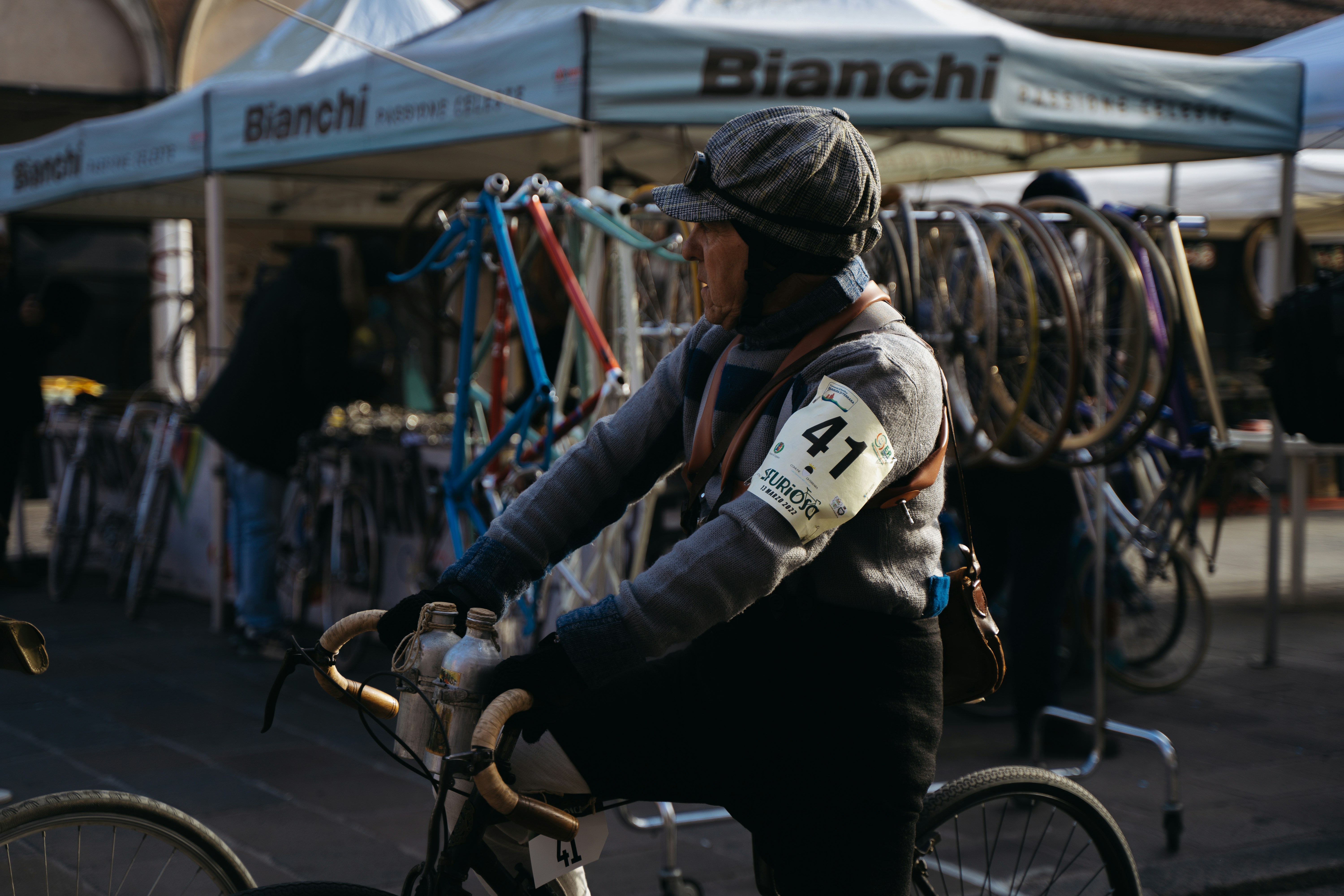
Perhaps nowhere else in Italy has the bicycle been embraced so thoroughly as a way of daily life. The flat terrain and the human scale of the historic center make cycling not just practical but genuinely pleasurable. More bikes than cars can be seen on many streets, and the gentle whir of bicycle wheels against cobblestones provides a constant soundtrack to urban life.
This bicycle culture creates an atmosphere that feels refreshingly unhurried. Morning markets can be reached without stress. Medieval squares can be crossed without dodging aggressive traffic. The nine kilometers of walls that encircle the old city have been transformed into an elevated pathway where cyclists and pedestrians share spectacular views over both the historic center and the surrounding countryside.
Literary Echoes
The streets and palaces here have inspired some of Italy's greatest literary minds. Giorgio Bassani set his most famous work, "The Garden of the Finzi-Continis," in this city, using its quiet elegance and its Jewish quarter as the backdrop for a haunting meditation on memory, loss, and the tragedy of Italian Fascism. His descriptions of bicycle rides along the walls and gatherings in aristocratic gardens capture something essential about the city's character.
The Jewish community here was among the most ancient in Italy, dating back to the 13th century. Despite persecution and the horrors of the Holocaust, the legacy of that community remains visible in the historic ghetto area, in the beautiful synagogue with its museum, and in the Jewish cemetery—one of the oldest in Europe. These sites stand as testaments to centuries of coexistence and cultural exchange.
A Cathedral of Contrasts
The Duomo of San Giorgio presents a facade unlike any other in Italy. Three distinct architectural styles compete for attention: the lower portion showcases Romanesque arches and sculptures, the central section displays Gothic pointed arches and delicate tracery, while the upper levels reveal Renaissance influences. Rather than appearing chaotic, this layering of styles creates a fascinating visual record of the city's evolution.
The interior was completely remodeled in the 18th century in Baroque style, creating a striking contrast with the medieval exterior. Above the main altar hangs a masterpiece by Benvenuto Tisi, known as Garofalo, depicting the Last Judgment in vivid colors that still command attention after five centuries.
Adjacent to the cathedral, the Museo della Cattedrale houses treasures that span centuries, including illuminated manuscripts, religious vestments embroidered with gold thread, and two remarkable organ shutters painted by Cosmè Tura, court painter to the Este family.
Renaissance Splendor Behind Palace Walls
To understand the full magnificence of Renaissance court life, a visit to Palazzo Schifanoia becomes essential. The name itself—meaning "escape from boredom"—hints at its original purpose as a pleasure palace for the Este court. But nothing could be more misleading than this modest name, for within these walls can be found one of the most extraordinary fresco cycles of the entire Renaissance.
The Salone dei Mesi (Hall of the Months) contains a unique astrological program painted by Francesco del Cossa and other artists of the Ferrara School. Each month was represented through three horizontal bands: the triumphs of the Olympian gods above, the signs of the zodiac in the middle, and scenes of court life and agricultural activities below. The frescoes that survive offer an unparalleled window into 15th-century life, mixing pagan mythology with contemporary reality in a way that would have seemed natural to Renaissance humanists.
Culinary Traditions
The gastronomy here reflects the city's history and its position between the Po Delta and the Emilian plains. Cappellacci di zucca, large pasta parcels stuffed with sweet butternut squash and amaretti cookies, then dressed simply with butter and sage, represent the pinnacle of local pasta-making tradition. The unexpected combination of sweet and savory flavors surprises first-time tasters but quickly wins converts.
Salama da sugo, a peculiar local specialty, requires patient preparation. This mixture of pork, liver, and spices was traditionally aged for months before being slowly boiled and served with mashed potatoes. The result possesses an intense, complex flavor that divides opinion but commands respect from culinary traditionalists.
The coppia ferrarese, a bread twisted into four horn-like points, was granted Protected Geographical Indication status by the European Union. Its crisp crust and soft interior make it the perfect accompaniment to local cold cuts and cheeses. According to tradition, its distinctive shape was designed to resemble the coat of arms of the Este family.
The Po Delta's Natural Majesty
Beyond the city walls, the landscape gradually transitions into the Po Delta, one of Europe's most important wetland ecosystems. This vast network of waterways, islands, and marshes was designated a UNESCO Biosphere Reserve. Countless bird species use the delta as a crucial stopover point during migration, making it a paradise for nature enthusiasts and birdwatchers.
The ancient Abbey of Pomposa, located within the delta region, once served as one of the most influential Benedictine monasteries in Italy. Its bell tower, standing 48 meters tall, can be seen from great distances across the flat landscape. Inside, remarkable frescoes from the 14th century cover nearly every surface, creating an effect that has been compared to an illustrated Bible.
Art Beyond the Obvious
While the Palazzo dei Diamanti houses impressive temporary exhibitions in its ground-floor galleries, the Pinacoteca Nazionale upstairs deserves equal attention. Here, the distinctive style of the Ferrara School of painting can be studied in depth. Artists like Cosmè Tura, Ercole de' Roberti, and Francesco del Cossa developed an approach characterized by precise draftsmanship, vivid colors, and a certain nervous energy in their figures that sets them apart from their Florentine and Venetian contemporaries.
The gallery's collection also includes works by later artists who worked at the Este court, demonstrating how artistic styles evolved while maintaining connections to local traditions. Dosso Dossi's mythological paintings, with their dreamy atmospheres and brilliant color harmonies, represent the High Renaissance at its most imaginative.
As evening settles over the red brick buildings and long shadows stretch across the medieval streets, the particular magic of this place becomes most apparent. Unlike cities overwhelmed by mass tourism, life here continues at a human pace. Families gather for the evening passeggiata, cycling along the walls or strolling through the historic center. Students from the ancient university fill the cafes and wine bars that line Via delle Volte, a remarkable covered medieval street that still follows its original course. The same timeless quality that inspired Renaissance poets and 20th-century novelists can still be felt by anyone willing to slow down and pay attention. Those seeking a different perspective might consider exploring Padova, another gem of the Veneto region where university traditions and artistic heritage create their own unique atmosphere.


 Home
Home Wishlist