
Pisa: Where Gravity Takes a Holiday
The Weight of Glory
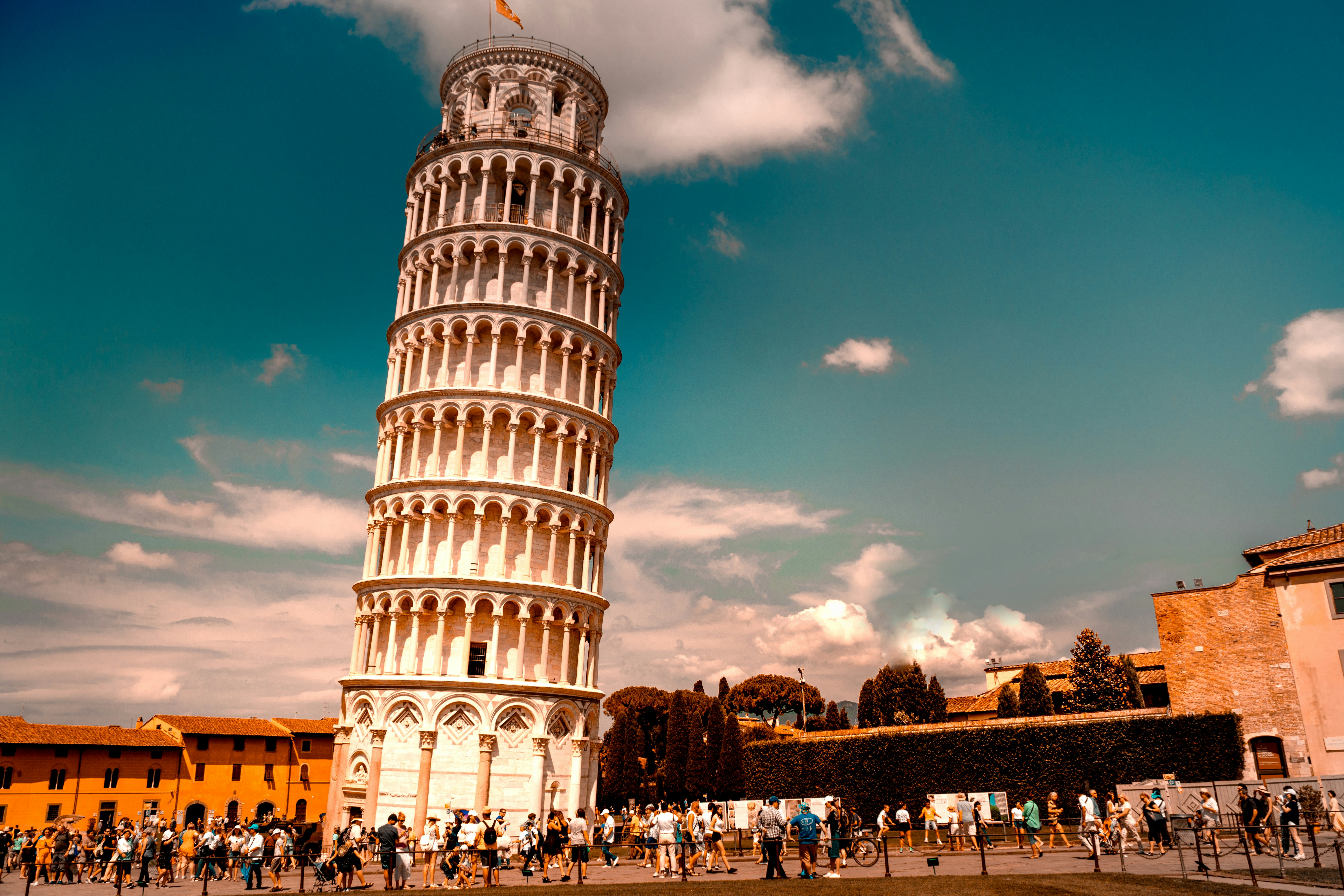
The Piazza dei Miracoli – the Square of Miracles – was given its name for good reason. This remarkable expanse of emerald grass was laid out with a collection of religious buildings that would define an entire architectural style. The white marble structures shine under the Tuscan sun, their Romanesque beauty enhanced by the distinctive blind arcades and decorative elements that became synonymous with the Pisan style.
The famous tower, begun in 1173, was never intended to tilt. Its lean was caused by soft ground that couldn't properly support the structure's weight. Construction was halted multiple times over nearly two centuries as engineers attempted to correct the tilt, each intervention inadvertently creating the gentle curve that makes the tower so distinctive. Today, the angle has been stabilized through careful engineering, ensuring this architectural accident will continue to defy expectations for generations to come.
Adjacent to the tower, the cathedral stands as a testament to the wealth and power once commanded by this maritime republic. Built between 1063 and 1118, the structure was designed to showcase treasures brought back from successful military campaigns across the Mediterranean. The bronze doors, intricate mosaics, and soaring nave speak to the ambition of a city-state that once rivaled Genoa and Venice in naval dominance.
Things to do in Pisa
A Legacy Written in Stone
The baptistery, completed in the 14th century, represents the largest of its kind in Italy. Its remarkable acoustics have been demonstrated for visitors for centuries – a simple note sung inside transforms into a resonant chorus as the sound reverberates off the marble surfaces. The structure blends Romanesque and Gothic elements, reflecting the lengthy construction period and the evolution of architectural taste.
Beyond the famous square, the Camposanto Monumentale served as a cemetery for the city's most distinguished citizens. Legend suggests that earth from Golgotha was brought back by Crusaders to create this sacred burial ground. Though severely damaged during World War II, the restoration efforts have revealed remarkable 14th-century frescoes, including the haunting "Triumph of Death," which provides insight into medieval perspectives on mortality and salvation.
The Mind That Moved the World
Galileo Galilei was born here in 1564, and his revolutionary thinking would forever change humanity's understanding of the cosmos. The story – likely apocryphal – claims he conducted experiments dropping objects from the leaning tower to study gravity. Whether true or not, his observations of the cathedral's swinging chandelier during Mass supposedly inspired his studies of pendulum motion.
The university, established in 1343, became one of Europe's most prestigious centers of learning. Its halls were walked by notable figures across centuries, from mathematician Leonardo Fibonacci to physicist Enrico Fermi. The Orto Botanico, Europe's first university botanical garden, was founded in 1544 and continues to house rare plant species behind its ancient walls.
Rivers of Commerce and Culture
The Arno River cuts through the city's heart, its banks lined with elegant buildings painted in warm ochres and terracotta. The Lungarni – the riverside promenades – offer views quite different from the tourist crowds around the tower. Here, daily life unfolds at a more measured pace. Markets set up in ancient squares, locals debate politics in centuries-old cafes, and students hurry between lectures much as their predecessors did hundreds of years ago.
The Borgo Stretto, a medieval street lined with porticoed buildings, serves as the main shopping thoroughfare. The arcades provide welcome shade during summer months while protecting shoppers from winter rain. Small boutiques, family-run businesses, and traditional shops occupy spaces that have hosted commerce since the Middle Ages.
Treasures Beyond the Tower
The Museo Nazionale di San Matteo houses an extraordinary collection of Tuscan art, including works by Masaccio, Simone Martini, and Donatello. The museum occupies a former Benedictine convent, its cloistered spaces providing an intimate setting for encountering masterpieces often overshadowed by the city's more famous attractions.
The Church of Santa Maria della Spina, a tiny Gothic jewel perched on the Arno's edge, was built to house a thorn supposedly from Christ's crown. Its elaborate exterior, covered in statues and decorative elements, seems almost too ornate for such a small structure. The church was physically moved in the 19th century, dismantled stone by stone and reconstructed on higher ground to protect it from flooding.
Flavors of Tradition
Tuscan cuisine finds particular expression in local trattorias where recipes have been passed down through generations. Cecina, a flatbread made from chickpea flour, was born from necessity during the city's maritime days – a simple food that could sustain sailors on long voyages. Today it remains a beloved street food, often enjoyed with a glass of local wine.
The surrounding countryside produces excellent wines, including the underrated whites from the nearby Colline Pisane DOC. Local restaurants serve pappardelle with wild boar sauce, ribollita (a hearty bread soup), and baccalà prepared in the traditional Tuscan style. Desserts might include cantuccini – almond biscotti meant for dipping in sweet vin santo – or the city's own torta co' bischeri, a chocolate and rice tart with an intriguing history dating back to the Renaissance.
The Rhythm of the Seasons
June brings the Luminara di San Ranieri, when thousands of candles illuminate the Arno's banks in honor of the patron saint. The reflections dance on the water's surface, creating a magical atmosphere as the city pauses to celebrate its heritage. The following day, the Palio di San Ranieri sees rowing teams compete in a historic regatta that has been held since 1292.
Throughout the year, the city maintains a pace distinctly removed from the frenetic energy of larger Italian metropolises. Afternoons might be spent in the Giardino Scotto, a public park created within the walls of a 16th-century fortress, where locals gather for picnics and conversation. Evenings bring the passeggiata, that quintessentially Italian tradition of the evening stroll, as residents reclaim their streets from day-trippers and reconnect with neighbors and friends.
Whispers of the Past
Walking through the medieval quarter, evidence of the city's complex history emerges at every turn. Towers that once served defensive purposes now house apartments. Walls bear faded frescoes and inscriptions that hint at stories long forgotten. In the Piazza dei Cavalieri, the Palazzo della Carovana's elaborate sgraffito facade stands as a reminder of the Medici period, when Florence absorbed its former rival into the Grand Duchy of Tuscany.
The transformation from independent maritime power to university town was not without loss, yet it preserved much that might otherwise have been swept away by modernization. The relatively compact historic center remains largely intact, its medieval street plan still guiding residents and visitors through a landscape that would be recognizable to inhabitants from centuries past.
As the sun sets over the Arno and the marble monuments glow golden in the fading light, it becomes clear that this city's identity extends far beyond a single tilting tower. From scientific innovation to artistic achievement, from maritime glory to academic excellence, the story told here encompasses centuries of human endeavor. For those willing to venture beyond the obvious, rewards await in quiet cloisters, along riverside walks, and in the warm welcome of locals who've learned to share their home with the world while preserving its essential character. Travelers seeking other Tuscan experiences might also consider exploring Siena, where medieval traditions remain deeply woven into daily life.


 Home
Home Wishlist