
Karlsruhe: Where Vision Shaped a City
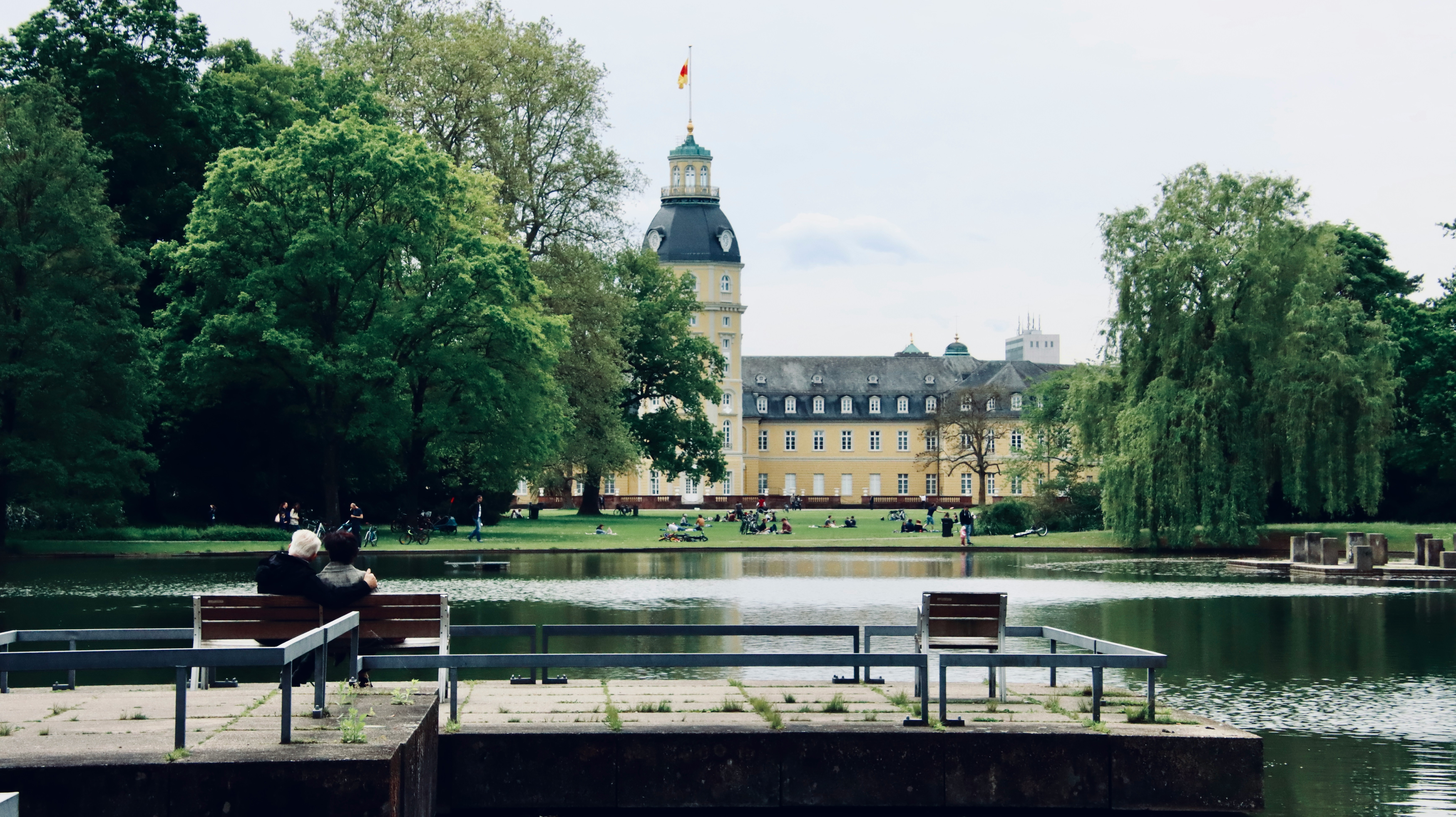
A Palace at the Center
The city's origin story was written in 1715, when Margrave Karl Wilhelm of Baden-Durlach decided his existing residence no longer suited his needs. A new palace was commissioned, and around it, an entirely new settlement took shape. The design chosen was unlike anything seen before in the region – thirty-two streets radiating from the palace tower like spokes on a wheel, creating what locals would come to call the "fan city."
Today, the Schloss still commands attention at the heart of this unique urban geometry. Its ochre facade watches over the Schlossgarten, where citizens gather on sunny afternoons and concert-goers stream toward the open-air performances held throughout summer months. The palace itself houses the Badisches Landesmuseum, where centuries of regional history have been carefully preserved and presented.
Things to do in Karlsruhe
The Legacy of Enlightenment
Walking through the streets, evidence of the Enlightenment period during which the city was founded can be spotted everywhere. The Marktplatz, with its distinctive pyramid marking the burial site of the city's founder, reflects the era's fascination with geometric forms and rational design. This modest sandstone structure, erected in 1825, has become an unofficial symbol of the city – a meeting point referenced in countless directions and rendezvous.
The influence of Enlightenment thinking extended beyond mere architecture. Religious tolerance was encouraged from the beginning, with Protestant, Catholic, and even Jewish communities welcomed to settle. This openness helped the young city grow rapidly, attracting craftsmen, merchants, and intellectuals from across Europe.
Where Justice Resides
Perhaps no institution better defines the modern character of this Baden city than the Bundesverfassungsgericht – Germany's Federal Constitutional Court. Since 1951, the nation's highest court has made its home here, its decisions shaping the interpretation of German law and protecting constitutional rights. The court's presence lends the city an air of gravitas and attracts legal scholars from around the world.
Near the court buildings, the quiet dignity of the surrounding neighborhood reflects this judicial importance. Elegant villas line tree-shaded streets, their well-maintained facades speaking to prosperity built on intellectual rather than industrial capital. This was never a city of smoking factories and industrial barons – its wealth was forged in courtrooms, laboratories, and lecture halls.
Innovation in Every Direction
The city's commitment to education and research runs deep. The Karlsruhe Institute of Technology, formed by merging the university and a major research center, ranks among Germany's most prestigious technical universities. In its laboratories and workshops, the foundations of modern technology have been laid – Heinrich Hertz proved the existence of electromagnetic waves here in the 1880s, and Karl Benz developed his pioneering automobile nearby.
This tradition of innovation continues. Start-ups and established tech companies have been drawn to the area, creating a thriving ecosystem where academic research flows naturally into commercial application. The CyberForum, one of Germany's largest regional IT networks, coordinates much of this activity, fostering collaboration between researchers, entrepreneurs, and investors.
Between Forest and Plain
Geography has blessed the city with an enviable position. To the east, the Black Forest rises in dark, wooded slopes. To the west, the Rhine plain stretches toward France, its flatness broken only by the winding course of the great river itself. This location between mountain and valley, between Germany and France, has shaped local culture in countless subtle ways.
The mild climate – one of Germany's warmest – encourages outdoor life. The Stadtgarten and Zoologischer Garten provide green retreats within the urban core, while the Turmberg, a hill on the city's eastern edge, offers panoramic views and a reminder of the wilder landscapes just beyond the suburbs. A historic funicular railway, in operation since 1888, carries visitors to the summit, its antique cars climbing the steep grade with mechanical determination.
Art and Expression
Cultural life flourishes in multiple venues across the city. The Badisches Staatstheater presents opera, ballet, and drama to enthusiastic audiences, its repertoire mixing classic works with bold contemporary pieces. The Zentrum für Kunst und Medien – better known as ZKM – has gained international recognition for its exploration of digital art and new media, occupying a former munitions factory transformed into exhibition spaces and laboratories.
In the smaller galleries and studios scattered throughout neighborhoods like the Oststadt, emerging artists experiment with forms and ideas, their work sometimes provocative, always interesting. The city's support for artistic expression extends to its streets, where murals and installations add unexpected splashes of color and whimsy to otherwise ordinary corners.
Flavors of Baden
The culinary traditions of Baden have been maintained and celebrated at countless tables. Local specialties include Schäufele – slow-roasted pork shoulder – and Maultaschen, those hearty pasta pockets filled with meat, spinach, and herbs. Wine from nearby vineyards graces many menus, the region's sunny climate producing excellent Rieslings and Spätburgunders.
At the Gutenbergplatz market, held several times weekly, vendors display fresh produce, artisanal cheeses, and baked goods. Conversations flow in German spiced with the melodic Baden dialect, as regular customers greet familiar faces and newcomers browse the colorful stalls with wide eyes.
The Rhythm of Daily Life
Public transportation moves residents and visitors efficiently through the fan-shaped street network. Trams glide along tracks first laid over a century ago, their routes updated for modern needs but still following the rational geometry of the original city plan. Cyclists claim dedicated lanes, their numbers swelling during morning and evening rush hours.
In the Südstadt neighborhood, cafes fill with students debating over coffee and lecture notes. The area's multicultural character reflects waves of immigration that have enriched the city's demographic tapestry. Turkish bakeries sit alongside Vietnamese restaurants and Italian ice cream parlors, each adding their own flavor to the urban mix.
Looking Forward
Current development projects continue the city's tradition of thoughtful urban planning. Sustainable building practices have been prioritized, with energy-efficient designs and green spaces incorporated into new construction. The challenge of preserving historical character while accommodating growth occupies planners and preservationists in ongoing dialogue.
What strikes any visitor paying attention is how the original vision – that radial pattern emanating from the palace – still shapes daily life three centuries later. The founder's dream of an orderly, enlightened community has evolved into a modern city that values education, justice, and innovation. In that sense, the geometric precision of those thirty-two radiating streets reflects something deeper than mere aesthetics – they represent a commitment to reason, planning, and progress that continues to define the city's character.
As evening settles over the rooftops and the palace tower catches the last golden light of sunset, the city reveals its timeless appeal. This was never meant to be Germany's largest or most powerful urban center. Instead, it was conceived as something more subtle – a place where ideas could flourish, where justice could be served, where the principles of the Enlightenment could find concrete expression in streets, buildings, and institutions. That original purpose, remarkably, has been fulfilled beyond what any 18th-century margrave might have imagined. For travelers seeking experiences beyond the obvious tourist circuits, the journey might well continue to Freiburg im Breisgau, where medieval charm meets modern environmental consciousness in the foothills of the Black Forest.


 Home
Home Wishlist